Lakhpati Didi scheme transforms Chhattisgarh's Purnima Basin into rural icon
Synopsis
An ordinary woman from Chhattisgarh's Balrampur district switched to organic Jiraphool rice farming using a government-backed loan, turning subsistence agriculture into a stable livelihood — and becoming a model for hundreds of women in her district under the Centre's Lakhpati Didi Yojana.
Key Takeaways
Purnima Basin from Balrampur, Chhattisgarh transformed her livelihood through the Centre's Lakhpati Didi Yojana .
She secured a loan via a bank and the Community Investment Fund (CIF) to shift from conventional to organic farming .
She now cultivates 'Jiraphool' rice , an aromatic paddy variety with rapidly rising market demand.
Her income now covers household expenses, her children's education, and allows her to support others.
Groups like the Gandhi Group of Bari , Santra Group of Durgapur , and Durga Group are also expanding businesses in handicrafts and food products in Balrampur.
The Chief Minister praised the growing participation of women in the rural economy during a meeting with Purnima.
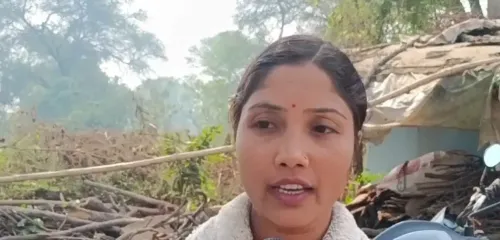
Purnima Basin, a woman from Balrampur district in Chhattisgarh, has emerged as a symbol of rural transformation — crediting the Centre's Lakhpati Didi Yojana for lifting her family out of subsistence farming and into a life of financial stability. Her journey from daily hardship to earning in the thousands each month is now inspiring hundreds of women across her village.
From Struggle to Self-Help Group
For years, Purnima and her family relied on conventional farming practices that barely covered daily expenses. The shift began when she joined a Self-Help Group (SHG) in her village, which opened the door to institutional credit and government support. Securing a loan through a bank and the Community Investment Fund (CIF), she found the financial footing to reimagine her livelihood.
With this assistance, she pivoted from traditional cultivation to organic farming, choosing to grow 'Jiraphool' rice — an aromatic paddy variety with rapidly rising market demand. The switch proved decisive, steadily increasing her agricultural income to a point where it now covers household expenses, her children's education, and allows her to support others in need.
What the Lakhpati Didi Yojana Offers
The Lakhpati Didi Yojana is a Central government initiative designed to help women in Self-Help Groups achieve an annual income of at least ₹1 lakh through skill development, bank linkages, and access to the Community Investment Fund. In Chhattisgarh, the scheme has been channelled through district-level SHG networks, giving rural women access to credit and market linkages that were previously out of reach.
Purnima's story is one of many that officials cite as evidence of the scheme's on-ground impact. She recently had the opportunity to meet with the Chief Minister, where she recounted her journey from struggle to success. The Chief Minister reportedly praised the growing participation of women in the rural economy as a significant step towards their self-reliance.
A Broader Movement in Balrampur
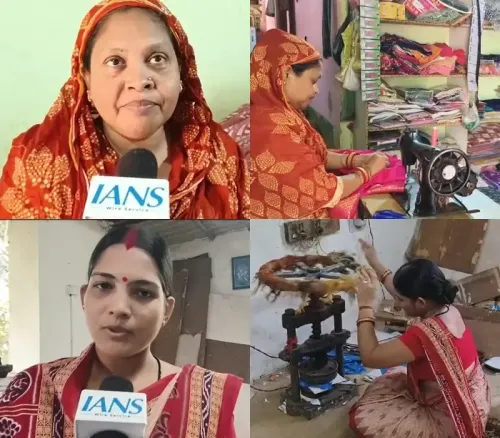
Purnima is not an isolated case. Numerous women in Balrampur have joined SHGs and are making rapid strides toward financial independence. Groups such as the Gandhi Group of Bari, the Santra Group of Durgapur, and the Durga Group are expanding their operations in handicrafts and food products, aided by government schemes and bank linkages to reach markets beyond their immediate neighbourhoods.
This cluster of success stories reflects a broader pattern of rural women building new identities through hard work, confidence, and structured government support — a model that policymakers are increasingly looking to replicate across other districts.
What This Signals for Rural Women's Economy
The Balrampur examples illustrate how targeted credit access, when combined with skill development and market linkages, can meaningfully shift income trajectories in agrarian households. The rising demand for niche agricultural products like Jiraphool rice also points to an emerging opportunity for rural producers to move up the value chain.
As the Lakhpati Didi Yojana continues to scale, the outcomes in Chhattisgarh will serve as a key benchmark for assessing whether the scheme delivers durable income gains — or remains confined to individual success stories.
Point of View
But the real policy question is scale: how many of the Lakhpati Didi beneficiaries have achieved sustained income above ₹1 lakh annually, and how many remain clustered around the threshold? Individual success stories are valuable for outreach, but without district-level income verification data, it is difficult to distinguish a scheme that is transforming rural women's economics from one that is producing a curated set of showcases. The Balrampur SHG cluster — with its diversification into handicrafts, food products, and niche agriculture — does suggest genuine momentum. The harder test will be whether bank linkages and market access hold up as the programme scales beyond early adopters.
NationPress
25 Sept 2026
Frequently Asked Questions
What is the Lakhpati Didi Yojana?
The Lakhpati Didi Yojana is a Central government scheme aimed at helping women in Self-Help Groups earn at least ₹1 lakh annually through skill development, bank credit linkages, and access to the Community Investment Fund. It targets rural women in agrarian households across India.
How did Purnima Basin benefit from the Lakhpati Didi scheme?
Purnima Basin from Balrampur, Chhattisgarh, used a bank loan and Community Investment Fund support under the scheme to switch from conventional to organic farming. She now grows 'Jiraphool' aromatic rice, which has strong market demand, and earns enough to cover her family's expenses and her children's education.
What is Jiraphool rice and why is it significant?
Jiraphool rice is an aromatic variety of paddy cultivated in Chhattisgarh with rapidly rising market demand. By choosing this crop over conventional varieties, Purnima was able to command better prices and increase her agricultural income significantly.
How widespread is the Lakhpati Didi impact in Balrampur district?
Several women's SHGs in Balrampur, including the Gandhi Group of Bari, the Santra Group of Durgapur, and the Durga Group, are expanding businesses in handicrafts and food products. The district is increasingly cited as a model for rural women's economic self-reliance in Chhattisgarh.
Did the Chhattisgarh Chief Minister acknowledge Purnima's achievement?
Yes, Purnima Basin recently met with the Chief Minister, where she shared her journey from struggle to success. The Chief Minister reportedly praised the growing participation of women in the rural economy as a significant step towards self-reliance.