Lalan Singh Links Cooperatives to Animal Husbandry
Synopsis
Union Minister Rajiv Ranjan Singh, known as Lalan Singh, asserted on X that cooperatives share a direct relationship with animal husbandry — invoking decades of policy lineage from Operation Flood to the 2021 Ministry of Cooperation and signalling continued integration of cooperative structures with livestock programmes.
Key Takeaways
Union Minister Rajiv Ranjan Singh (Lalan Singh) posted on 22 October 2026 that cooperatives have a direct relationship with animal husbandry.
Operation Flood (1970) established the Amul-model cooperative dairy network that first institutionalised this link.
The Ministry of Cooperation , created in July 2021 , was designed to give focused attention to cooperative institutions including dairy and fisheries.
Singh holds the portfolios of Animal Husbandry and Dairying , Fisheries , and Panchayati Raj — placing him at the direct intersection of cooperative and livestock policy.
Dairy farmers and cooperative societies remain the primary vehicle for organising small and marginal livestock holders across rural India.
Further integration of cooperative dairy models with panchayat-level animal husbandry programmes is the key policy direction to watch.
A single sentence from Union Panchayati Raj and Fisheries Minister Rajiv Ranjan Singh on Thursday, 22 October 2026 cut to the core of a debate that has defined rural India's livestock economy for decades: that cooperatives and animal husbandry are not parallel tracks — they are the same road.
Posting in Hindi, the senior Janata Dal (United) leader wrote: 'Sahkarita ka pashupaalan se seedha sambandh hai' — 'Cooperatives have a direct relationship with animal husbandry.' Brief, pointed, and backed by more than half a century of policy architecture.
Operation Flood's shadow: why this link is older than most ministers
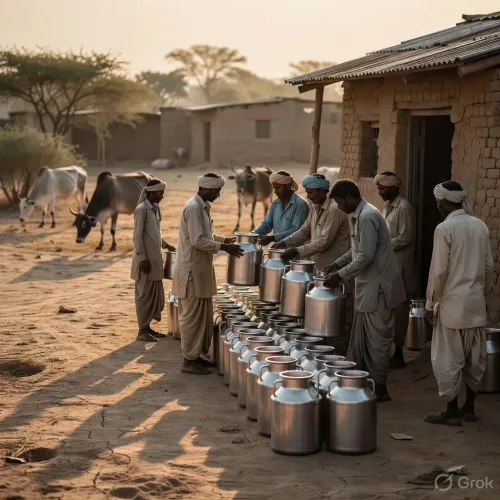
The connection Singh invokes is not rhetorical. When Operation Flood launched in 1970, it did exactly one thing brilliantly — it plugged village-level milk producers into an Amul-model cooperative chain, turning scattered animal husbandry into organised dairy commerce. The result was the world's largest milk-producing nation. The cooperative was the infrastructure; the livestock was the engine.
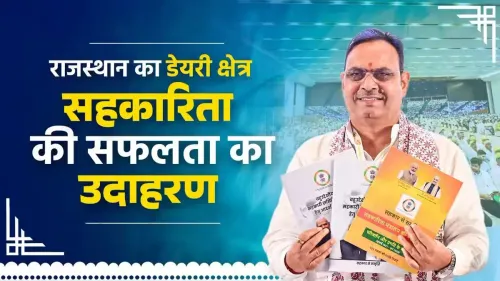
Dairy farmers and cooperative societies remain the twin pillars of rural income for millions of small and marginal livestock holders across states like Bihar, Gujarat, Uttar Pradesh, and Rajasthan. Without the cooperative structure, individual farmers lack the bargaining power, cold-chain access, and credit mechanisms that make animal husbandry commercially viable.
The 2021 Ministry of Cooperation and a renewed push
The institutional underpinning for Singh's statement arrived in July 2021, when the Ministry of Cooperation was carved out as a dedicated central ministry — a signal that cooperative structures needed focused government attention beyond agriculture alone. Dairy, fisheries, and animal husbandry were explicitly within its orbit.
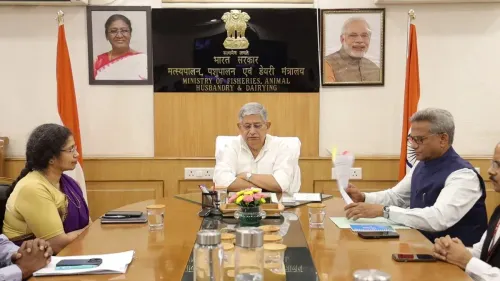
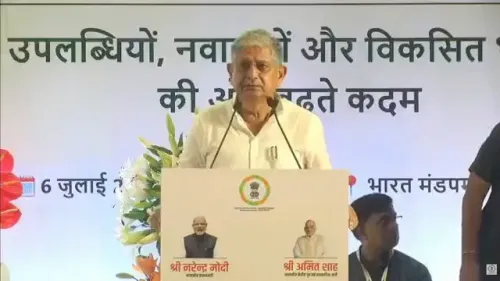
Singh, who holds the Animal Husbandry and Dairying portfolio alongside Panchayati Raj and Fisheries, sits precisely at the intersection these two ministries share. His post reads less like a tweet and more like a statement of governing intent — a reminder that the cooperative model is the chosen vehicle for organising livestock holders and improving their market access.
What the integration looks like on the ground
The practical question is whether cooperative dairy models can be woven into panchayat-level animal husbandry programmes through state budgets and central schemes. Veterinary services, artificial insemination drives, fodder supply chains, and milk procurement networks all require the kind of last-mile reach that only a functional panchayat-cooperative axis can deliver.
For the millions of rural households whose income sheet includes a cow or a buffalo, that axis is not a policy abstraction. It is the difference between subsistence and livelihood.
The minister said it in eight words. The policy machinery will need considerably more to deliver it.
Point of View
Singh signals that his ministry views the panchayat-cooperative axis as the primary delivery mechanism for livestock welfare and dairy income, rather than direct state intervention. This aligns with the broader NDA-era push to revitalise cooperative institutions through the 2021 Ministry of Cooperation, positioning them as market-access vehicles for rural producers. The statement also quietly stakes ministerial turf — asserting that animal husbandry outcomes are inseparable from cooperative governance, a space Singh's portfolio uniquely straddles.
NationPress
22 Oct 2026
Frequently Asked Questions
What did Lalan Singh say about cooperatives and animal husbandry?
On 22 October 2026, Union Minister Lalan Singh posted in Hindi that cooperatives have a direct relationship with animal husbandry, underscoring the interdependence of cooperative institutions and livestock-based rural livelihoods.
What is the Ministry of Cooperation and when was it set up?
The Ministry of Cooperation is a dedicated central ministry created in July 2021 to promote and strengthen cooperative institutions across India, including in the dairy, fisheries, and animal husbandry sectors.
How did Operation Flood link cooperatives with animal husbandry?
Operation Flood, launched in 1970, built the Amul-model cooperative dairy network that connected village-level milk producers — and their livestock — to organised markets, making India the world's largest milk producer.
What portfolios does Rajiv Ranjan Singh (Lalan Singh) hold?
Lalan Singh is the Union Minister for Panchayati Raj, Fisheries, Animal Husbandry and Dairying, and is a senior leader of the Janata Dal (United) from Bihar.
How do cooperatives help dairy farmers in India?
Cooperative societies give small and marginal livestock holders collective bargaining power, access to cold-chain infrastructure, credit, and organised milk procurement — making animal husbandry commercially viable for rural households.