Why is the Lok Sabha Opposing 'Centralisation' and 'Privatisation' in New Education and Nuclear Bills?
Synopsis
The Lok Sabha is embroiled in intense debates over significant new bills introduced by the government, focusing on education and nuclear energy reforms. The opposition raises concerns about centralisation and privatisation, igniting discussions on federalism and state autonomy. What does this mean for the future of India's legislative framework?
Key Takeaways
Government introduces significant reform bills.
Opposition raises concerns over centralisation.
Potential implications for federalism.
SHANTI Bill aims to privatize nuclear sector.
Legislative discussions expected to intensify.
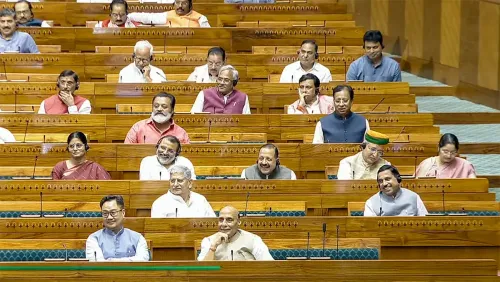
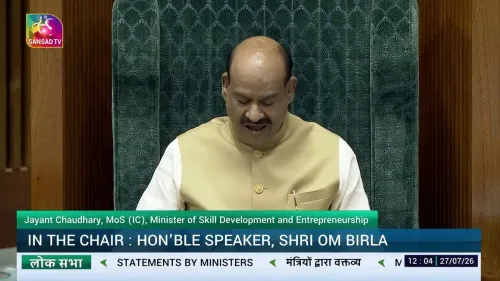
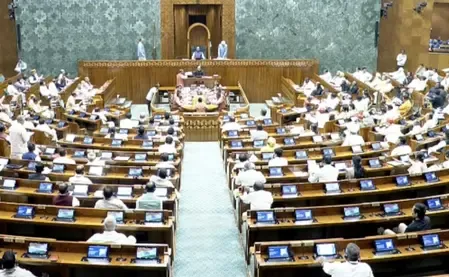
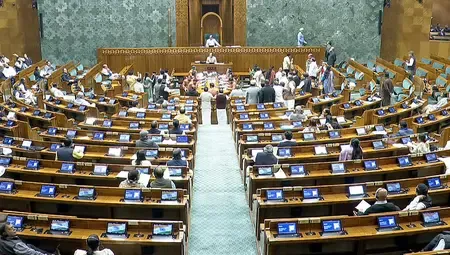
New Delhi, Dec 15 (NationPress) The Lok Sabha was the stage for intense discussions on Monday as the government put forth several crucial bills during the concluding week of the Winter Session, which is set to wrap up on December 19.
In light of a busy legislative schedule, three pivotal reform bills faced significant backlash from the opposition, who raised concerns over potential over-centralisation, the risk of privatisation, and breaches of federal principles.
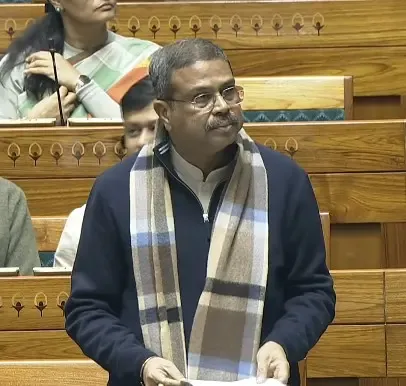
Union Education Minister Dharmendra Pradhan presented the “Viksit Bharat Shiksha Adhishthan Bill, 2025”, which aims to reform India's higher education regulatory structure. The proposed legislation seeks to repeal the University Grants Commission Act, 1956; All India Council for Technical Education Act, 1987; and National Council for Teacher Education Act, 1993.
This bill intends to create a 12-member apex body—the Viksit Bharat Shiksha Adhishthan—to supervise three specialized councils: Regulatory (Viniyaman Parishad), Accreditation (Gunvatta Parishad), and Standards (Manak Parishad).
In accordance with the National Education Policy 2020, the bill promises enhanced institutional autonomy, streamlined regulations, transparent accreditation processes, and the integration of multidisciplinary approaches alongside Bharatiya knowledge systems. It stipulates that funding will be independent of regulations, managed directly by the ministry, with penalties in place for any violations.
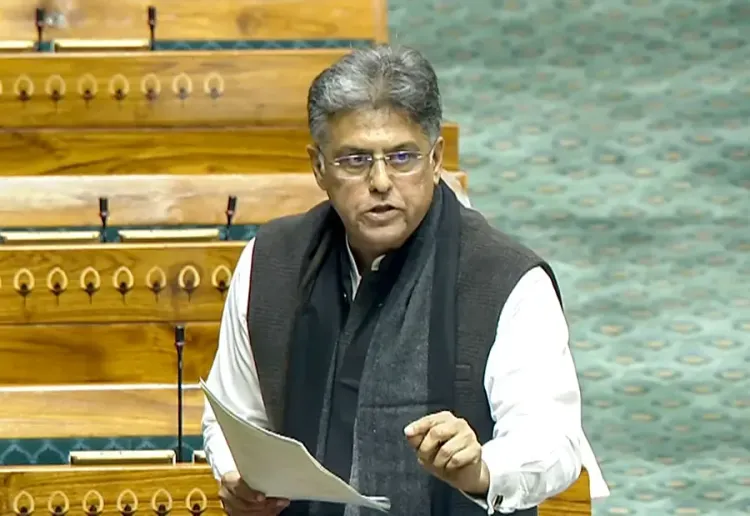
However, senior Congress MP Manish Tewari voiced strong objections to its introduction, labeling it as “excessive centralisation.” He contended that the bill confers excessive control to the Centre over educational policy formulation, thereby diminishing the powers of states and the autonomy of institutions regarding administration and appointments.
As education is a concurrent subject, Tewari cautioned that this undermines federalism.
Revolutionary Socialist Party MP NK Premachandran also raised alarms about the bill's Hindi/Sanskrit titles, which he claims contravene Article 348's requirement for English as the official language for legislative bills.
He further criticized the bill for imposing central mandates on universities established by states, violating the principles introduced via the 42nd Amendment in 1976, which aim to respect local needs.
In response, Parliamentary Affairs Minister Kiren Rijiju announced a proposal to send the bill to a Joint Parliamentary Committee (JPC) for comprehensive discussions, following requests from members during the Business Advisory Committee meeting.
Simultaneously, Minister of State for Atomic Energy Jitendra Singh introduced the “Sustainable Harnessing and Advancement of Nuclear Energy for Transforming India (SHANTI) Bill, 2025”. This significant legislation aims to allow private participation in the civil nuclear sector, modernize regulations, and support India's goal of achieving 100 GW of nuclear capacity by 2047.
This bill proposes repealing the Atomic Energy Act, 1962, and the Civil Liability for Nuclear Damage Act, 2010.
Premachandran also opposed this initiative, claiming it facilitates the privatisation of nuclear energy and rare earth minerals, which are presently managed by public sector undertakings, contrary to the Directive Principles of State Policy.
Rijiju defended the bill, asserting Parliament's legislative authority under Union List Entry 6 (covering atomic energy and related minerals).
Jitendra Singh reminded members that similar laws had been enacted during the tenures of the Nehru and Manmohan Singh governments.
The supplementary business list also featured the “Viksit Bharat—Guarantee for Rozgar and Ajeevika Mission (Gramin) (VB-G RAM G) Bill, 2025”, which is set to replace the Mahatma Gandhi National Rural Employment Guarantee Act (MGNREGA), recognized as the world's largest rural jobs scheme, but it could not be addressed.
Additionally, the Repealing and Amending Bill, 2025 was introduced to eliminate outdated laws. Later, Congress leader Jairam Ramesh took to X, urging for the referral of the higher education, atomic energy, and rural employment bills to relevant Standing Committees for “in-depth study and broad consultations,” in line with parliamentary traditions.
This session underscored the friction between the government's reform initiatives and the opposition's concerns over federalism, with debates expected to escalate.
Point of View
The ongoing debates in the Lok Sabha reveal a critical juncture in India's legislative process. The government's push for significant reforms in education and nuclear energy raises important questions about federalism and state autonomy. Balancing reform with respect for local governance will be vital to ensure a cohesive and effective policy framework.
NationPress
2 Oct 2026
Frequently Asked Questions
What are the main concerns raised by the opposition regarding the new bills?
The opposition expresses concerns about potential over-centralisation, privatisation, and violations of federal principles in the new education and nuclear bills.
What does the Viksit Bharat Shiksha Adhishthan Bill entail?
This bill aims to overhaul India's higher education regulatory framework, establishing an apex commission and repealing several existing acts.
How does the SHANTI Bill plan to impact the nuclear energy sector?
The SHANTI Bill seeks to open the civil nuclear sector to private participation and modernize regulations to support India's nuclear capacity goals.
What steps is the government taking in response to opposition concerns?
The government has proposed referring the education bill to a Joint Parliamentary Committee for detailed discussions.
What is the significance of the debates in the Lok Sabha?
The debates highlight the tension between the government's reform agenda and the opposition's views on federalism and state autonomy.