Sajad Lone slams J&K govt, calls JKAS appointments 'recruitment apartheid'
Synopsis
Peoples Conference chief Sajad Lone has accused the Omar Abdullah government of 'recruitment apartheid' after data showed only 10 of 55 JKAS and J&K Accounts posts went to Kashmir Valley candidates — 18% of jobs for 56% of the population. With the Assembly session approaching and a Centre-pending reservation revision he calls 'nearly useless,' this is a direct political challenge to the NC-led government's legitimacy in the valley.
Key Takeaways
Sajad Gani Lone (Peoples Conference) called the latest JKAS and J&K Accounts (Gazetted) appointments 'recruitment apartheid' against the Kashmir Valley .
Only 10 of 55 selected officers are from the Kashmir Valley , amounting to 18% of posts against the region's 56% population share.
Lone criticised Chief Minister Omar Abdullah for personally distributing the appointment orders.
He dismissed the NC cabinet's pending reservation revision, saying it would raise Kashmir Valley's share to only 19% at best.
J&K's reservation framework reportedly sets aside over 60% of government jobs and college seats, leaving under 40% for the open merit category.
Lone has pledged to raise the issue in the upcoming Legislative Assembly session and appealed for cross-party action.
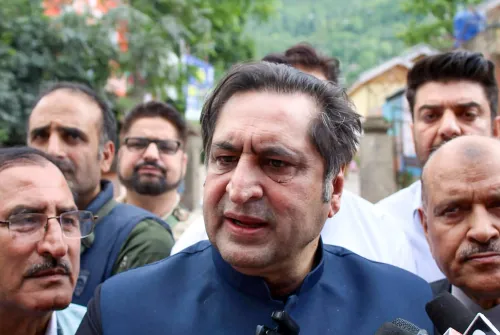
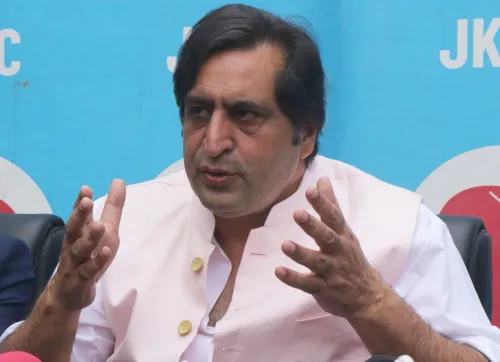
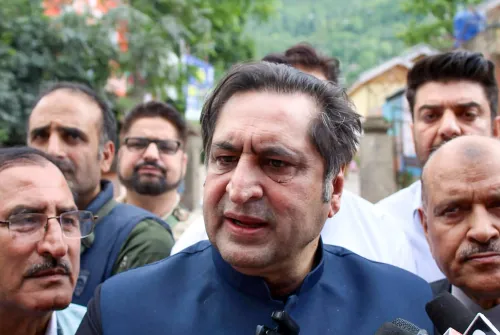
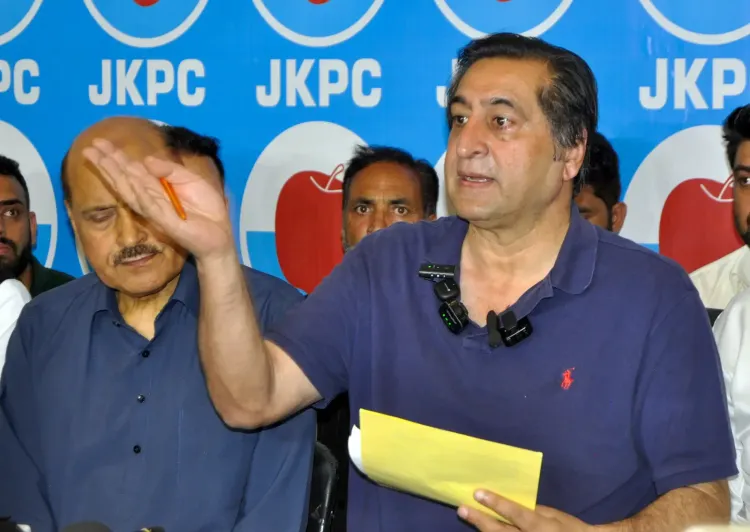
Peoples Conference (PC) president and Handwara MLA Sajad Gani Lone on Wednesday, 16 September 2026, launched a sharp attack on the National Conference (NC)-led government in Jammu and Kashmir, condemning the latest appointments to JKAS and J&K Accounts (Gazetted) services as 'recruitment apartheid' against the Kashmir Valley. The outburst comes ahead of the upcoming session of the Jammu and Kashmir Legislative Assembly and intensifies pressure on Chief Minister Omar Abdullah over the union territory's contested reservation framework.
The Appointment Figures at the Centre of the Row
Lone pointed to stark numbers: of 55 JKAS and J&K Accounts (Gazetted) officers selected in the latest round, only 10 are from the Kashmir Valley. He argued this translates to 18% of positions for a region that accounts for 56% of the population — a disparity he described as deliberate marginalisation.
In a post on X, Lone further charged that Chief Minister Abdullah's direct involvement in distributing appointment orders was inappropriate. 'Incidentally, appointment orders were given by CM sahib. Ideally, he should have kept away. It is persecution of the inhabitants of the Kashmir Valley — a strategy to disempower and marginalise them,' he said.
Why the Cabinet's Reservation Proposal Falls Short, According to Lone
Lone dismissed the NC-led cabinet's forwarded reservation policy revision as largely ineffective. He argued that even if the proposal — currently pending with Lt Governor Manoj Sinha and the Centre — receives formal approval, the disparity will barely budge. 'At best, it will increase to 19 per cent, against the 56 per cent population,' he said, calling the change negligible against the scale of under-representation he alleges.
This is a significant political challenge for the Abdullah government, which has already faced sustained pressure to rationalise a quota architecture that reportedly reserves over 60% of government jobs and professional college seats, leaving under 40% for the open merit (general) category.
The Broader Reservation Controversy in J&K
The reservation row in Jammu and Kashmir has been building over several years. Changes introduced ahead of the assembly elections added a 10% quota for the Pahari ethnic group alongside increases for Other Backward Classes (OBCs) and other categories. Critics, including representatives of Scheduled Tribes such as Gujjar and Bakerwal communities, argue these additions dilute existing protections without proportionate benefit to any single group.
General category aspirants contend that despite forming a large share of the population, they are effectively competing for fewer than 40% of available positions — a grievance that has fuelled protests and legal challenges in recent years. The NC government has so far faced delays in securing formal concurrence from the Lieutenant Governor and the Centre on its proposed rationalisation.
Lone's Legislative Strategy and Cross-Party Appeal
Lone has pledged to raise the appointments controversy in the forthcoming Assembly session through 'appropriate legislative devices,' and has made an explicit call for cross-party solidarity. 'I wish and hope that we, together, across party lines, are able to highlight the severity of this issue. And call a spade a spade — which would mean saying it explicitly and unambiguously that the present reservation system in place is a methodology to disempower and relegate to the margins the inhabitants of the Kashmir Valley,' he said.
Whether other parties — particularly those with constituencies spanning both regions — will align with this framing remains to be seen, as the Assembly session approaches.
Point of View
Not a cabinet note. The NC government's own forwarded proposal, which Lone says would move the needle by only one percentage point, exposes the limits of what an elected government can actually deliver under the current constitutional arrangement of J&K, where the Centre retains significant administrative control. What mainstream coverage often skips is that this isn't simply a valley-versus-Jammu divide — it is also a stress test of whether restored statehood aspirations can coexist with a reservation architecture designed during a period of direct central rule. The Assembly session will reveal whether this anger finds legislative traction or dissolves into party-line positioning.
NationPress
16 Sept 2026
Frequently Asked Questions
What did Sajad Lone say about J&K government appointments?
Sajad Lone accused the National Conference-led J&K government of 'recruitment apartheid,' pointing out that only 10 of 55 JKAS and J&K Accounts (Gazetted) officers selected in the latest round are from the Kashmir Valley — just 18% of positions despite the valley accounting for 56% of the population. He made the remarks in a post on X ahead of the upcoming Legislative Assembly session.
What is the J&K reservation policy controversy?
Jammu and Kashmir's reservation policy reserves over 60% of government jobs and professional college seats across various categories — including Scheduled Tribes, OBCs, and, more recently, the Pahari ethnic group — leaving under 40% for the open merit (general) category. Critics argue the system has disproportionately reduced opportunities for residents of the Kashmir Valley relative to their population share.
Why did Lone criticise Chief Minister Omar Abdullah personally?
Lone said it was inappropriate for Chief Minister Abdullah to personally distribute the appointment orders for the contentious JKAS and J&K Accounts recruitment round. He argued that, given the politically charged nature of the appointments, the Chief Minister should have distanced himself from the process.
What is the status of J&K's revised reservation proposal?
The J&K cabinet has cleared and forwarded a revised reservation policy to Lt Governor Manoj Sinha and the Centre, but formal concurrence is pending. Sajad Lone has argued that even if approved, the proposal would raise the Kashmir Valley's share of posts by only one percentage point — to 19% — which he considers inadequate given its 56% population share.
What action is Sajad Lone planning in the Assembly?
Lone has pledged to raise the appointment controversy in the forthcoming Jammu and Kashmir Legislative Assembly session through 'appropriate legislative devices.' He has also appealed to lawmakers across party lines to jointly acknowledge and challenge what he describes as a systematic policy to marginalise Kashmir Valley residents.