CM Himanta Flags Rediscovery of Rungia mastersii in Assam

Synopsis
A plant species unseen for nearly 180 years, Rungia mastersii, has been rediscovered in Assam's Jatinga Hills. Chief Minister Himanta Biswa Sarma called it a milestone for science and a reminder of the state's extraordinary biodiversity, urging continued efforts to protect Assam's natural heritage.
Key Takeaways
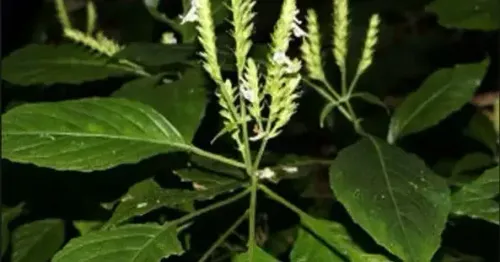
Rungia mastersii , a flowering plant last recorded in the 19th century , has been rediscovered in Jatinga Hills , Dima Hasao district , Assam.
The species had been absent from scientific records for nearly 180 years before this find.
Assam Chief Minister Himanta Biswa Sarma announced the rediscovery on August 1, 2026 , calling it 'a remarkable milestone.' Jatinga Hills is already known globally for its unusual migratory bird phenomenon, and now emerges as a site of botanical significance.
The find aligns with national biodiversity documentation efforts and may prompt proposals for enhanced protection of the site.
A plant unseen for nearly 180 years has been found again — not in a laboratory, not in a herbarium archive, but alive in the forests of Jatinga Hills. Assam Chief Minister Himanta Biswa Sarma on Saturday, August 1, 2026, hailed the rediscovery of Rungia mastersii, a botanical species last recorded in the 19th century, calling it 'a remarkable milestone for our scientific community.'
A species lost to science for nearly two centuries
Rungia mastersii belongs to the family Acanthaceae, a group of flowering plants with numerous species across tropical Asia. Its disappearance from scientific records for roughly 180 years placed it among those species that researchers feared might be extinct or simply undocumented in an era before systematic field surveys. Its re-emergence from the Jatinga Hills in Dima Hasao district of Assam is the kind of find that rewrites a species' conservation status overnight. Jatinga Hills is already known to the scientific world — primarily for its extraordinary and still-debated phenomenon of migratory birds descending in large numbers during monsoon nights. That the same hills now yield a botanically significant rediscovery underlines how much of this terrain remains genuinely unexplored.What Dima Hasao's forests hold
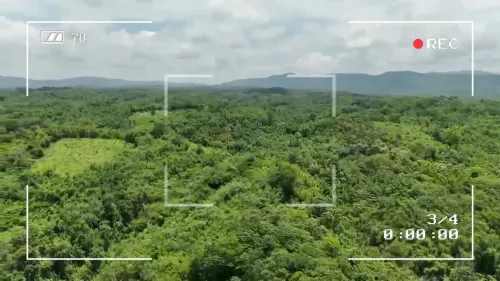
Assam accounts for a substantial share of India's northeastern forest cover, a biodiversity corridor that connects the Eastern Himalayas with the Indo-Burma hotspot — one of the world's most species-rich regions. Dima Hasao, a hill district with dense subtropical and temperate forest patches, has been the site of periodic botanical and zoological surveys, though systematic documentation has historically lagged behind the pace of ecological change in the region. Successive state governments have expanded protected areas and pushed biodiversity documentation alongside infrastructure development. The rediscovery of Rungia mastersii fits into a broader national effort to map endemic flora under India's biodiversity action plans — a programme that depends heavily on ground-level field surveys by botanists and forest department personnel.Sarma's conservation signal
Chief Minister Himanta Biswa Sarma, who has regularly used conservation announcements to spotlight Assam's ecological credentials since taking office in 2021, framed the find as both a scientific achievement and a civic responsibility. 'Let us continue our collective efforts to preserve Assam's priceless natural heritage,' he wrote — a call directed as much at policymakers and the forest department as at the scientific community. The announcement is likely to focus attention on whether the site of the rediscovery in Jatinga Hills warrants formal protection — as a biodiversity heritage site or through an expansion of existing reserve boundaries. Botanical rediscoveries of this magnitude often trigger exactly such proposals, and the state's forest department will be watched for its next move. One plant, 180 years of silence, and a forest that clearly has more to say.Point of View
Which has faced scrutiny over infrastructure projects in ecologically sensitive zones, a botanical milestone in Dima Hasao's forests offers a counter-narrative rooted in scientific credibility. The broader pattern here is significant: India's northeastern states are increasingly positioning themselves as biodiversity custodians, and such announcements feed directly into federal conversations about protected area expansion and climate resilience funding. Watch whether this rediscovery translates into a formal proposal for heritage site status — that would be the real policy follow-through.
NationPress
15 Sept 2026
Frequently Asked Questions
What is Rungia mastersii and why is its rediscovery significant?
Rungia mastersii is a flowering plant from the family Acanthaceae that had not been recorded by scientists for nearly 180 years . Its rediscovery in Jatinga Hills , Assam confirms the species still exists in the wild and highlights the unexplored biodiversity of northeastern India.
Where exactly was Rungia mastersii rediscovered in Assam?
The plant was rediscovered in the Jatinga Hills , located in Dima Hasao district of Assam — a hilly, forested region already known for its unusual migratory bird phenomena.
Who announced the rediscovery of Rungia mastersii?
Assam Chief Minister Himanta Biswa Sarma announced the rediscovery on August 1, 2026 , via a post on X, praising it as a milestone for the scientific community.
What is Jatinga Hills known for?
Jatinga Hills in Dima Hasao district is internationally known for a mysterious phenomenon in which large numbers of migratory birds descend and become disoriented during monsoon nights. The area also holds significant botanical diversity.
Could this discovery lead to new protected areas in Assam?
Botanical rediscoveries of species absent from records for nearly two centuries often prompt conservation proposals. Experts and the state forest department may consider recommending Jatinga Hills for biodiversity heritage site status or expanded reserve boundaries, though no formal proposal has been announced yet.