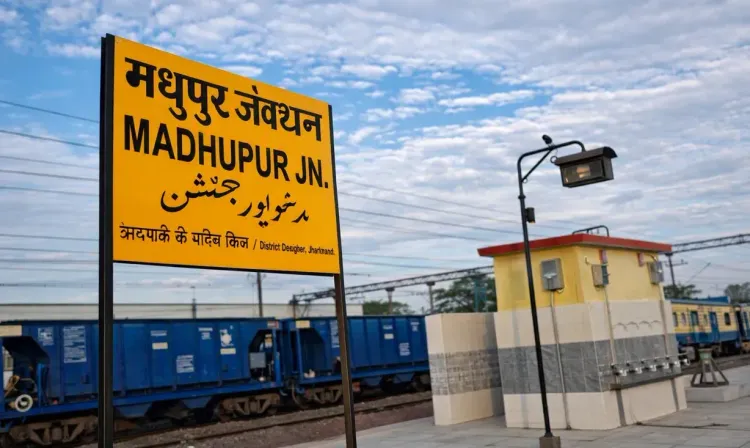
Madhupur station water safe since CAG flagged E. coli, says Eastern Railway
Synopsis
A CAG audit caught E. coli in Madhupur's station water — Eastern Railway's answer is a rebuilt filter house, nine coolers (up from four), daily chlorine checks, and a clean bill from its own health inspectors covering April 2025 to July 2026. The upgrades follow a direct ministerial intervention ordering 'Tank to Tap' systems across 20,000 railway locations.
Key Takeaways
The CAG flagged E. coli and other contaminants in drinking water at Madhupur station and seven other railway stations during 2022–23 and 2023–24 .
Railway Minister Ashwini Vaishnaw ordered a 'Tank to Tap' centralised water filtration system across 20,000 railway locations after the report.
Eastern Railway replaced the old overhead tank with a new SMC-panelled tank and overhauled the pressure filter at Madhupur in 2024–25 .
Water coolers at Madhupur station increased from four to nine , all reported fully functional.
Water quality tests from April 2025 to July 2026 have been declared 'completely satisfactory' by Eastern Railway.
A formal proposal to install auto-chlorinators at all feasible Madhupur locations has been submitted.
Eastern Railway (ER) has declared drinking water at Madhupur station in Jharkhand safe, following a Comptroller and Auditor General (CAG) report that found E. coli bacteria and other contaminants in water samples collected from eight railway stations across India during 2022–23 and 2023–24. The railway zone says sweeping infrastructure upgrades and tightened monitoring since then have brought water quality to satisfactory levels.
What the CAG Report Found
The CAG audit flagged the presence of E. coli and other contaminants in drinking water at several stations, including Madhupur, during its review of the 2022–23 and 2023–24 periods. The findings raised serious public health concerns, given that railway stations serve millions of daily commuters across the country.
Following the report's publication, Railway Minister Ashwini Vaishnaw held review meetings and ordered the rollout of a 'Tank to Tap' centralised water filtration and monitoring system across 20,000 locations on the railway network.
How Madhupur's Water Is Treated
Water supplied to Madhupur station is drawn from the nearby Patroo River via a river boring system powered by electric pumps, which channels it through a dedicated pipeline to the Madhupur Filter House. There, it passes through pressure filters and receives regular doses of bleaching powder for manual chlorination and alum to reduce turbidity before being distributed to the station, surrounding railway colonies, and key service buildings.
Eastern Railway said major infrastructure overhauls were carried out in 2024–25, including the replacement of an old, damaged overhead tank with a new SMC-panelled tank at both the filter house and the station. The number of water coolers at the station has also been expanded — from four during 2023–24 to nine, all reported to be fully functional.
Quality Assurance Measures in Place
According to Eastern Railway, a multi-tier monitoring protocol is now in force at Madhupur. Residual chlorine is tested at multiple points daily, bacteriological testing is conducted monthly by the Health Department, and chemical testing is carried out periodically. The railway has also submitted a formal proposal to install auto-chlorinators at all feasible locations in Madhupur.
'Quality records available from the office of the Health Inspector of Madhupur confirmed that the water input quality was satisfactory during 2023–24,' Eastern Railway said in a statement, adding that the latest quality reports from April 2025 to July 2026 have been found 'completely satisfactory.'
Eastern Railway's Official Position
ER Chief Public Relations Officer Shibram Majhi said: 'Providing safe, clean, and tested drinking water to our passengers is an essential part of our service commitment. Through continuous monitoring, infrastructural modernisation, and strict health checks at Madhupur station, Eastern Railway ensures that every traveller can rely on the highest standards of hygiene and comfort throughout their journey.'
This comes amid broader scrutiny of railway station amenities, with the CAG audit having put the spotlight on water quality gaps that had persisted for years without adequate redressal. Whether the improvements at Madhupur are replicated consistently across the other flagged stations will be the real measure of the system's response.
Point of View
But the credibility gap lies in the source of the verification — the railway is essentially self-certifying its own improvement. Monthly bacteriological tests conducted by the railway's own Health Department, without independent third-party audits, leave room for doubt. The CAG's original findings covered eight stations; public confirmation of remediation at each of those sites has not been uniformly forthcoming. Until an independent body corroborates the 'satisfactory' tag, the assurance, however well-intentioned, remains incomplete.
NationPress
18 Aug 2026
Frequently Asked Questions
What did the CAG report say about Madhupur station's drinking water?
The CAG found E. coli bacteria and other contaminants in drinking water samples at Madhupur station in Jharkhand, along with seven other railway stations, during 2022–23 and 2023–24. The audit flagged serious water quality lapses across the railway network.
What steps has Eastern Railway taken to fix the water quality at Madhupur?
Eastern Railway overhauled the pressure filter, replaced the old overhead tank with a new SMC-panelled tank, increased water coolers from four to nine, and introduced daily residual chlorine testing, monthly bacteriological checks, and periodic chemical testing. A proposal for auto-chlorinators has also been submitted.
Is the drinking water at Madhupur station safe now?
Eastern Railway says yes — water quality reports from April 2025 to July 2026 have been declared completely satisfactory. However, these assessments are conducted by the railway's own Health Department rather than an independent body.
What is the 'Tank to Tap' system ordered by the Railway Minister?
'Tank to Tap' is a centralised water filtration and monitoring system ordered by Railway Minister Ashwini Vaishnaw after the CAG report was published. It is being implemented across 20,000 locations on the Indian railway network to ensure end-to-end water quality control.
Where does Madhupur station get its drinking water from?
Water at Madhupur station is sourced from the nearby Patroo River via a river boring system. It is pumped through a dedicated pipeline to the Madhupur Filter House, where it is purified through pressure filters, chlorination, and alum dosing before distribution.