Maharashtra Cabinet Approves PPP Model for ST Depot Land Development
Synopsis
Maharashtra's cabinet has approved a Public-Private Partnership concession policy to develop additional spaces at MSRTC (ST) properties, the Chief Minister's Office announced on 15 July 2026. The move aims to monetise underused depot land, ease MSRTC's financial stress, and improve commuter facilities across the state.
Key Takeaways
The Maharashtra cabinet approved a PPP concession policy for developing additional spaces at MSRTC (ST) depots and properties on 15 July 2026 .
Chief Minister Devendra Fadnavis is tagged in the official announcement, signalling direct CM-level ownership of the decision.
The PPP model will allow private developers to develop and operate designated spaces on MSRTC land under concession agreements.
MSRTC , which has faced prolonged financial stress, is expected to generate new revenue streams from concession premiums or revenue sharing.
Bus commuters across Maharashtra may benefit from upgraded depot facilities as part of private investment conditions.
Tender processes and implementation timelines for depot redevelopment will be the next critical milestones to watch.
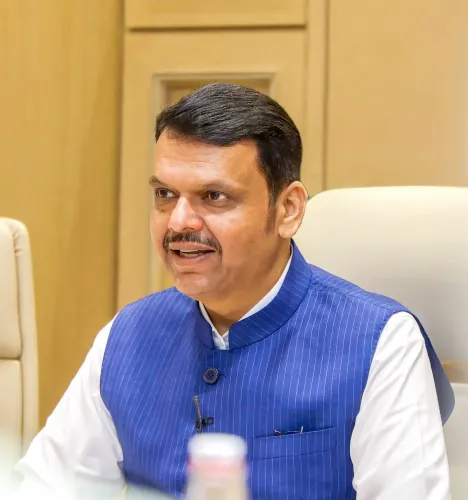
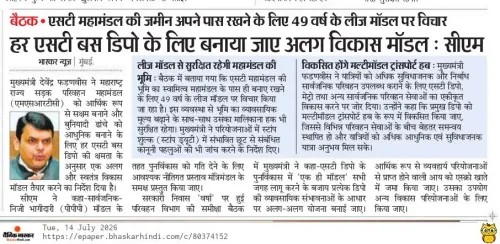
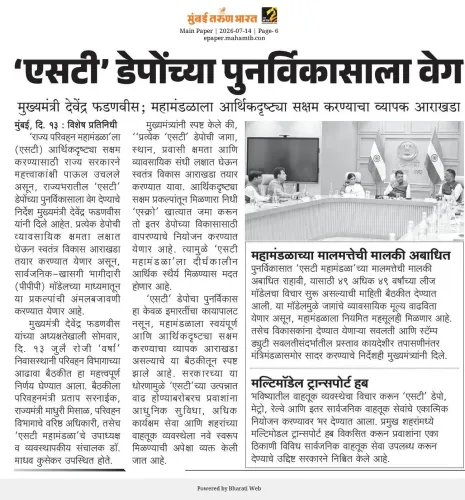
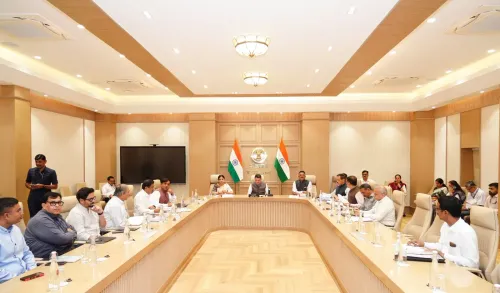
The Chief Minister's Office of Maharashtra announced on Wednesday, 15 July 2026 that the state cabinet has approved a decision to develop additional spaces at Maharashtra State Road Transport Corporation (MSRTC) depots and properties through a Public-Private Partnership (PPP) concession policy. The announcement, shared on the official CMO Maharashtra account, tags Chief Minister Devendra Fadnavis and marks a significant step in the state's strategy to monetise underused public transport land assets.
Context
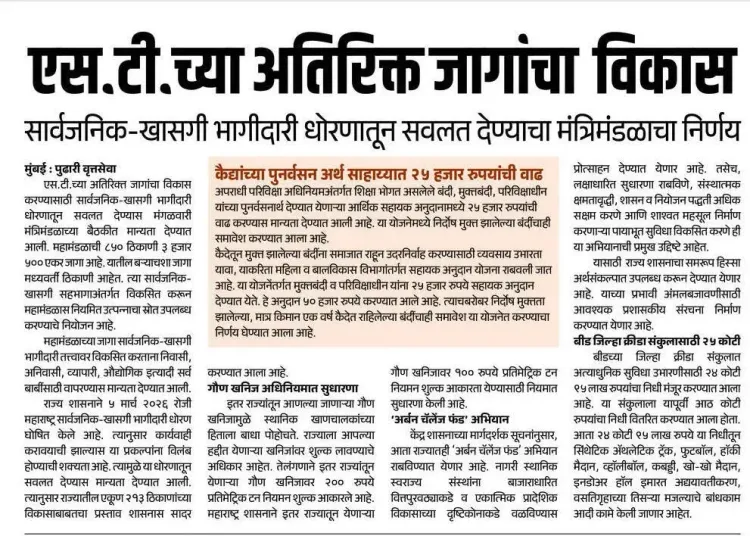
The cabinet post, originally in Marathi, states: 'एस.टी.च्या अतिरिक्त जागांचा विकास सार्वजनिक-खासगी भागीदारी धोरणातून सवलत देण्याचा मंत्रिमंडळाचा निर्णय' — translating to 'Cabinet decision to grant concession for development of additional ST spaces through the Public-Private Partnership policy.' The term 'S.T.' refers to the Maharashtra State Road Transport Corporation, commonly known as ST or MSRTC, which operates one of the largest public bus networks in India.
MSRTC manages an extensive network of depots, bus stands, and ancillary land parcels across the state. A significant portion of this land, particularly in urban and semi-urban areas, has historically remained underutilised beyond core operational requirements, representing a latent asset base that the state now seeks to activate.
Policy Backdrop
Maharashtra has employed PPP frameworks for transport and urban infrastructure since the early 2000s, using private capital to supplement constrained public budgets. Under a concession-based PPP model, private developers are typically granted the right to develop and commercially operate designated spaces for a fixed term, in exchange for upfront premiums, revenue sharing, or both.
Chief Minister Devendra Fadnavis, who has anchored his tenures around infrastructure-led growth and administrative efficiency, has consistently pushed for asset monetisation as a tool to reduce fiscal pressure on state-owned enterprises. MSRTC, which has faced financial stress over several years, stands to benefit from revenue generated through such concessions without diluting public ownership of the underlying land.
Similar PPP-based depot and bus terminal redevelopment models have been adopted in other Indian states, where integrated commercial development above or alongside transport hubs has generated sustained revenue streams for state transport undertakings.
Stakeholders and Impact
Bus commuters across Maharashtra could see improved facilities at ST depots if private investment is channelled into upgrading infrastructure as part of concession conditions. Better amenities, retail facilities, and modernised waiting areas are typical outcomes of such redevelopment projects in comparable schemes elsewhere in India.
Private developers gain access to strategically located land parcels, often in town centres or high-footfall transit corridors, under long-term concession arrangements. For MSRTC, the revenue generated could ease its financial burden and fund operational improvements to its bus fleet and services.
What's Next
The immediate focus will shift to the formulation and release of tender documents that define the scope, eligibility criteria, and revenue-sharing structure for each identified ST property. The pace of project implementation — from tender floatation to financial closure and construction — will determine how quickly the policy translates into tangible outcomes for commuters and the corporation.
Observers will watch whether the state sets firm timelines for completing the concession process and whether environmental and heritage considerations around older depot structures are addressed in the project guidelines. The cabinet decision sets the policy direction; execution will be the true test of its ambition.
Point of View
Revenue-maximisation approach to public sector reform — using private capital to do what the state exchequer cannot. For a corporation that has struggled with deficits, this is as much a financial lifeline as it is an infrastructure play. The political calculus is straightforward: visible improvements at bus depots benefit a wide commuter base, while the fiscal gains reduce the need for politically sensitive fare hikes or bailouts. The real test, however, lies in implementation — Maharashtra's PPP history includes both successful projects and stalled tenders, and the quality of concession design will determine which category this falls into.
NationPress
15 Jul 2026
Frequently Asked Questions
What did the Maharashtra cabinet decide about ST depots?
The Maharashtra cabinet approved a policy to develop additional spaces at MSRTC (ST) depots and properties through a Public-Private Partnership concession model, as announced by the Chief Minister's Office on 15 July 2026.
What is the PPP concession policy for MSRTC?
Under the approved PPP concession policy, private developers will be granted rights to develop and commercially operate additional spaces on MSRTC land for a fixed period, in exchange for upfront premiums or revenue sharing with the corporation.
How will this affect MSRTC's finances?
MSRTC is expected to earn new revenue from concession fees or profit-sharing arrangements, which could help ease the financial stress the corporation has faced over several years without requiring the state to sell its land assets.
Will bus commuters benefit from the ST depot PPP policy?
Yes, commuters could benefit from improved facilities such as better waiting areas, retail amenities, and modernised infrastructure at ST depots, as private developers typically upgrade spaces as part of their concession obligations.
What happens next after the Maharashtra cabinet's PPP decision for ST land?
The next steps involve drafting and releasing tender documents specifying the scope, eligible properties, and concession terms. Project timelines will depend on how quickly the tender process is completed and private partners are onboarded.