Maharashtra CM Fadnavis: 265 of 358 Talukas Hit by Drought
Synopsis
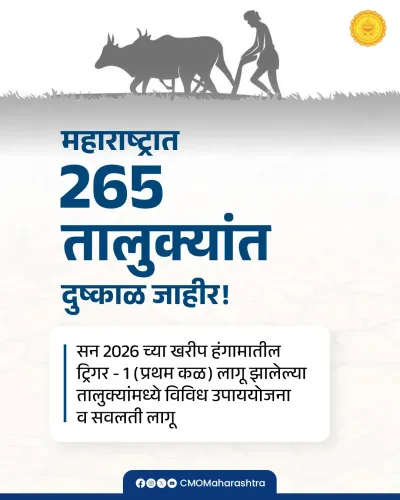
The Chief Minister's Office of Maharashtra has disclosed that 265 of the state's 358 talukas are drought-affected — a near-statewide agricultural crisis under CM Devendra Fadnavis that triggers urgent relief, crop insurance, and water supply measures for millions of rural households.
Key Takeaways
265 out of 358 talukas — roughly 74 per cent of Maharashtra's sub-divisions — have been declared drought-hit.
The announcement was made by the Chief Minister's Office of Maharashtra on 27 September 2026 , with CM Devendra Fadnavis leading the state response.
Marathwada and Vidarbha are historically the worst-affected regions during monsoon-deficient years in Maharashtra.
Formal drought notification unlocks crop insurance disbursals, emergency water supply, and fodder procurement for affected talukas.
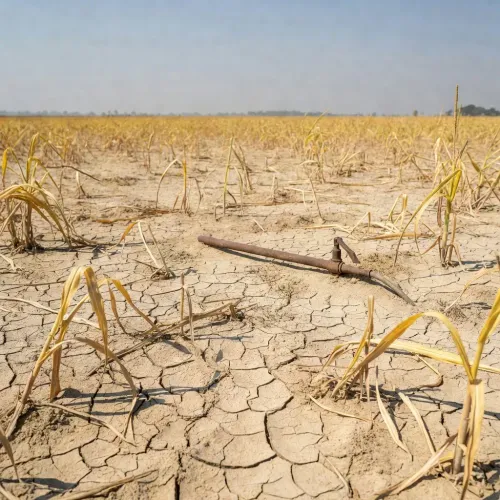
The scale of this drought — 265 talukas — is exceptionally wide, threatening both the current crop cycle and the upcoming rabi sowing season .
Farmers and rural households across the state face compounding pressure from crop losses, drinking water shortages, and livestock distress.
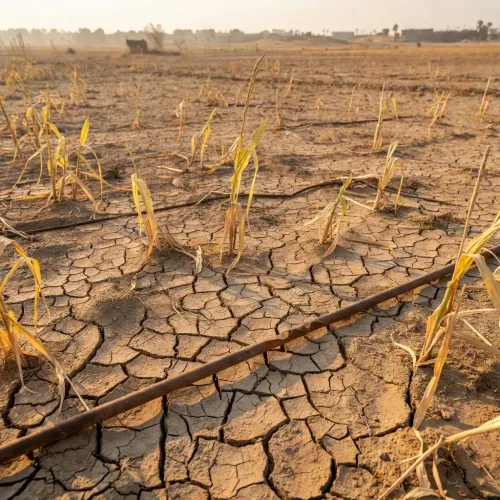
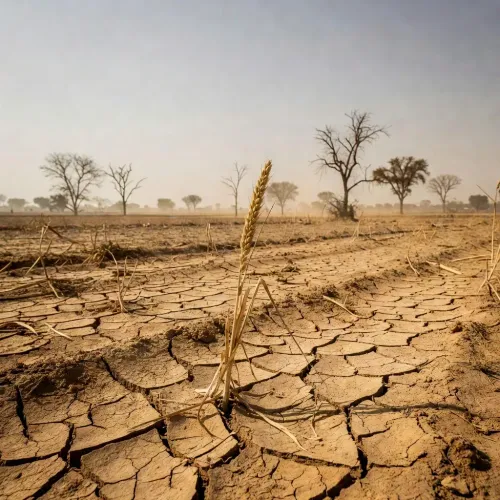
Nearly three in every four talukas across Maharashtra are reeling under drought conditions — a scale of agricultural distress that places millions of farmers and rural households squarely in the path of a deepening crisis. The Chief Minister's Office of Maharashtra confirmed on Sunday, 27 September 2026 that 265 out of 358 talukas have been declared drought-hit, with Chief Minister Devendra Fadnavis at the helm of the state's response.
A number that tells the whole story
Two hundred and sixty-five talukas. That single figure — 74 per cent of Maharashtra's administrative sub-divisions — captures the breadth of what is unfolding across the state. This is not a localised dry spell confined to a belt or two; it is a near-statewide emergency rooted in monsoon shortfall, with consequences that will cascade well into the rabi (winter crop) season. The Maharashtra Government's taluka-level tracking system is the trigger mechanism for formal relief: once a taluka is notified, it unlocks crop insurance disbursals, emergency water supply arrangements, and fodder procurement — all of which are now in play at an extraordinary scale.
Marathwada and Vidarbha: drought's perennial ground zero
Maharashtra's vulnerability to drought is structural, not incidental. The Marathwada and Vidarbha regions have historically borne the heaviest burden in years of deficient monsoon — a pattern that successive state governments have had to navigate repeatedly. The state has issued taluka-level drought notifications in previous cycles, including a significant declaration covering multiple districts during 2018-19, but a figure of 265 affected talukas points to conditions of exceptional severity. For farmers who have already absorbed the volatility of input costs and commodity prices, a drought of this spread is a compounding blow.
What the relief machinery now faces
With CM Devendra Fadnavis overseeing the response, the immediate pressure falls on three fronts: expediting crop loss assessments so that insurance payouts reach affected cultivators before the rabi sowing window closes; mobilising water tankers and canal allocations to protect drinking water supply in parched villages; and coordinating fodder camps to prevent distress sale of livestock — often a farmer's last financial buffer. The state administration has prior experience running these mechanisms, but doing so across 265 talukas simultaneously will test both logistical capacity and fiscal headroom.
The numbers are in. The clock on relief delivery has already started.
Point of View
Not an exception. For CM Fadnavis — who has emphasised water conservation and farm income stability as policy pillars — the scale of this notification raises the stakes considerably: relief delivery at 74 per cent of the state's talukas demands both administrative bandwidth and fiscal flexibility the budget may not have anticipated. The political optics matter too: Marathwada and Vidarbha, where drought bites hardest, are also regions where agrarian discontent has historically shaped electoral outcomes, making the speed and reach of relief as much a political imperative as a humanitarian one.
NationPress
27 Sept 2026
Frequently Asked Questions
How many talukas in Maharashtra are affected by drought in 2026?
According to the Chief Minister's Office of Maharashtra, 265 out of 358 talukas have been declared drought-affected, amounting to roughly 74 per cent of the state's sub-divisions.
Which regions in Maharashtra are most vulnerable to drought?
Marathwada and Vidarbha are historically the most drought-prone regions of Maharashtra, bearing the heaviest burden during years of deficient monsoon rainfall.
What relief measures follow a drought declaration in Maharashtra?
Once talukas are formally notified as drought-hit, the state government triggers crop insurance disbursals, emergency drinking water supply, and fodder camp mobilisation for affected farmers and livestock owners.
Who is overseeing Maharashtra's drought response in 2026?
Chief Minister Devendra Fadnavis is overseeing the state government's drought response, as confirmed by the official Chief Minister's Office account.
Will the Maharashtra drought affect rabi crop sowing?
Yes, the drought poses a direct threat to the upcoming rabi (winter crop) sowing season , as depleted soil moisture, water shortages, and crop losses from the kharif season reduce farmers' capacity to plant and finance rabi cultivation.