Maharashtra scales down Parivahan Bhavan to 4 floors after Indian Navy objections
Synopsis
Maharashtra's flagship Transport Commissionerate building in Worli has been cut from 16 floors to just 4 — not by budget pressure, but by an Indian Navy veto on height near its installations. The revision ends a prolonged stalemate and clears the way for construction to finally begin.
Key Takeaways
The proposed Parivahan Bhavan in Worli, Mumbai has been scaled down from 16 storeys to a ground floor, two podiums, and four upper floors .
The revision follows height restriction objections from the Indian Navy and the Ministry of Defence due to proximity to naval installations.
The Transport Department issued a Government Resolution (GR) on 3 August granting administrative and second financial approval for the revised design.
The Public Works Department (PWD) will execute the construction, which will house multiple offices of the Transport Commissionerate under one roof.
Transport Minister Pratap Sarnaik has separately set a two-year profitability target for MSRTC , issuing performance ultimatums to officers in 21 loss-making divisions .
MSRTC staff received a 5% DA hike , bringing Dearness Allowance to 58% of basic pay, linked to operational accountability.
The Maharashtra state government has drastically revised its blueprint for the proposed Parivahan Bhavan (Transport Building) in Worli, Mumbai, shrinking the originally planned 16-storey high-rise to a compact structure of a ground floor, two podiums, and four upper floors — following security objections from the Indian Navy over height restrictions near naval installations. The Transport Department on Monday, 3 August issued a Government Resolution (GR) granting administrative and second financial approval for the revised design.
Why the Original Plan Was Blocked
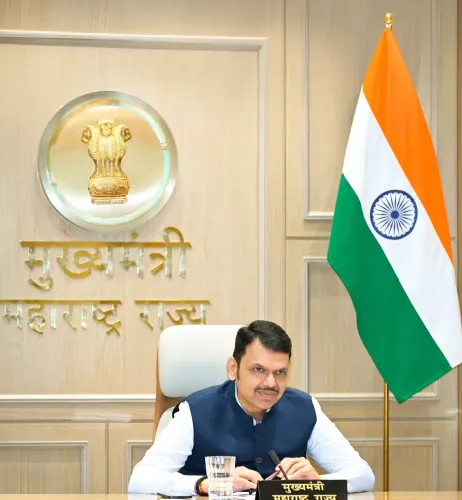
The state government, led by Chief Minister Devendra Fadnavis, had initially envisioned a high-tech, 16-floor headquarters for the Transport Commissionerate in Worli. However, the project ran into a firm obstacle: strict height restrictions enforced by the Ministry of Defence and the Indian Navy, owing to the plot's proximity to sensitive naval installations. Defence clearance could not be obtained for the original elevation, stalling the project for an extended period.
What the Revised Plan Entails
Under the modified layout, the Public Works Department (PWD) will execute the construction. The revised structure comprises a ground floor, two podium levels, and four storeys above — a significant reduction from the original proposal. The new building is intended to consolidate multiple offices of the Transport Commissionerate under a single roof, with the stated aim of streamlining administrative operations and improving public-facing services.
The GR also directs officials to maintain full transparency in the tendering process, strictly adhere to the sanctioned plan, comply with environmental and safety norms, and keep expenditures within the allocated budget.
A Long-Delayed Project Finally Moves Forward
The approval of the revised layout resolves a long-standing impasse and clears the way for actual construction on the Parivahan Bhavan to begin. The project had remained in limbo due to the unresolved defence clearance issue. With the revised elevation now compliant with Navy-mandated height restrictions, construction is expected to commence shortly.
MSRTC Reforms Running in Parallel
Separately, Transport Minister Pratap Sarnaik, who also chairs the Maharashtra State Road Transport Corporation (MSRTC), has been driving a parallel set of reforms at the cash-strapped state transport utility. Sarnaik has set an explicit two-year target to restore MSRTC to profitability by optimising routes, plugging revenue leaks, and modernising asset management.
He issued a one-month performance ultimatum to depot and division officers across 21 loss-making divisions — including Nashik, Kolhapur, Nagpur, and Thane — warning of demotions, transfers, or suspensions if revenue targets are not met. He also approved a 5% Dearness Allowance (DA) hike for MSRTC staff, bringing the DA to 58% of basic pay, linking pay parity with operational accountability. Infrastructure upgrades at rural depots and a gradual transition of older fleet units to cleaner energy alternatives are also underway.
With construction approvals now in place and the MSRTC reform agenda gaining momentum, Maharashtra's transport administration is entering a period of significant structural change.
Point of View
Bundling MSRTC reform updates into the same GR cycle risks diluting accountability — the two agendas deserve separate, measurable scrutiny.
NationPress
4 Aug 2026
Frequently Asked Questions
Why was the Parivahan Bhavan in Worli scaled down from 16 floors to 4?
The Indian Navy and the Ministry of Defence raised objections over height restrictions near naval installations in the Worli area, making the original 16-storey design non-compliant with defence regulations. The Maharashtra government revised the plan to a ground floor, two podiums, and four upper floors to secure the necessary clearance.
What is the Parivahan Bhavan project in Mumbai?
Parivahan Bhavan is a proposed headquarters for Maharashtra's Transport Commissionerate in Worli, Mumbai. It is designed to consolidate multiple transport department offices under one roof to streamline operations and improve public services.
Who will construct the revised Parivahan Bhavan?
The Public Works Department (PWD) of Maharashtra has been designated to execute the construction of the revised structure, as per the Government Resolution issued on 3 August.
What reforms has Transport Minister Pratap Sarnaik introduced at MSRTC?
Sarnaik has set a two-year target to return MSRTC to profitability, issued one-month performance ultimatums to officers in 21 loss-making divisions, approved a 5% DA hike bringing staff allowance to 58% of basic pay, and initiated infrastructure upgrades and fleet modernisation.
When will construction on Parivahan Bhavan begin?
The Government Resolution issued on 3 August 2025 clears the administrative and financial approvals for the revised design, resolving a long-standing impasse. Construction is expected to commence shortly, though a specific start date has not been officially announced.