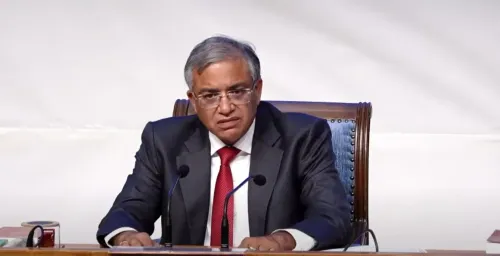
Mahua Moitra calls Election Commissioner a 'rogue agent', demands prosecution
Synopsis
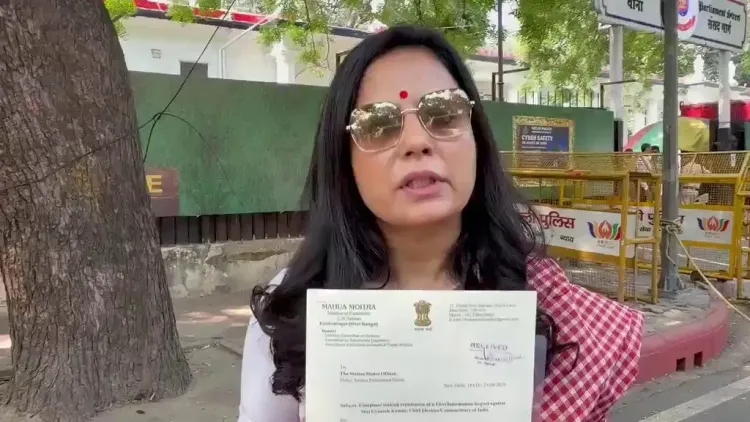
TMC MP Mahua Moitra on 24 September 2026 publicly accused Election Commissioner Gyanesh Kumar of acting unilaterally to disenfranchise genuine voters without the consent of the other two Election Commissioners, calling him a 'rogue agent' and demanding his prosecution.
Key Takeaways
TMC MP Mahua Moitra on 24 September 2026 demanded criminal prosecution of Election Commissioner Gyanesh Kumar .
Moitra alleged Kumar acted 'without consent of other 2 ECs,' targeting the collegial decision-making framework of the three-member Commission.
She argued that disenfranchising voters falls outside 'official duties,' meaning Kumar cannot claim institutional immunity from prosecution.
The Election Commission (Conditions of Service of Election Commissioners and Transaction of Business) Act, 1991 requires consensus-based functioning among all three Commissioners.
No formal dissent note from the other two Commissioners or Supreme Court petition has been publicly confirmed as of the time of posting.
The charge marks a rare, direct and named demand for prosecution of a sitting Election Commissioner in Indian political discourse.
A sharp political broadside landed against the Election Commission of India on Thursday, 24 September 2026, when TMC MP Mahua Moitra publicly accused Election Commissioner Gyanesh Kumar of acting unilaterally — without the consent of the other two Election Commissioners — to disenfranchise genuine voters, and demanded he be prosecuted.
Moitra was unsparing in her language. 'Gyanesh Chor Kumar is a rogue agent who acted without consent of other 2 ECs,' she posted on X, adding that 'disenfranchising genuine voters is not official duties' and that Kumar 'cannot enjoy immunity.' The demand was blunt: 'He needs to be prosecuted. Simple.'
Why the 'consent of other 2 ECs' framing matters
The Election Commission of India is a three-member constitutional body — one Chief Election Commissioner and two Election Commissioners. Under the Election Commission (Conditions of Service of Election Commissioners and Transaction of Business) Act, 1991, the Commission is designed to operate on collegial, consensus-based decision-making. Moitra's specific charge — that Kumar acted without consent of the other two members — is not a rhetorical flourish; it targets the Commission's core constitutional architecture.
If genuine, a unilateral action on voter rolls by a single Commissioner would represent a significant procedural breach of how the body is meant to function. Decisions on electoral roll revisions, voter deletions, or summary revision drives are supposed to carry the collective sanction of the full bench.
Immunity, prosecution, and the constitutional question
Moitra's insistence that Kumar 'cannot enjoy immunity' raises a pointed constitutional question. Election Commissioners, while constitutionally protected in their tenure, do not hold blanket immunity from criminal proceedings for actions taken outside the scope of their official duties — a distinction the MP appears to be deliberately invoking. Her framing separates 'official duties' from what she characterises as an act of disenfranchisement, thereby arguing the immunity shield does not apply.
Opposition criticism of the Election Commission over alleged procedural lapses in voter list management is not new. Such charges have intensified during intensive summary revision periods in politically contested states. What is sharper here is the direct, named demand for criminal prosecution of a sitting Election Commissioner — a rare escalation in India's already combative electoral politics.
What comes next: courts, dissent notes, and political pressure
The critical question now is whether Moitra's accusation translates into formal legal or institutional action. The most consequential next steps would be a formal dissent note from either of the other two Election Commissioners on the record, or a petition filed before the Supreme Court of India or the Election Commission itself. Without one of those, the charge remains a political allegation, however forcefully stated.
For India's voters — the ultimate stakeholders in any dispute over electoral rolls — the underlying issue is elementary: whether their names are being removed from lists without due process. That question, not the political noise around it, is what courts and the Commission will eventually have to answer.
Point of View
She is laying a legal-sounding foundation for what may become a formal petition. The broader pattern here is the growing willingness of opposition politicians to challenge the Election Commission's operational independence not just in press conferences but in the language of prosecution and constitutional breach. Whether this translates into actionable legal proceedings, or remains a pressure tactic ahead of state elections, will determine its real weight.
NationPress
24 Sept 2026
Frequently Asked Questions
Who is Gyanesh Kumar and why is Mahua Moitra demanding his prosecution?
Gyanesh Kumar is an Election Commissioner of India. Mahua Moitra alleges he acted unilaterally — without the consent of the other two Election Commissioners — to disenfranchise genuine voters, which she argues falls outside official duties and strips him of institutional immunity.
Can an Election Commissioner of India be prosecuted?
Election Commissioners enjoy constitutional protection of tenure but do not hold blanket immunity from criminal prosecution for acts outside their official duties. Mahua Moitra's argument rests precisely on this distinction — that disenfranchising voters unilaterally is not an official duty.
What is the collegial functioning rule of the Election Commission of India?
Under the Election Commission (Conditions of Service of Election Commissioners and Transaction of Business) Act, 1991, the three-member Commission — one Chief Election Commissioner and two Election Commissioners — is required to take decisions collectively, by consensus.
What would count as formal follow-up to Moitra's allegation?
The most consequential next steps would be a formal dissent note on the record from one of the other two Election Commissioners, or a petition filed before the Supreme Court of India or the Election Commission itself challenging the specific voter-roll action.
Has the Election Commission been accused of disenfranchising voters before?
Opposition parties have periodically raised concerns about procedural lapses in voter list revisions and deletions, particularly during intensive summary revision drives in politically contested states. Moitra's demand for prosecution of a named Commissioner represents a sharper escalation than typical criticism.