Mahua Moitra Questions Citizenship Proof Despite Holding MP Passport
Synopsis
TMC MP Mahua Moitra on 25 June 2026 said she holds a Union Government-issued passport yet cannot prove she is an Indian citizen, calling the situation a mockery of constitutional democracy. The post reignites debate over India's citizenship documentation burden under the Citizenship Act, NRC, and CAA framework.
Key Takeaways
Mahua Moitra , Lok Sabha MP from Krishnanagar , posted on 25 June 2026 that holding a Union Government passport does not guarantee she can prove Indian citizenship.
Under the Citizenship Act, 1955 (amended 2003 ), the burden of proving citizenship rests on the individual when challenged, regardless of government-issued documents held.
The Assam NRC final list ( July 2019 ) excluded approximately 1.9 million long-term residents who lacked acceptable legacy documents, including some who held voter cards.
The Citizenship Amendment Act, 2019 created differential pathways to citizenship based on religion, but left documentary requirements for existing citizens unchanged.
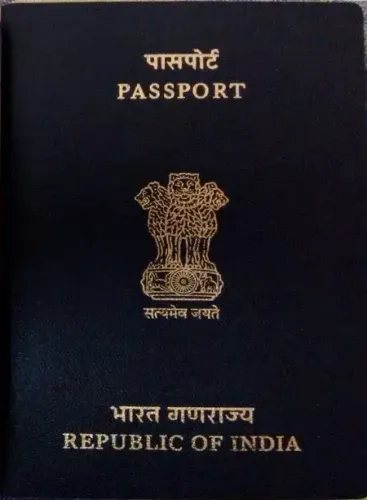
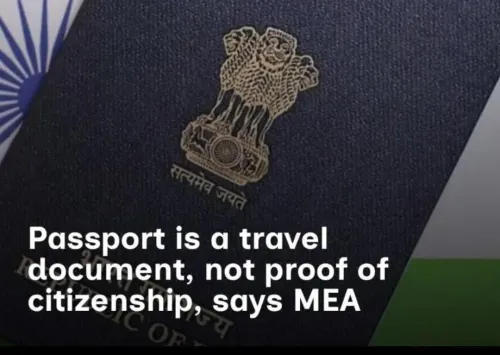
Passports are issued by the Ministry of Home Affairs under a separate legal framework from citizenship law, meaning passport possession is not conclusive proof of citizenship in a legal challenge.
Pending Supreme Court challenges to Assam NRC and CAA implementation leave the constitutional questions Moitra raises unresolved.
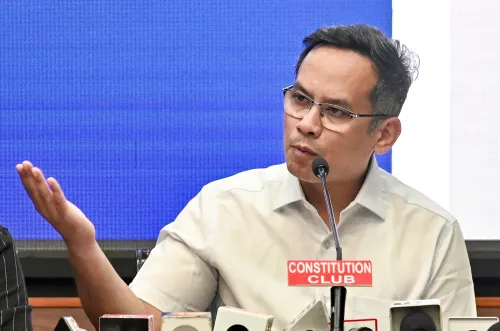
TMC MP Mahua Moitra on Thursday, 25 June 2026, posted a sharp rebuke of India's citizenship documentation framework, stating that despite holding a passport issued by the Union Government, she cannot be certain she is an Indian citizen and has no means to prove it. The remark cuts to the heart of a long-running constitutional debate over what constitutes valid proof of citizenship under Indian law.
Context
Moitra's post reads: 'I am a Member of Parliament with a passport issued by the Union Government but I'm not sure I am an Indian citizen and have no way to prove it. What a mockery of constitutional democracy.' The statement is pointed precisely because a passport is widely regarded as among the strongest government-issued identity documents a citizen can hold — yet it has never been deemed conclusive proof of citizenship under Indian law.
The Citizenship Act, 1955, as amended in 2003, places the burden of proving citizenship squarely on the individual when that citizenship is challenged. This principle means that even holders of passports and voter identity cards can, in certain administrative or legal proceedings, be asked to produce legacy documents tracing their lineage — a requirement that has ensnared millions of ordinary residents.
Policy Backdrop
The debate intensified after the Assam National Register of Citizens (NRC) final list was published in July 2019 under Supreme Court supervision, leaving approximately 1.9 million long-term residents off the register for want of acceptable documentary proof. Many of those excluded held voter cards and other government-issued documents, yet were still unable to satisfy the legacy-document requirements.
Weeks later, Parliament passed the Citizenship Amendment Act (CAA) in December 2019, fast-tracking citizenship for non-Muslim migrants from Afghanistan, Bangladesh, and Pakistan. Critics, including opposition MPs from West Bengal, argued the combination of a nationwide NRC and the CAA would create a two-tier citizenship system in which the burden of documentary proof falls disproportionately on certain communities. Nationwide protests followed.
The Ministry of Home Affairs issues Indian passports and enforces citizenship law, but the two functions operate under separate legal frameworks. Passport issuance does not automatically confer or confirm citizenship status in a legal challenge — a gap that Moitra's post directly highlights.
Stakeholders and Impact
The concern Moitra articulates is not merely rhetorical. Multiple petitions before High Courts and the Supreme Court have documented cases of long-standing residents — including former government employees — who struggle to produce the precise legacy papers demanded by citizenship verification exercises. If an elected Member of Parliament, whose credentials are vetted at multiple stages, can credibly raise this question, the implications for ordinary, document-poor citizens are far more acute.
Opposition parties from states with large populations of residents lacking ancestral land records — particularly West Bengal, Assam, and parts of Jharkhand — have consistently flagged the due-process vacuum at the centre of the current framework. Moitra's post amplifies that concern at the national level and ahead of any potential parliamentary debate on citizenship rules.
What's Next
Pending Supreme Court challenges to the implementation of both the Assam NRC and the CAA remain unresolved, and any fresh Home Ministry rules clarifying what documents conclusively establish citizenship will be closely watched. Moitra's intervention signals that the opposition intends to keep the citizenship-documentation question alive in parliamentary and public discourse. Unless the government legislates a clear, inclusive standard for citizenship proof — one that accounts for the documentary limitations of millions of Indians — the constitutional tension she identifies will persist.
Point of View
The framework is demonstrably inadequate for ordinary residents. The remark connects directly to the post-2019 policy arc in which the NRC and CAA together shifted the evidentiary burden onto individuals without providing a clear, universally accessible documentary standard. By framing the issue as a 'mockery of constitutional democracy,' she is signalling that the opposition will press this as a governance and rights question, not merely a procedural one. The timing, ahead of any potential parliamentary session, suggests an attempt to force the government to articulate a coherent position on what documents actually settle citizenship status.
NationPress
25 Jun 2026
Frequently Asked Questions
Why does Mahua Moitra say she cannot prove she is an Indian citizen?
Moitra's point is that under the Citizenship Act, 1955 , a passport is not legally conclusive proof of citizenship when citizenship is challenged in an administrative or court proceeding. Legacy documents proving ancestry are typically required, and millions of Indians — including some passport holders — lack them.
Is an Indian passport proof of citizenship?
An Indian passport is strong evidence of citizenship but is not conclusive proof under current law. In citizenship verification proceedings such as the Assam NRC , applicants were required to produce legacy documents regardless of whether they held a passport or voter ID.
What is the NRC and how does it relate to this issue?
The National Register of Citizens (NRC) is a register of verified Indian citizens. The Assam NRC final list, published in July 2019 , excluded approximately 1.9 million people who could not produce acceptable documentary proof of ancestry, highlighting the gap between holding government documents and legally proving citizenship.
What is the Citizenship Amendment Act and why is it controversial?
The Citizenship Amendment Act (CAA) , passed in December 2019 , fast-tracks citizenship for non-Muslim migrants from Afghanistan , Bangladesh , and Pakistan . Critics argue it introduces religion-based discrimination and, when combined with a potential nationwide NRC, could place an unequal documentary burden on Muslim residents.
What documents are accepted as proof of citizenship in India?
The Citizenship Act, 1955 and NRC rules require legacy documents such as land records, birth certificates, and school certificates dated before a cut-off year to establish lineage. Passports, voter cards, and Aadhaar are treated as supporting evidence but not as standalone conclusive proof of citizenship in a formal challenge.