Punjab CMO: Mann says canal water reached fields after 50 years

Synopsis
Punjab CMO said CM Bhagwant Mann told a Nawan Nangal Shiva congregation that canal water has reached fields where farmers waited 50 years, citing government irrigation and welfare works.
Key Takeaways
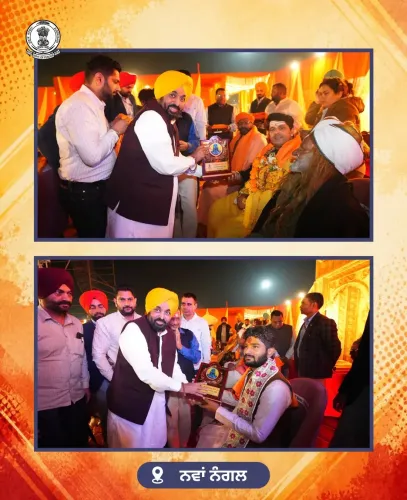
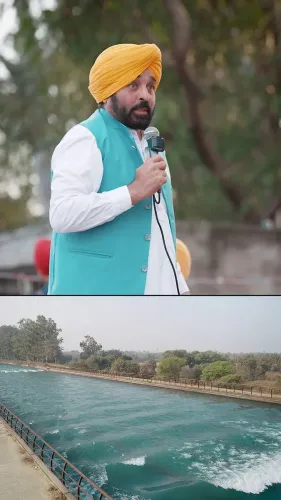
The Chief Minister's Office of Punjab said on November 27, 2026 that CM Bhagwant Singh Mann addressed a Shiva gathering at Nawan Nangal.
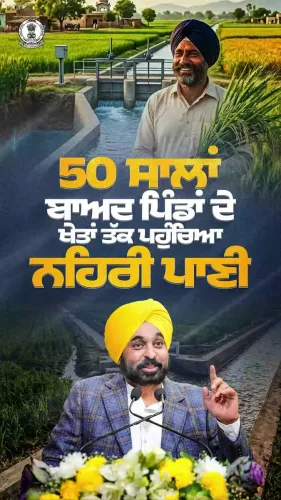
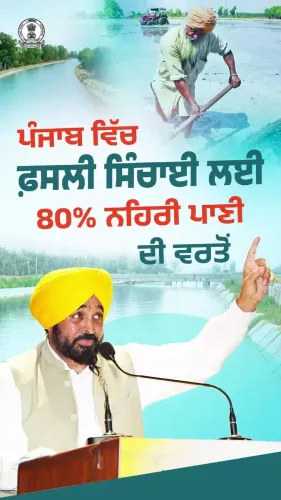
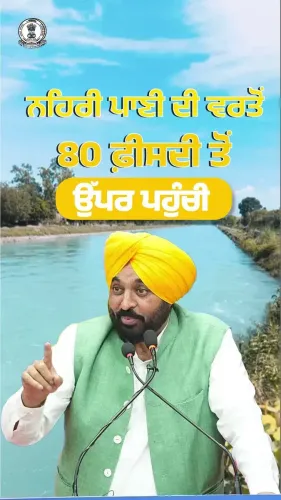
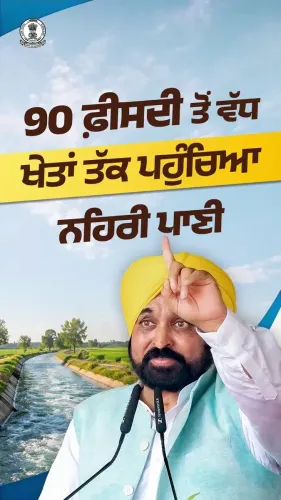
Mann said canal water has been taken to fields in several areas where farmers had waited 50 years.
The programme was titled Ek Sham Bhagwan Shiv De Naam (An Evening in the Name of Lord Shiva).
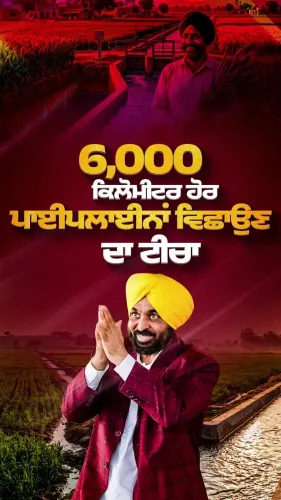
He also referred to Punjab government welfare and development works.
Punjab's canal network is historically anchored by the Bhakra Nangal Dam, completed in 1963.
The CMO post did not name the specific pockets newly receiving canal water.
The Chief Minister's Office of Punjab said on Friday, November 27, 2026 that Chief Minister Bhagwant Singh Mann told a Lord Shiva congregation at Nawan Nangal a number built to land: canal water has reached fields where farmers waited 50 years. Half a century of dry watercourses, he said, had finally been broken by government effort.
Addressing the sangat at the religious programme ਇੱਕ ਸ਼ਾਮ ਭਗਵਾਨ ਸ਼ਿਵ ਦੇ ਨਾਮ (Ek Sham Bhagwan Shiv De Naam, An Evening in the Name of Lord Shiva), Mann also spoke of work the Punjab government is doing for public welfare and development, the official post said. He stated that, because of those efforts, canal water has been taken to the fields of several areas where farmers had been waiting for canal water for the past 50 years.
Canal water after a 50-year wait
The figure is meant to sting. Punjab's canal system is not a new promise; it is an old machine with missing last links. Mann's line presents those links as closed — water, at last, in fields that sat off the irrigation map for five decades.
The CMO post did not name the newly served pockets. It said only that several such areas have been connected through the current government's efforts. Farmers will test that claim in the watercourse, not in a speech.
A Shiva evening at Nawan Nangal
Nawan Nangal sits in the Bhakra-Nangal belt, a landscape already defined by dams, channels and farm turns. Staging a development pitch there, at a packed Shiva gathering, puts irrigation in front of the sangat on a night billed as devotion.
Mann has been Chief Minister since March 2022 from the Aam Aadmi Party, with a repeated emphasis on rural works. Canal water is the most concrete of those works for households that still live by the irrigation roster.
The Bhakra spine and leftover dry pockets
The Bhakra Nangal Dam, completed in 1963, formed the core of Punjab's canal network. Planning gaps and resource limits still left some tracts waiting long after the main channels were built. Extending water to those fields is how a government tries to turn a 1960s mega-project into last-mile delivery.
Further completion notices in other districts, and any fresh allocations in the next state budget, will show whether this is a mapped programme or a single-evening line. Fifty years is a long wait for a canal. The next sowing season is a short one for proving the water is really there.
Point of View
Not new mega-dams, is the unfinished job. Staging that claim at a Shiva congregation is a familiar Punjab move: faith crowds become a public square for government scorecards. Farmers will score the government on water in the channel, not words on a stage.
NationPress
27 Nov 2026
Frequently Asked Questions
What did CM Bhagwant Mann say about canal water in Punjab?
He said the Punjab government has taken canal water to fields in several areas where farmers had been waiting for 50 years. He made the remark while addressing a congregation at Nawan Nangal and also spoke of welfare and development works.
Where did Bhagwant Mann address the Shiva gathering?
He addressed the gathering at Nawan Nangal in Punjab. The religious programme was titled Ek Sham Bhagwan Shiv De Naam.
What is Ek Sham Bhagwan Shiv De Naam?
It is a religious gathering focused on Lord Shiva. The Punjab CMO said Chief Minister Bhagwant Singh Mann addressed the sangat at the event in Nawan Nangal and spoke about government development works.
How old is Punjab's main canal irrigation system?
The Bhakra Nangal Dam, completed in 1963, formed the core of Punjab's canal irrigation network. Some areas still remained underserved for decades because of planning gaps and resource constraints.
Who issued the update on the Nawan Nangal event?
The Chief Minister's Office of Punjab issued the update on its official account. It summarised CM Bhagwant Singh Mann's remarks on welfare, development and the 50-year canal-water wait.