Kapil Mishra alleges conspiracy behind Diwali stubble burning spike in Punjab
Synopsis
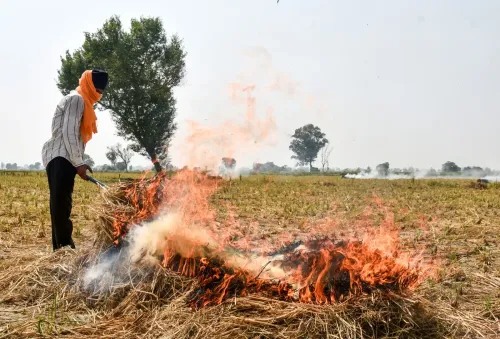
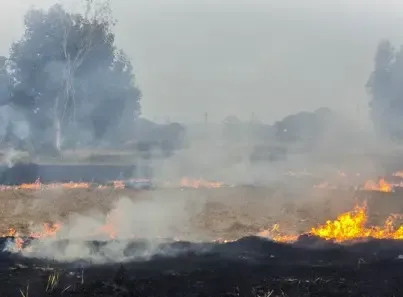
Stubble-burning incidents in Punjab reportedly jumped from around 100-125 per day to nearly 1,200 on Diwali night — a ten-fold surge that Delhi Minister Kapil Mishra is calling a deliberate conspiracy targeting Diwali, farmers, and Delhi itself. With AQI crossing 1,600 in Sangrur, the charges have intensified the BJP-AAP political battle over North India's most toxic annual crisis.
Key Takeaways
Delhi Minister Kapil Mishra alleged on 9 November that stubble-burning in Punjab was deliberately triggered on Diwali night (8 November) .
Satellite data cited by Mishra showed stubble-burning incidents rising from 100–125 per day to nearly 1,200 on 8 November .
AQI readings on the morning of 9 November reportedly stood at 1,238 in Malout, 1,307 in Abohar, and 1,651 in Sangrur.
Mishra demanded Punjab CM Bhagwant Singh Mann register FIRs in all affected areas and conduct a detailed probe.
Mishra directed criticism at AAP and Arvind Kejriwal , alleging a campaign against Diwali and 'Sanatan traditions' preceded the fire surge.
Mishra acknowledged farmers' own efforts to avoid stubble burning, blaming the spike on alleged miscreants.
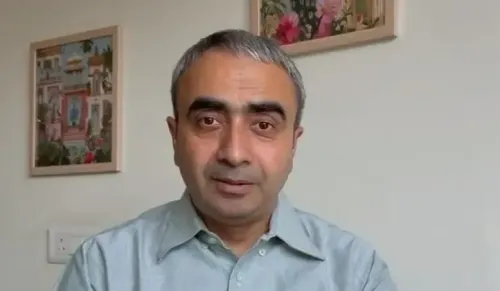
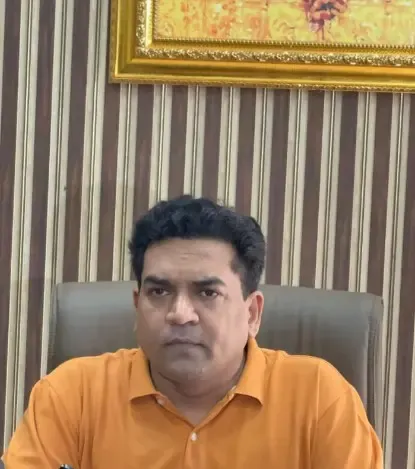
Delhi Minister Kapil Mishra on Monday, 9 November alleged a deliberate conspiracy behind a dramatic surge in stubble-burning incidents in Punjab on Diwali night (8 November), claiming fields were set ablaze without farmers' consent to tarnish the festival, farmers, and the national capital. Speaking at a press conference at his official residence in New Delhi, Mishra cited satellite data to buttress his claim.
Key Allegations and Satellite Data
According to Mishra, satellite data showed approximately 100 to 125 stubble-burning incidents in Punjab on 5, 6 and 7 November — figures broadly consistent with seasonal patterns. However, the number reportedly surged to nearly 1,200 on the evening of 8 November, coinciding with Diwali.
'This is a conspiracy against farmers, a conspiracy against Diwali, a conspiracy against Delhi and a conspiracy against Punjab,' Mishra said at the press conference. He expressed apprehension that fields were 'deliberately set on fire by miscreants' to malign the festival and the farmers.
Attack on AAP and Demand for FIRs
Mishra directed sharp criticism at Aam Aadmi Party (AAP) and its national convener Arvind Kejriwal, alleging that AAP leaders had been building a narrative against Diwali, firecrackers, and what he termed 'Sanatan traditions' even before the festival. 'Stop insulting Sanatan and disrespecting Hindu festivals. Do not commit this sin against Diwali and Sanatan,' Mishra said.
He appealed to Punjab Chief Minister Bhagwant Singh Mann to immediately register FIRs in all areas where fields were allegedly set on fire on Diwali night and to initiate a detailed investigation into the incident.
Alarming AQI Readings Cited
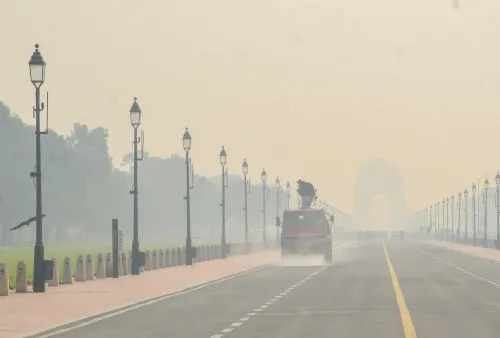
Pointing to air quality data for the morning of 9 November, Mishra referenced reports indicating an AQI of 1,238 in Malout, 1,307 in Abohar, and 1,651 in Sangrur — all in Punjab. He noted that farmers and ordinary citizens in the state were themselves struggling to breathe, and questioned who bore responsibility for the hazardous air quality levels across cities including Bathinda.
Farmer Efforts Acknowledged
Notably, Mishra was careful to distinguish farmers from the alleged perpetrators, appreciating what he called their 'every possible effort to avoid stubble burning.' He conceded that 'some instances of fire due to unavoidable circumstances' could not be ruled out, but maintained that the scale and timing of the Diwali night surge warranted serious scrutiny. This comes amid an annual cycle of North India's post-harvest stubble-burning season that typically peaks in October and November, triggering toxic smog across Delhi and neighbouring states.
Political Context
The allegations place AAP, which governs both Punjab and Delhi, squarely in the crosshairs of the Bharatiya Janata Party (BJP) ahead of the upcoming Delhi Assembly elections. The stubble-burning and pollution debate has been a recurring flashpoint between the two parties, with each side accusing the other of weaponising the issue. How Punjab authorities respond to Mishra's demand for FIRs will be closely watched in the coming days.
Point of View
But the underlying data point — a near ten-fold single-day spike on Diwali — is striking enough to demand a factual explanation, regardless of motive. Punjab's AAP government now faces two simultaneous pressures: investigating a verifiable anomaly in its own territory, and defending itself against a BJP framing that links every puff of Delhi smog to AAP governance. The irony is that stubble burning has persisted through every political dispensation in Punjab; the question of accountability has never been cleanly resolved. Without an independent forensic audit of the satellite data and ground reports, both the conspiracy narrative and the counter-denial risk overtaking the actual public health emergency — where AQI readings above 1,600 are not a political metaphor but a breathing crisis.
NationPress
9 Nov 2026
Frequently Asked Questions
What did Delhi Minister Kapil Mishra allege about stubble burning on Diwali?
Mishra alleged that stubble-burning incidents in Punjab were deliberately set off on Diwali night (8 November) as a conspiracy against the festival, farmers, and Delhi. He cited satellite data showing fires jumping from roughly 100–125 per day to nearly 1,200 on that single evening.
What does the satellite data cited by Mishra show?
According to Mishra, satellite data recorded approximately 100 to 125 stubble-burning incidents in Punjab on 5, 6 and 7 November, before the number surged to nearly 1,200 on the evening of 8 November — Diwali. The data has not been independently verified in the source.
What action has Mishra demanded from Punjab's government?
Mishra appealed to Punjab Chief Minister Bhagwant Singh Mann to immediately register FIRs in all areas where fields were allegedly set on fire on Diwali night and to conduct a detailed investigation into the spike.
How serious was the air quality in Punjab on 9 November?
Reports cited by Mishra indicated AQI readings of 1,238 in Malout, 1,307 in Abohar, and 1,651 in Sangrur on the morning of 9 November — all in the severe-plus or hazardous category. Mishra questioned who would be held accountable for these levels.
Why is this controversy politically significant?
The charges place AAP — which governs both Punjab and Delhi — under pressure from the BJP ahead of Delhi Assembly elections. Stubble burning and North India's annual pollution crisis have been a recurring point of confrontation between the two parties, with each blaming the other for inaction.