Vikram Misri in Beijing: India-China discuss academic and bilateral ties
Synopsis
Foreign Secretary Vikram Misri's Beijing visit went well beyond a courtesy tour — spanning the CPC's Central Party School, the foreign ministry, the CPPCC, and the party's international department. The multi-track outreach signals India is rebuilding institutional depth with China, not just managing border optics, with academic and think-tank linkages now explicitly on the table for the first time in years.
Key Takeaways
Foreign Secretary Vikram Misri met Li Wentang , Vice President of the CPC Central Party School , on 28 July to discuss academic cooperation and exchanges.
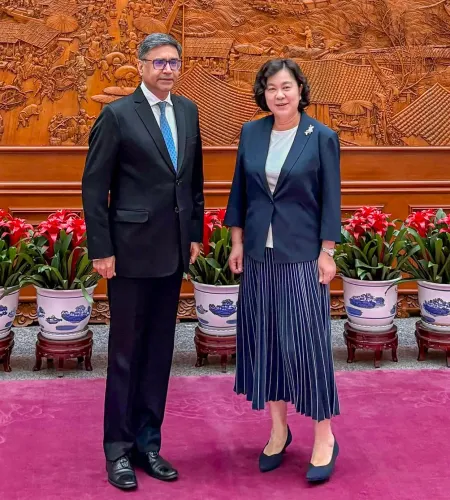
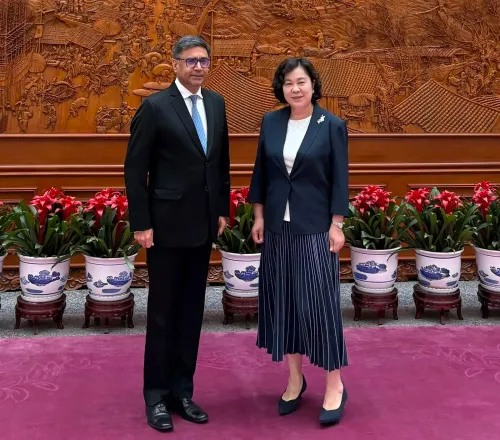
On Monday , Misri and Vice Minister Hua Chunying reviewed the full range of bilateral ties, including trade, culture, and people-to-people links.
Both sides reaffirmed the importance of peace and tranquillity in India-China border areas.
Misri also met Hong Liang of the CPPCC to discuss political and people-to-people exchanges.
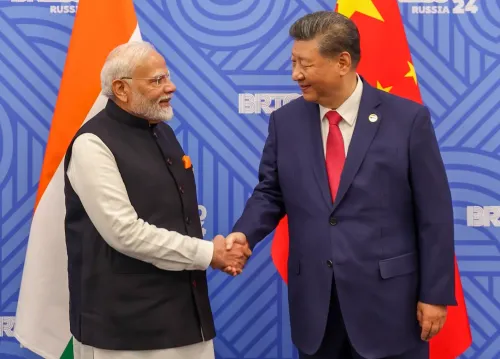
The visit opened with a meeting with Sun Haiyan of the CPC Central Committee's International Department , focused on implementing the guidance of PM Modi and President Xi Jinping .
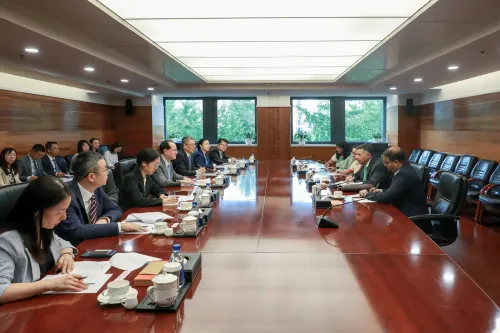
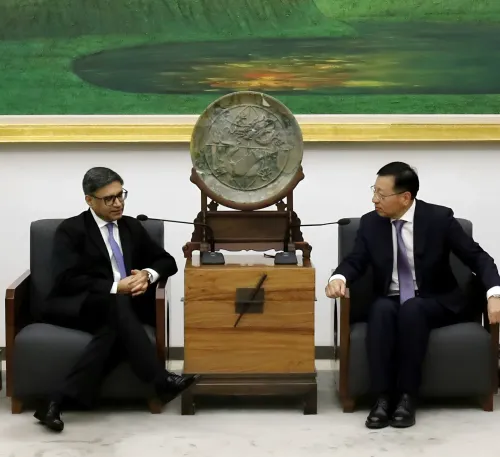
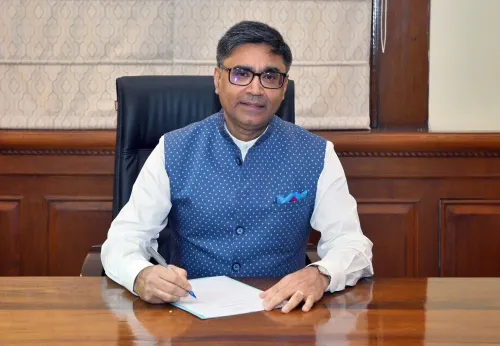
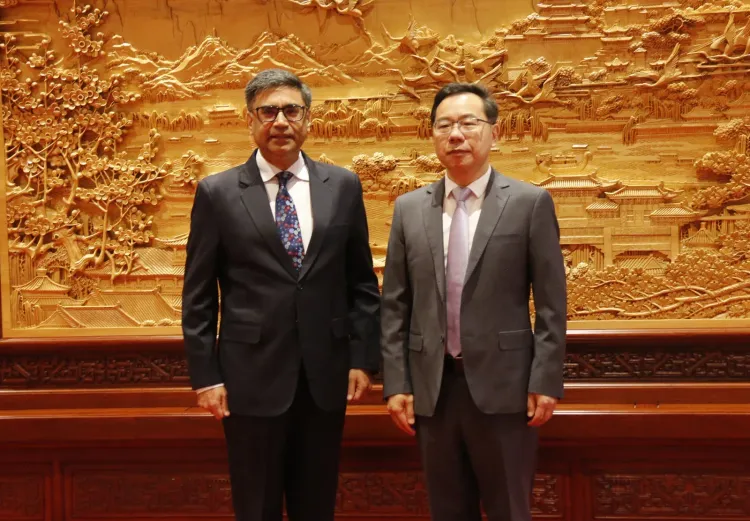
Foreign Secretary Vikram Misri on Tuesday, 28 July met Li Wentang, Vice President of the Communist Party of China (CPC) Central Party School (also known as the National Academy of Governance) in Beijing, exploring avenues for academic cooperation and institutional exchanges between the two countries. The meeting is part of Misri's multi-day official visit to China, which has included a series of high-level engagements aimed at resetting the bilateral relationship.
Academic Cooperation on the Table
During the meeting with Li Wentang, Misri was briefed on the historical significance of the Central Party School, its intellectual contributions, and its academic programmes. According to the Indian Embassy in China, the two sides 'discussed opportunities for future cooperation and exchanges.' The Central Party School is China's premier institution for training senior Communist Party officials and shaping policy thinking — making any prospective academic linkage with India diplomatically significant.
Bilateral Ties Reviewed with Vice Minister Hua Chunying
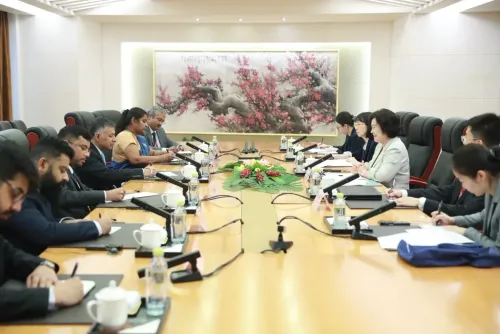
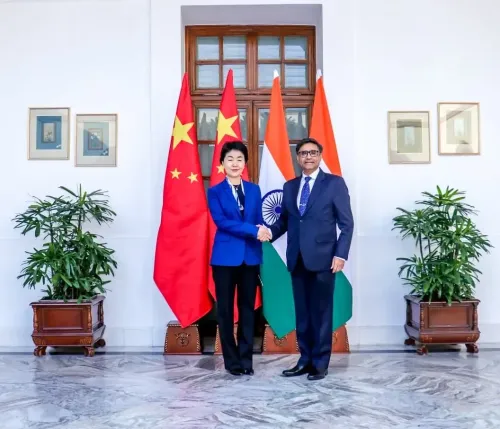
On Monday, Misri held a separate meeting with Hua Chunying, Vice Minister of Foreign Affairs of China, during which the two sides conducted a comprehensive review of bilateral relations. The Indian Embassy stated that they 'discussed means of advancing the vision of the two leaders that India and China are partners and development opportunities for each other, including through mutually beneficial outcomes across trade and economic ties, culture, and people-to-people exchanges.' Critically, both sides 'acknowledged the importance of maintaining peace and tranquillity in the India-China border areas' — a signal that the post-Galwan normalisation process remains a live priority.
Political and People-to-People Exchanges Discussed
Misri also met Hong Liang, Deputy Secretary General of the 14th National Committee of the Chinese People's Political Consultative Conference (CPPCC), to discuss ways to strengthen bilateral exchanges at both the political and people-to-people levels. The CPPCC is China's top political advisory body, and engagement at this level underscores the breadth of Misri's outreach during the visit.
Visit Opened with CPC International Department Meeting
Misri commenced his official engagements in China with a meeting with Sun Haiyan, Vice Minister of the International Department of the CPC Central Committee. According to the Indian Embassy, they 'discussed ways to deepen implementation of the guidance of the leaders for bilateral relations, including addressing issues of priority to both sides and by promoting political, people-to-people, academic and think-tank exchanges.' The reference to 'guidance of the leaders' points to the framework set by Prime Minister Narendra Modi and Chinese President Xi Jinping for steering the relationship forward.
What This Visit Signals
Misri's Beijing trip — spanning foreign ministry officials, party school leadership, and advisory body representatives — reflects a deliberate, multi-track diplomatic effort to rebuild engagement across institutional layers. This comes amid a broader thaw in India-China relations following the disengagement of troops at friction points along the Line of Actual Control (LAC) in late 2024. The emphasis on academic, think-tank, and people-to-people exchanges suggests both sides are looking to rebuild the soft-power scaffolding of the relationship, not just manage security concerns. The next phase will test whether these conversations translate into concrete institutional agreements.
Point of View
Foreign ministry, advisory body, CPC international department — is not accidental. It reflects a deliberate Indian strategy to rebuild institutional channels that atrophied after Galwan, not merely to manage the border but to re-establish the full architecture of engagement. The explicit mention of academic and think-tank exchanges is notable: these are the channels through which strategic narratives are shaped over the long term. The real question is whether this diplomatic momentum survives the next friction point on the LAC, or whether — as has happened before — a single incident resets years of careful rebuilding.
NationPress
26 Oct 2026
Frequently Asked Questions
What did Foreign Secretary Vikram Misri discuss in Beijing?
Vikram Misri held multiple meetings in Beijing on 28 July 2025, covering academic cooperation with the CPC Central Party School, a full review of bilateral ties with Vice Minister Hua Chunying, political and people-to-people exchanges with the CPPCC, and implementation of PM Modi and President Xi Jinping's guidance for the relationship.
What is the CPC Central Party School and why does it matter for India?
The CPC Central Party School, also known as the National Academy of Governance, is China's premier institution for training senior Communist Party officials and shaping policy thinking. Any academic or institutional linkage between it and Indian counterparts would carry significant diplomatic weight, signalling a deepening of intellectual and policy-level engagement.
What was agreed on the India-China border during Misri's visit?
Both sides acknowledged the importance of maintaining peace and tranquillity in India-China border areas, according to the Indian Embassy. No new formal agreement was announced, but the reaffirmation signals continuity of the normalisation process following troop disengagement in late 2024.
Who did Vikram Misri meet during his China visit?
Misri met Li Wentang (CPC Central Party School), Hua Chunying (Vice Minister of Foreign Affairs), Hong Liang (CPPCC Deputy Secretary General), and Sun Haiyan (CPC Central Committee International Department) during his official visit to Beijing.
What is the broader significance of Misri's Beijing visit?
The visit reflects a multi-track Indian diplomatic effort to rebuild institutional engagement with China across political, academic, and people-to-people channels. It comes amid a broader thaw in relations following the 2024 LAC disengagement and signals both sides are looking to restore the full architecture of bilateral ties.