India-China trade talks: Doraiswami, Yan Dong meet to boost market access
Synopsis
A multi-track diplomatic push is quietly reshaping India-China ties. From Foreign Secretary Vikram Misri's Beijing visit to Ambassador Doraiswami's trade talks with Vice Minister Yan Dong, New Delhi is methodically pressing for concrete gains — chief among them, market access for Indian pharmaceuticals — while both sides reaffirm the border peace imperative.
Key Takeaways
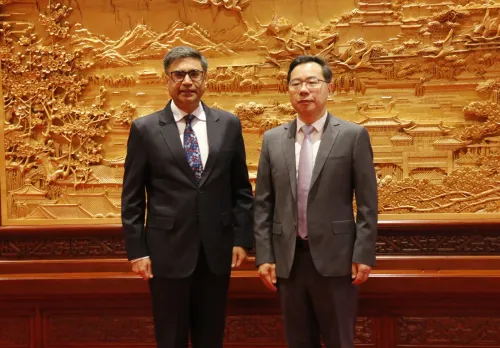
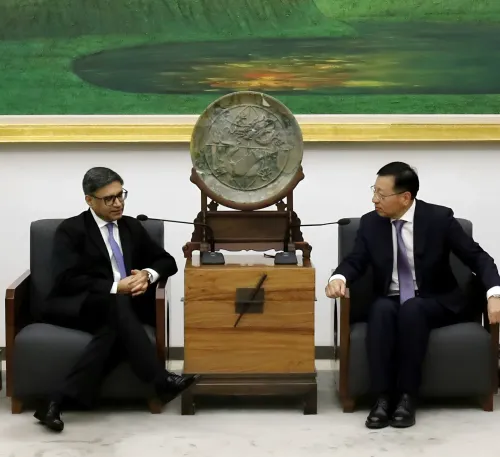
Ambassador Vikram Doraiswami met Chinese Vice Minister Yan Dong in Beijing on 30 July to strengthen bilateral trade and economic ties.
Both sides agreed to enhance cooperation on sustainable trade and market access for Indian products, including pharmaceuticals .
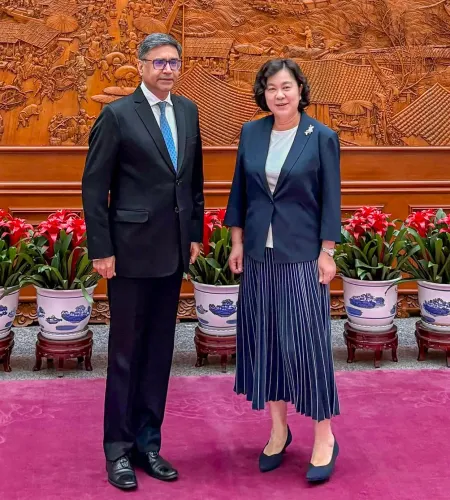
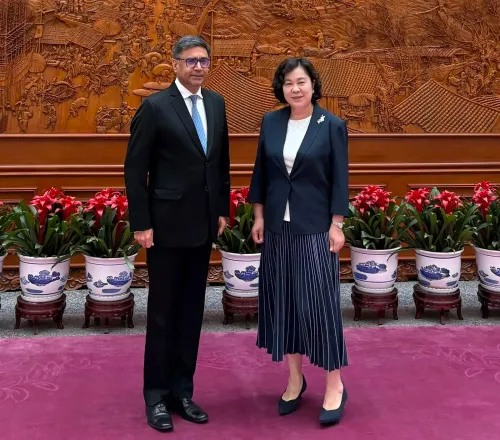
Foreign Secretary Vikram Misri visited China earlier this week and held talks with Vice Minister of Foreign Affairs Hua Chunying , covering the full range of bilateral relations.
Consul General Pratik Mathur visited Shaoxing, Zhejiang and met CPC Party Secretary Shi Huifang , discussing her recent India visit to Delhi and Bengaluru .
India's athletics team was acknowledged for winning multiple medals, including a historic gold in the 4x100 metre women's relay , at the second Asian Relay Championships held in China.
Both countries reaffirmed the importance of maintaining peace and tranquillity along the India-China border areas.
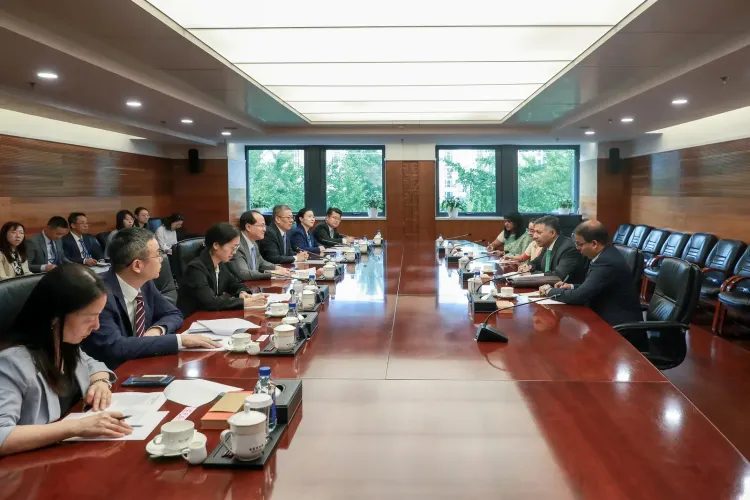
India's Ambassador to China, Vikram Doraiswami, met Yan Dong, Member of the CPC Leadership Group of the Ministry of Commerce and Vice Minister, in Beijing on Thursday, 30 July, with both sides agreeing to deepen cooperation and communication on bilateral trade and economic ties. The discussions included a specific push for sustainable trade and improved market access for Indian products, particularly pharmaceuticals.
Key Developments
The Embassy of India in Beijing confirmed the meeting in a post on X, stating that the two sides 'agreed to enhance cooperation and communication' towards strengthening bilateral trade and economic ties. The meeting signals a continued diplomatic effort to convert high-level political intent into concrete commercial outcomes, particularly as India seeks greater access for its goods in the Chinese market.
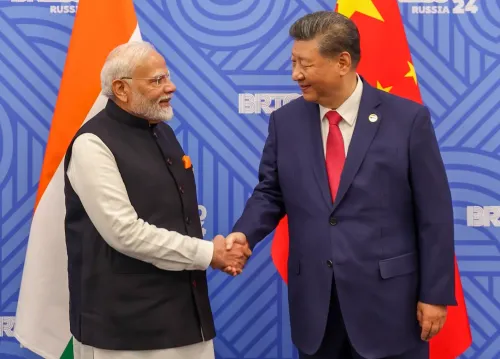
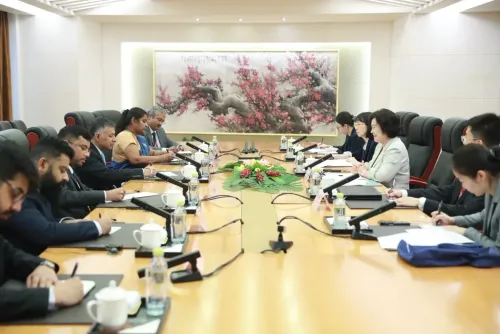
This comes amid a broader diplomatic momentum: earlier this week, Foreign Secretary Vikram Misri paid an official visit to China, holding discussions with Hua Chunying, Vice Minister of Foreign Affairs of China. The two reviewed the full scope of bilateral relations and discussed advancing the shared vision of India and China as 'partners and development opportunities for each other' — spanning trade, culture, and people-to-people exchanges. Both sides also acknowledged the importance of maintaining peace and tranquillity along the India-China border areas.
Shanghai Engagement
On Wednesday, Pratik Mathur, Consul General of India in Shanghai, made an official visit to Shaoxing, a prefecture-level city in Zhejiang province, where he was welcomed by CPC Party Secretary Shi Huifang. Their discussions centred on Party Secretary Shi's recent visit to India, during which he travelled to Delhi and Bengaluru.
The Consulate General of India in Shanghai reported that Mathur also thanked Shaoxing's leadership for the support extended to the Indian athletics team during the second Asian Relay Championships held last month, when Indian athletes won multiple medals — including a historic gold in the 4x100 metre women's relay event.
Cultural Diplomacy
On the sidelines of the Shaoxing visit, Consul General Mathur interacted with the local Indian diaspora and, at the invitation of the Lu Xun Foundation, visited the home of China's poet laureate — an occasion used to pay tribute to his celebrated friendship with Gurudev Rabindranath Tagore. The gesture underscores the people-to-people dimension that both governments have flagged as central to the relationship's reset.
What This Signals
The flurry of diplomatic engagements — from the Foreign Secretary's visit to ambassador-level trade talks and consular outreach in Zhejiang — reflects a deliberate, multi-track approach by New Delhi to rebuild and institutionalise ties with Beijing following years of friction. The emphasis on pharmaceuticals market access is particularly notable: India's drug exports to China remain well below their potential, and securing regulatory clearances has been a long-standing ask from the Indian pharmaceutical industry. How quickly these consultations translate into verifiable market-opening steps will be the real measure of progress.
Point of View
Ambassador, and Consul General all engaging Chinese counterparts within days — is not coincidental; it reflects a structured effort by New Delhi to lock in momentum before domestic or geopolitical headwinds intervene. The specific mention of pharmaceuticals market access is telling: it is one of the few sectors where India holds a genuine export advantage over China, yet regulatory barriers have kept the door nearly shut. Whether Beijing reciprocates with tangible regulatory movement, or whether these meetings produce only communiqués, will determine whether this diplomatic flurry is a genuine reset or managed optics. The border peace reaffirmation, meanwhile, remains the load-bearing pillar — without it, the trade architecture has no foundation.
NationPress
14 Sept 2026
Frequently Asked Questions
What did India's Ambassador Vikram Doraiswami and China's Vice Minister Yan Dong discuss?
Ambassador Vikram Doraiswami and Vice Minister Yan Dong met in Beijing on 30 July and agreed to enhance bilateral trade and economic cooperation, with a focus on sustainable trade and improved market access for Indian products, particularly pharmaceuticals.
Why is India pushing for pharmaceuticals market access in China?
India is one of the world's largest generic drug manufacturers, but its pharmaceutical exports to China remain limited due to regulatory barriers. Securing greater market access is a long-standing priority for India's drug industry, and the issue was specifically raised during the 30 July trade talks.
What was the outcome of Foreign Secretary Vikram Misri's visit to China?
Foreign Secretary Vikram Misri held discussions with Chinese Vice Minister of Foreign Affairs Hua Chunying, reviewing the full scope of bilateral relations. Both sides discussed advancing the vision of India and China as partners, covering trade, culture, and people-to-people exchanges, and reaffirmed the importance of border peace.
What was discussed during the Consul General's visit to Shaoxing?
Consul General Pratik Mathur met CPC Party Secretary Shi Huifang in Shaoxing, Zhejiang, on Wednesday. They discussed Shi's recent visit to India and Mathur thanked the city's leadership for supporting India's athletics team at the second Asian Relay Championships, where India won a historic gold in the 4x100 metre women's relay.
What is the broader significance of these India-China diplomatic meetings?
The back-to-back engagements — spanning trade, foreign affairs, and consular diplomacy — reflect a deliberate multi-track effort by India to rebuild institutional ties with China. The meetings follow a period of prolonged friction and signal that both sides are working to translate political intent into concrete economic and cultural outcomes.