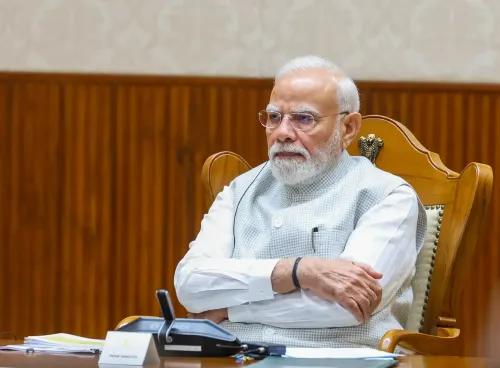
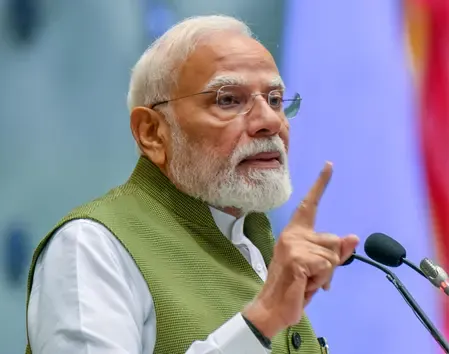
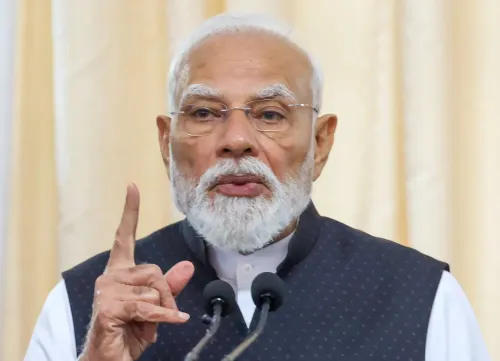
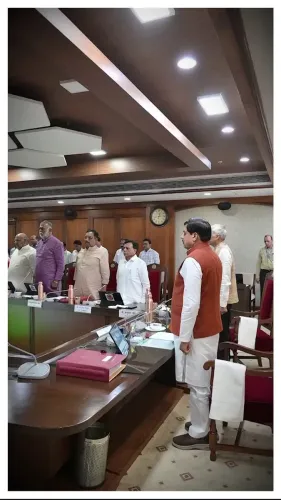
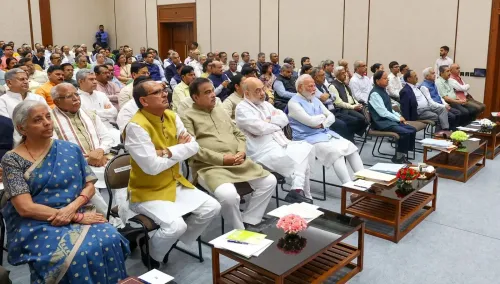
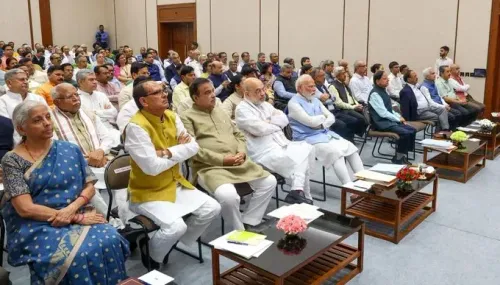
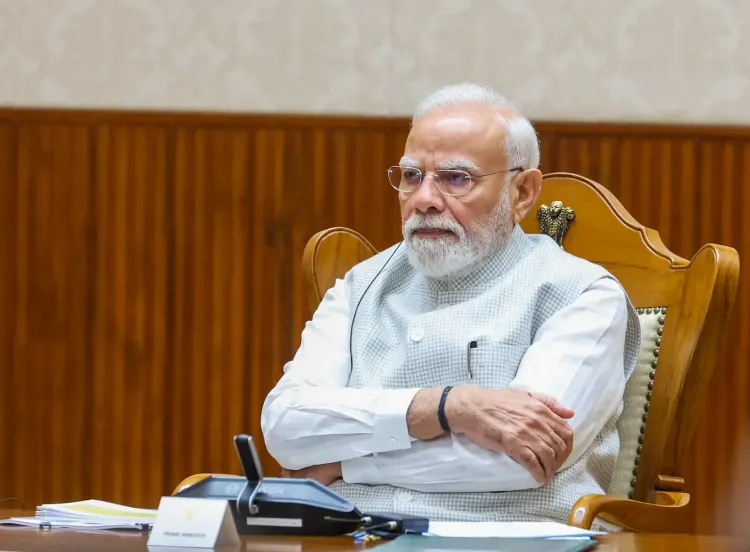
PM Modi chairs Union Cabinet meet at Bharat Mandapam today, post-Philippines return
Synopsis
Fresh from the Philippines, PM Modi is convening the Union Cabinet at Bharat Mandapam to audit ministry progress and map the road ahead — continuing a structured, tier-wise consultation cycle that last convened as a Chintan Shivir in September, where 100 per cent welfare-scheme coverage was the central target.
Key Takeaways
PM Narendra Modi is chairing the Union Council of Ministers meeting at Bharat Mandapam on 18 November 2026 .
The meeting follows Modi's return from the Philippines and is scheduled for around 10 am IST .
Agenda includes reviewing ministry-wise progress and finalising a forward roadmap aligned with Viksit Bharat 2047 .
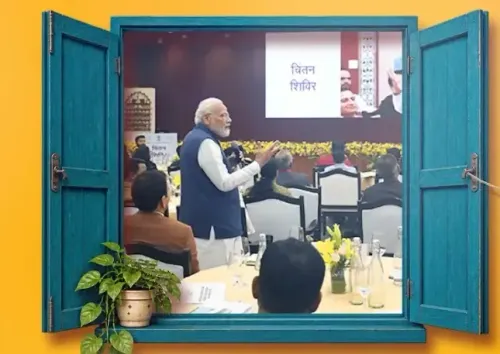
The previous ministerial conclave — a Chintan Shivir in September — focused on achieving 100 per cent coverage of government welfare schemes.
Only Cabinet ministers are part of this session, mirroring the structure of the September meeting.
Prime Minister Narendra Modi is chairing a meeting of the Union Council of Ministers on Wednesday, 18 November 2026, at Bharat Mandapam in New Delhi, shortly after returning from the Philippines. The deliberations are expected to focus on reviewing progress on tasks assigned at the previous session and charting a roadmap for the period ahead.
What Is on the Agenda
According to reports, the Prime Minister is expected to assess how various ministries have fared on decisions taken at the last ministerial meeting. The discussions will also cover the way forward — with an emphasis on ensuring effective implementation of government initiatives and welfare policies already in motion.
The Previous 'Chintan Shivir' and Its Focus
The previous meeting of the Union Council of Ministers — held as a 'Chintan Shivir' in September — had concentrated on achieving 100 per cent coverage of government welfare schemes and improving the Centre's communication with citizens about those measures. Several ministries had presented their initiatives and future plans, all oriented around the Viksit Bharat 2047 vision. That session was notably restricted to Cabinet ministers alone, making it a focused deliberation at the highest tier of the Union government — a departure from earlier, broader consultative rounds.
Structure of the Ministerial Consultation Cycle
Wednesday's meeting is part of a structured sequence of engagements. Prior to the September Chintan Shivir, Prime Minister Modi had held separate interactions with Ministers of State and Ministers of State with Independent Charge at his office. The layered approach — engaging different tiers of the Council of Ministers in distinct settings — points to a deliberate effort to ensure accountability at every level of the Union government, critics and observers note.
Significance of the Timing
The timing is notable on two counts. First, the meeting follows Modi's return from the Philippines, keeping the Cabinet's review cycle uninterrupted even amid an active foreign engagement calendar. Second, it comes at a point when multiple flagship schemes are in mid-execution, making a progress audit at the Cabinet level particularly relevant. This comes amid broader government messaging around delivery — moving from policy announcement to last-mile implementation — which has been a recurring theme in ministerial interactions this year.
Point of View
Then Cabinet ministers in a dedicated Chintan Shivir format — signals an effort to run a disciplined accountability loop within the government rather than convene grand assemblies for optics. The real question is whether these reviews translate into measurable delivery improvements, particularly on welfare-scheme last-mile coverage, which was flagged as incomplete as recently as September. With 2047 as the stated horizon, annual or bi-annual progress audits at Cabinet level need to be matched by credible reporting mechanisms — otherwise the exercise risks becoming a ritual rather than a governance tool.
NationPress
18 Nov 2026
Frequently Asked Questions
What is the Union Council of Ministers meeting at Bharat Mandapam about?
PM Narendra Modi is chairing a Union Cabinet meeting on 18 November 2026 at Bharat Mandapam in New Delhi to review progress made by various ministries on decisions taken at the previous session, and to finalise a roadmap for the period ahead.
What was discussed at the previous Chintan Shivir in September?
The September Chintan Shivir focused on achieving 100 per cent coverage of government welfare schemes and improving communication with citizens about those measures. Several ministries presented their initiatives and future plans centred on the Viksit Bharat 2047 vision.
Why is only the Cabinet — and not Ministers of State — part of this session?
The session, like the September Chintan Shivir, is restricted to Cabinet ministers for a focused, top-level deliberation. Ministers of State and Ministers of State with Independent Charge were engaged separately by the Prime Minister in earlier meetings, as part of a tier-wise consultation cycle.
What is the significance of the meeting coming right after Modi's Philippines visit?
The meeting underscores continuity in the government's internal review cycle, ensuring that Cabinet-level accountability exercises are not deferred due to international travel. It also signals that mid-execution audits of flagship schemes remain a priority irrespective of the external engagements calendar.
What is Viksit Bharat 2047?
Viksit Bharat 2047 is the Indian government's long-term vision to make India a developed nation by the centenary of its independence in 2047. It has been a recurring framework in ministerial deliberations, guiding the planning and delivery targets of multiple Union ministries.