PM Modi at East Asia Summit: Four New Regional Initiatives
Synopsis
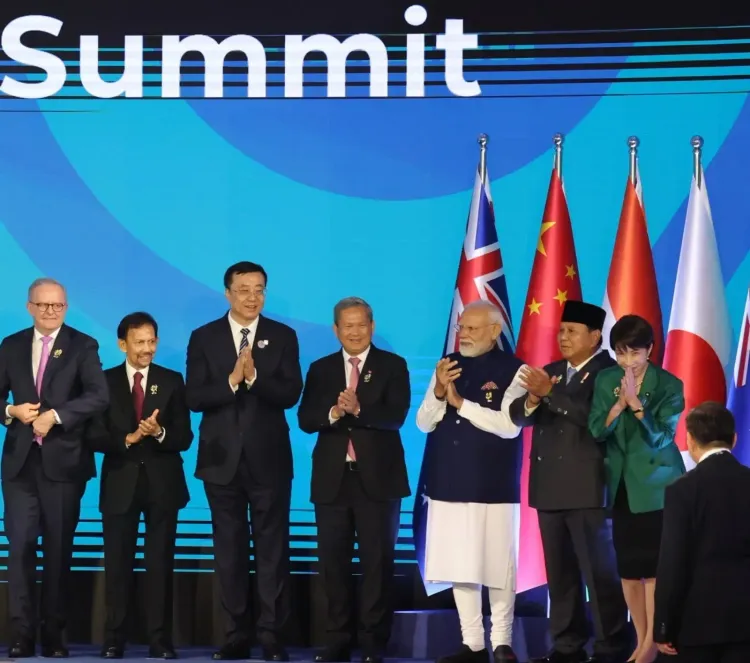
At the East Asia Summit on 17 November 2026, Prime Minister Narendra Modi called for peace, prosperity and predictability, reaffirmed India's Indo-Pacific vision, and launched four new initiatives on seafarers' safety, cyber crime, maritime heritage at Lothal, and academic cooperation at Nalanda.
Key Takeaways
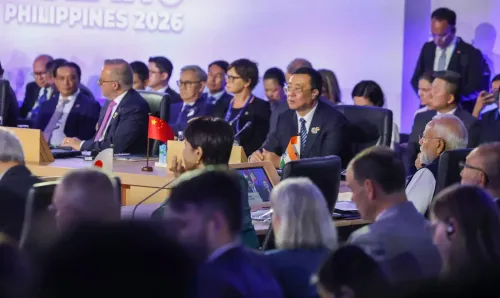
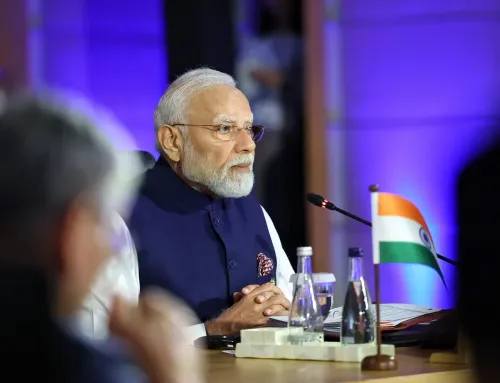
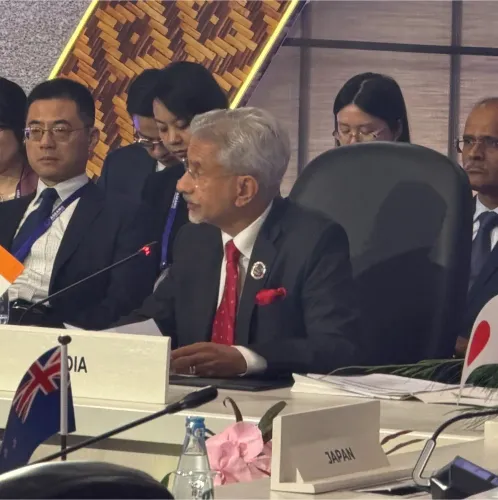
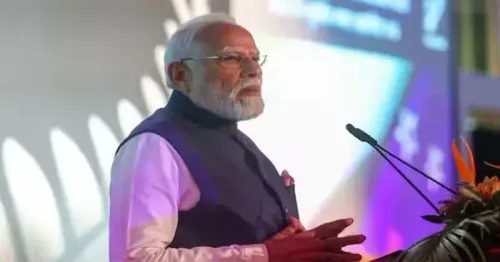
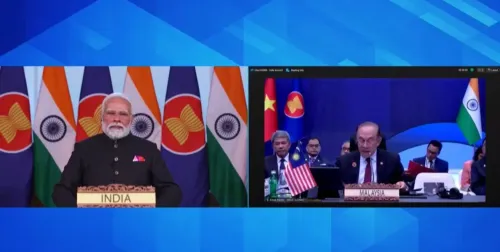
Prime Minister Narendra Modi addressed the East Asia Summit on 17 November 2026 , calling for 'peace, prosperity and predictability' in the region.
India announced a Seafarers' Safety Initiative to coordinate protection of maritime workers during emergencies and crises.
The EAS Cyber Crime Conference will be hosted at the National Forensic Sciences University in Gandhinagar to build collective defences against online fraud and transnational digital crime.
The ancient Harappan port of Lothal, Gujarat will host an EAS Maritime Heritage Festival celebrating centuries of regional seafaring and trade.
Nalanda, Bihar will serve as the venue for an EAS University Conclave connecting scholars, students and institutions across member nations.
All four initiatives extend India's Act East Policy framework and align with its stated vision of a free, open, inclusive and rules-based Indo-Pacific.
Peace, prosperity, and predictability — three words that Prime Minister Narendra Modi placed at the centre of his address to the East Asia Summit on Tuesday, 17 November 2026, as India unveiled four concrete multilateral initiatives spanning seafarers' safety, cyber crime, maritime heritage, and university cooperation.
Four initiatives, four fronts
Modi announced the Seafarers' Safety Initiative, calling for greater coordination among EAS nations to protect those who work at sea, particularly during emergencies and maritime crises. The ocean, in India's framing, is not just a trade corridor — it is a workplace with real people at risk.
The second initiative puts a National Forensic Sciences University campus in Gandhinagar at the heart of regional cyber security. India will host an EAS Cyber Crime Conference there to forge a stronger collective response to online fraud, hacking and transnational digital crime — threats that no single government can fight alone.
The third initiative turns to history to make a point about the future. The ancient Harappan port city of Lothal in Gujarat will host an EAS Maritime Heritage Festival, bringing together all East Asia Summit nations to celebrate centuries of seafaring traditions, commerce and cultural exchange. That a civilisation-era trading post is being activated as a modern diplomatic venue is a deliberate signal about the depth of India's maritime roots in the region.
Rounding out the quartet, Nalanda in Bihar — the revived site of one of Asia's greatest ancient universities — will host an EAS University Conclave for scholars, students and institutions to build fresh partnerships in education, research and innovation.
Act East, with historical anchors
None of this comes from nowhere. India's Act East Policy, launched in 2014, committed New Delhi to deepening economic, strategic and cultural engagement with ASEAN and the broader East Asian neighbourhood. At the 2018 Shangri-La Dialogue, Modi first spelled out India's vision for a free, open and inclusive Indo-Pacific — the same phrase he reiterated on Tuesday. The Tuesday announcements are the latest iteration of a twelve-year arc.
What is distinctive about this round is the deliberate pairing of heritage sites with hard-security themes. Lothal and Nalanda are not conference facilities in the conventional sense — they are civilisational statements, chosen precisely because they let India make a soft-power argument and a strategic one simultaneously.
Why the EAS platform, why now
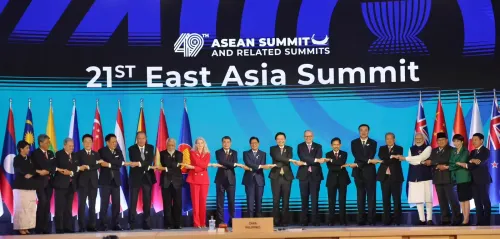
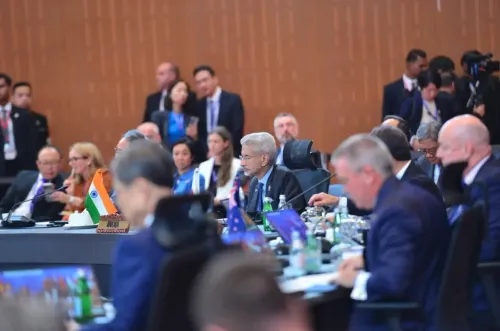
The East Asia Summit brings together ASEAN's ten members plus India, Australia, China, Japan, New Zealand, South Korea, Russia and the United States — making it the highest-level Indo-Pacific leaders' forum that includes all major players. Using it to announce concrete deliverables, rather than aspirational language, signals that India wants to be seen as a provider of regional public goods, not merely a participant in communiqués.
The cyber crime conference and seafarers' initiative in particular address pressure points that ASEAN nations have flagged repeatedly: rising maritime incidents in contested waters and an explosion in cross-border digital fraud that has outpaced existing legal frameworks. India is offering institutional capacity — its forensic university, its ports — as a contribution.
Implementation timelines and participation lists for all four initiatives remain to be confirmed. The next ASEAN-India Summit will be the first real test of whether Tuesday's announcements translate into working-level agreements.
Point of View
Nalanda's scholarly legacy — as the physical backdrop for hard-nosed multilateral proposals on cyber security and maritime safety. That pairing is not accidental; it allows New Delhi to press a soft-power claim while simultaneously positioning itself as a provider of regional institutional capacity. Within the broader Act East arc, the four initiatives also mark a shift from declaratory diplomacy toward deliverable-based engagement — a response to criticism that India's Indo-Pacific rhetoric has outpaced its concrete contributions. Whether the initiatives find working-level traction will depend on follow-through at the next ASEAN-India Summit, which will be the first real accountability moment.
NationPress
17 Nov 2026
Frequently Asked Questions
What did PM Modi announce at the East Asia Summit 2026?
Prime Minister Narendra Modi announced four initiatives at the East Asia Summit on 17 November 2026: a Seafarers' Safety Initiative, an EAS Cyber Crime Conference to be hosted at the National Forensic Sciences University in Gandhinagar, an EAS Maritime Heritage Festival at the ancient port of Lothal in Gujarat, and an EAS University Conclave at Nalanda in Bihar.
What is the East Asia Summit and which countries are part of it?
The East Asia Summit is an annual leaders' forum of ASEAN's ten member states plus India, Australia, China, Japan, New Zealand, South Korea, Russia and the United States, focused on regional security, economic cooperation and strategic dialogue in the Indo-Pacific.
Why is Lothal being used for the EAS Maritime Heritage Festival?
Lothal is an ancient Harappan port city in Gujarat dating back thousands of years, considered one of the earliest known dockyard sites in the world. India chose it to highlight its deep maritime heritage and to signal historical sea-trade connections with the broader East Asian and Indo-Pacific region.
What is India's Act East Policy?
India's Act East Policy, launched in 2014, is a strategic framework to deepen economic, diplomatic and cultural ties with ASEAN and East Asian nations. It replaced the earlier 'Look East' approach and has underpinned India's engagement with the East Asia Summit and Indo-Pacific initiatives ever since.
Where will the EAS Cyber Crime Conference be held?
India will host the EAS Cyber Crime Conference at the National Forensic Sciences University in Gandhinagar, a central university specialising in forensic science, cyber security and criminal investigation, to strengthen collective regional responses to online fraud and transnational digital crime.