Modi Launches Pune Metro Line 3; Phase 2 Gets Groundbreaking
Synopsis
PM Modi virtually inaugurated Pune Metro Line 3 — a 23.2-km PPP corridor linking Hinjewadi's IT hub to Shivajinagar — and broke ground on Phase 2, committing ₹22,000 crore to transform the Pune Metropolitan Region into India's premier mobility centre by 2030.
Key Takeaways
Pune Metro Line 3 (Man-Hinjewadi-Shivajinagar, 23.203 km , 23 elevated stations ) inaugurated online by PM Modi on 3 November 2026 .
Project cost: ₹8,313 crore ; total day's investment commitment: ₹22,000 crore including Phase 2 groundbreaking.
India's first metro built under a national PPP-DBFOT policy , developed by Tata Projects and Siemens . 'Pink-Powered' metro : 90 women train operators and 50% women workforce across the project.
Centre has committed ₹5,000 crore separately for PMR urban development; Maharashtra leads nationally with metro activity in 12 municipal areas .
PM Modi pledged central government support for Maharashtra's drought-hit farmers at the same event.
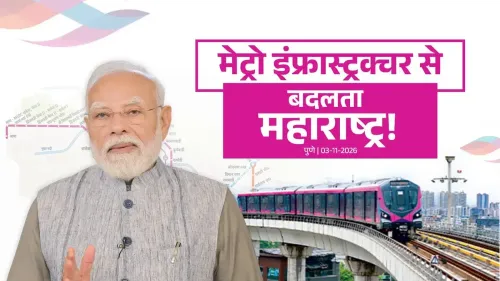
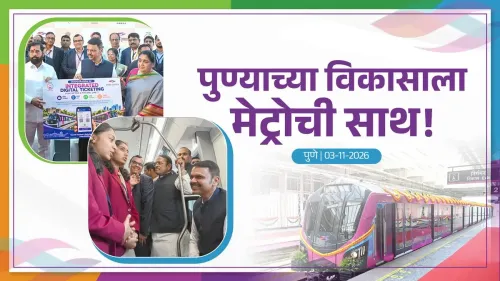
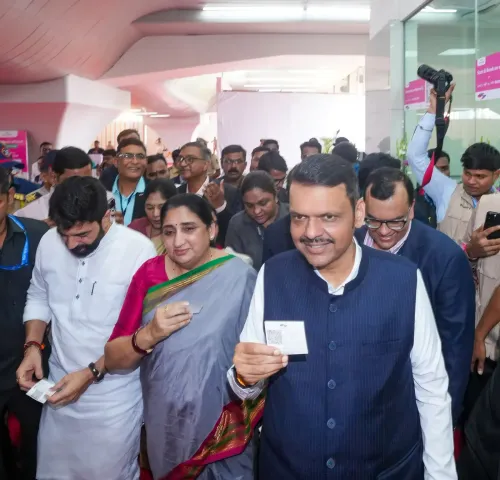
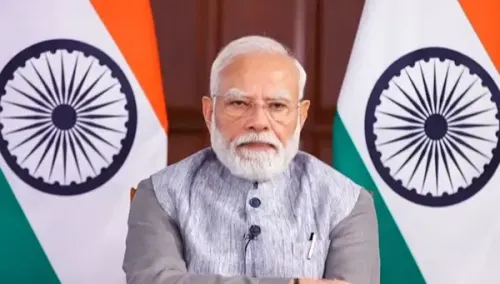
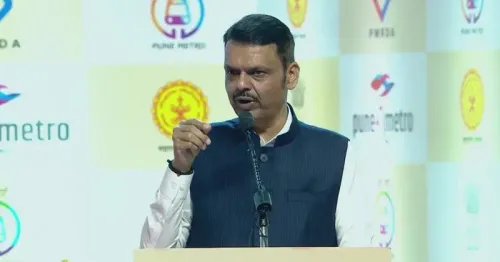
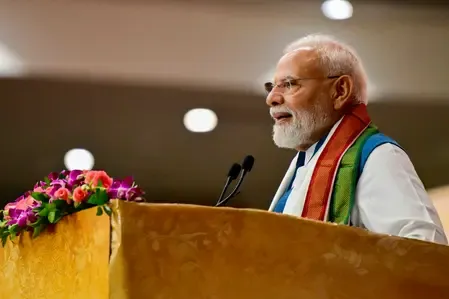
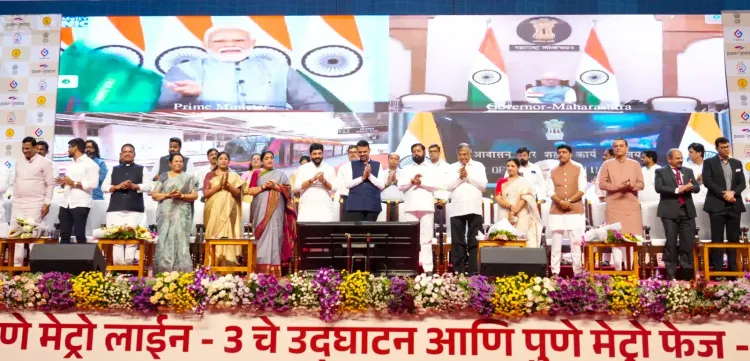
A metro corridor eight years in the making finally opened on Tuesday, 3 November 2026, as Prime Minister Narendra Modi virtually inaugurated Pune Metro Line 3 — the 23.2-kilometre Man-Hinjewadi-Shivajinagar elevated corridor — and simultaneously broke ground on Pune Metro Phase 2, anchoring a combined investment of roughly ₹22,000 crore in the city's future. The Chief Minister's Office of Maharashtra confirmed that Chief Minister Devendra Fadnavis attended in person as Modi addressed the gathering online.
India's first PPP metro corridor: what makes Line 3 different
Line 3 is not just another metro opening. Built on a Design-Build-Finance-Operate-Transfer (DBFOT) basis by Tata Projects and Siemens, it is the first metro project in India executed entirely under a public-private partnership model following a national PPP metro policy — a template the Centre now wants replicated across cities. The project cost stands at ₹8,313 crore, funded through a combination of central and state government support, viability gap funding, and land acquisition by the Maharashtra government.
The corridor's 23 elevated stations stitch together Hinjewadi — the country's densest concentration of IT campuses outside Bengaluru — directly to Shivajinagar, the commercial heart of Pune. For thousands of tech workers who currently lose one to two hours daily to gridlock on the Hinjewadi stretch, the metro promises a faster, predictable commute. CM Fadnavis described it as 'a major relief for IT professionals, especially young men and women.'
'Pink-Powered': 90 women drivers, 50% women workforce
Line 3 carries a deliberate social signal. The CMO post described it as a 'पिंक पॉवर्ड' ('Pink-Powered') metro: 90 women train operators will run services on the corridor, and 50 per cent of the project's total workforce — from construction through operations — is female. CM Fadnavis called women's contribution 'central to this project from groundbreaking to daily operations.'
The metro is also designed as a green corridor, with the system targeting self-generation of 30 per cent of its own energy requirement — a meaningful benchmark as Pune's power demand grows with its expanding tech economy.
₹22,000 crore vision and the 2030 mobility target
The day's ceremony was bigger than one line. The simultaneous groundbreaking for Pune Metro Phase 2 signals that the city's rail build-out is accelerating, not plateauing. CM Fadnavis outlined a layered mobility masterplan for the Pune Metropolitan Region (PMR): metro lines, electric buses, an Inner Ring Road, Outer Ring Road, underground tunnels, a Circular Metro Transit Ring (CMTR), and a proposed new airport — all converging on a single goal of making PMR 'India's most important mobility centre by 2030.'
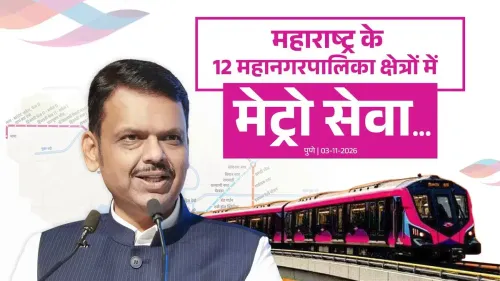
The Centre has separately committed ₹5,000 crore to develop the PMR as a major urban growth hub, funds earmarked for modern transport infrastructure across the region. Fadnavis noted that Maharashtra now has metro projects running or under construction across 12 municipal areas — more than any other state — and that the country's metro expansion has disproportionately benefited Maharashtra. Total metro network within Pune city itself has crossed 120 kilometres in various stages of completion and operation.
Modi's Diwali pledge to drought-hit farmers
Beyond the infrastructure headline, PM Modi used the occasion to extend Diwali greetings to Maharashtra's people and made an explicit commitment on agrarian distress: the central government will stand firmly behind Maharashtra's drought-affected farmers, he assured. The pledge, delivered from the same platform as a gleaming urban infrastructure launch, underscored the dual political optic the BJP seeks in the state — modern city-builder and rural protector simultaneously.
Modi also emphasised that India's infrastructure push runs alongside poverty alleviation and employment creation for youth — framing the Pune Metro not merely as a commuter upgrade but as an economic multiplier. Fadnavis echoed that framing: 'Metro is not just a transport facility — it is a mechanism that drives investment, employment, and an entire economic ecosystem around it.'
From 2018 foundation stone to 2026 inauguration — by the same hand
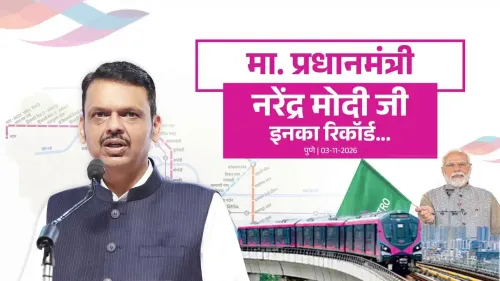
The foundation stone for this very project was laid by PM Modi in 2018. That the inauguration too was performed by him — eight years later — was a talking point CM Fadnavis returned to warmly. The bookending by a single Prime Minister lends the project a political continuity that the ruling alliance will lean on heavily in the months ahead.
A high-powered attendance list underscored the event's weight: Deputy Chief Ministers Eknath Shinde and Sunetra Ajit Pawar, Union Minister Manohar Lal (online), Governor Jishnu Dev Varma (online), Union Minister of State Murlidhar Mohol, Pune Mayor Manjusha Nagpure, Pimpri-Chinchwad Mayor Ravi Landge, and a clutch of MPs and state ministers were present.
Pune's IT economy powers a significant slice of India's services exports. A metro that finally connects Hinjewadi to the city's core is not a civic convenience — it is infrastructure that keeps a national economic engine running without burning out the people who run it.
Point of View
The event is a carefully constructed dual message: urban moderniser in Pune's IT corridors and rural patron to drought-stressed farmers — both delivered by the same Prime Minister on the same stage. The 2030 mobility-hub target for the Pune Metropolitan Region also signals that the Centre and Maharashtra are positioning the city as a rival to Hyderabad and Bengaluru in the frontier-technology race. The real test will be whether ridership on Line 3 justifies the PPP model quickly enough to attract the next wave of private metro investment.
NationPress
3 Nov 2026
Frequently Asked Questions
What is Pune Metro Line 3 and where does it run?
Pune Metro Line 3, also called the 'Puneri Metro', is a 23.203-kilometre elevated corridor running from Man-Hinjewadi to Shivajinagar with 23 stations . It directly connects Hinjewadi's IT hub to the commercial centre of Pune.
Who inaugurated Pune Metro Line 3?
Prime Minister Narendra Modi inaugurated Pune Metro Line 3 virtually on 3 November 2026 . He had also laid the foundation stone for the same project in 2018 .
How much did Pune Metro Line 3 cost?
The project cost is ₹8,313 crore . The broader investment announced on the same day, including the Phase 2 groundbreaking, amounts to approximately ₹22,000 crore .
Why is Pune Metro Line 3 called a PPP metro?
It is the first metro project in India built under a public-private partnership on a DBFOT (Design-Build-Finance-Operate-Transfer) basis following a national PPP metro policy. Tata Projects and Siemens developed and will operate the corridor.
What is the 'Pink Metro' feature of Pune Metro Line 3?
Line 3 has been branded a 'Pink-Powered' metro because 90 women train operators will drive services and 50 per cent of the project's total workforce is female — from construction through daily operations.