PM Modi meets Thailand PM Anutin in Manila on ASEAN sidelines
Synopsis
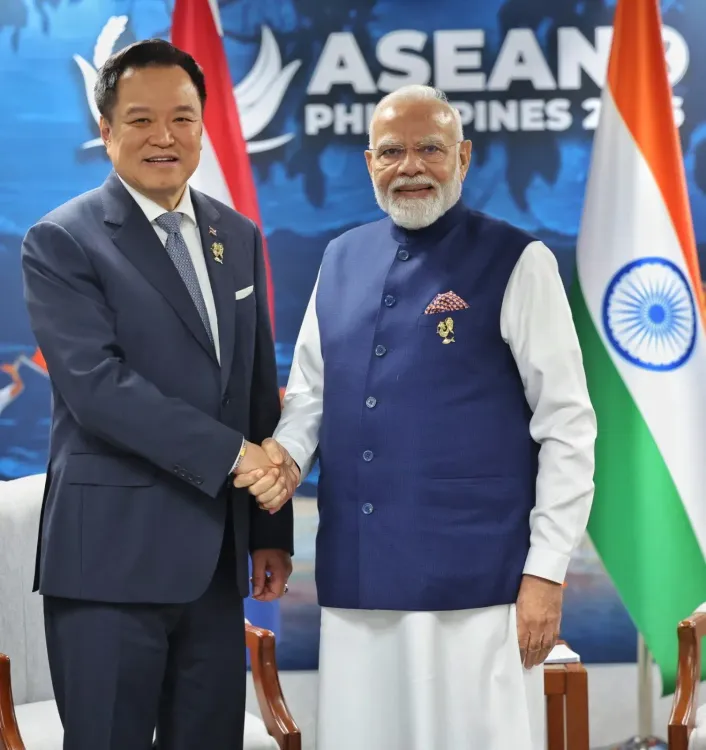
Prime Minister Narendra Modi met Thailand PM Anutin Charnvirakul on the ASEAN summit sidelines in Manila on 17 November 2026, personally congratulating him on taking office and pledging fresh momentum to the India-Thailand Strategic Partnership across trade, defence, connectivity and culture.
Key Takeaways
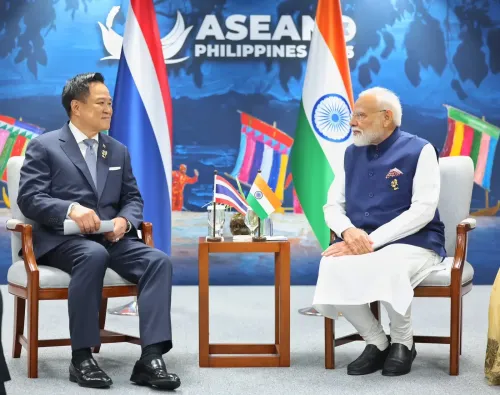
PM Modi met Thailand PM Anutin Charnvirakul on the sidelines of the ASEAN-related summits in Manila on 17 November 2026 .
Modi personally congratulated Anutin on assuming the office of Prime Minister of Thailand.
The two leaders discussed advancing the India-Thailand Strategic Partnership across four pillars: trade, defence and security, connectivity, and culture.
India and Thailand are described as maritime neighbours with centuries of shared history, culture and spiritual traditions.
The meeting aligns with India's Act East Policy , launched in 2014 , which prioritises deeper engagement with ASEAN member states.
Modi's post included a passage in Thai language , underscoring the cultural outreach dimension of the bilateral.
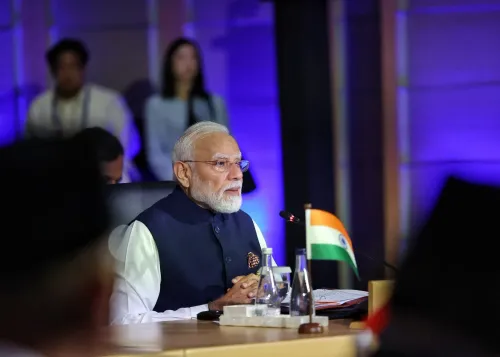
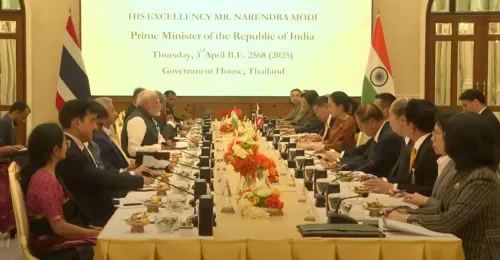
On the sidelines of the ASEAN-related summits in Manila, Prime Minister Narendra Modi held a bilateral meeting with Thailand Prime Minister Anutin Charnvirakul on Tuesday, 17 November 2026 — personally congratulating the Thai leader on his assumption of office and setting the stage for a fresh push in one of India's most historically layered partnerships in Southeast Asia.
Modi described the two nations as 'maritime neighbours, bound by centuries of shared history, culture and spiritual traditions' — framing the meeting not as a routine diplomatic courtesy but as a reboot of a relationship with deep civilisational roots. The two leaders discussed injecting new momentum into the India-Thailand Strategic Partnership across four concrete pillars: trade, defence and security, connectivity, and culture.
Act East meets Bangkok: what's on the table
The Manila meeting sits squarely within India's Act East Policy, launched in 2014, which repositioned ASEAN engagement from a peripheral foreign-policy footnote to a strategic priority. Thailand — a founding ASEAN member and India's maritime neighbour across the Bay of Bengal and the Andaman Sea — has long been a natural anchor for that pivot. ASEAN summit sidelines have become India's preferred theatre for compressing multiple high-value bilaterals into a single diplomatic sprint, and Modi's conversation with Anutin is a textbook example of that playbook.
Trade and connectivity are the two pillars with the most room to run. India and Thailand are linked by the broader India-Myanmar-Thailand Trilateral Highway project, a connectivity corridor that, once fully operational, would transform overland access between South and Southeast Asia. Defence and security cooperation has been a quieter but steady thread — both navies operate in overlapping Indo-Pacific waters, and maritime domain awareness is a shared concern.
Anutin Charnvirakul: the new face across the table
Modi's personal congratulations to Anutin Charnvirakul on assuming the Thai premiership signal that New Delhi moved quickly to establish direct rapport at the leadership level. Anutin, a prominent figure in Thai politics who previously served as Deputy Prime Minister, brings a pragmatic economic focus — an outlook that aligns with India's interest in expanding bilateral trade and investment flows. For Modi, building personal chemistry with a new counterpart early in their tenure is a practised diplomatic habit.
The bilateral also carried a cultural register. Modi's post included a substantial passage in Thai — 'รู้สึกยินดีเป็นอย่างยิ่งที่ได้พบหารือกับนายอนุทิน ชาญวีรกูล' ('I am truly delighted to have met and held discussions with Anutin Charnvirakul') — a gesture of linguistic outreach that rarely goes unnoticed in bilateral optics.
Whether the Manila conversation translates into tangible follow-up — a joint working group on trade facilitation, a defence cooperation roadmap, or a fresh connectivity timeline — will be the real measure of this meeting's weight. The framework is in place. The momentum, now, has to be earned.
Point of View
Modi signals that New Delhi prioritises early leader-level rapport as a force-multiplier for bilateral momentum. The four-pillar agenda — trade, defence, connectivity, culture — mirrors the template India applies across its ASEAN partnerships, but Thailand's maritime adjacency and civilisational ties give it particular salience in India's Indo-Pacific calculus. The real test will be whether working-level mechanisms are activated in the months following the summit.
NationPress
17 Nov 2026
Frequently Asked Questions
Where did PM Modi meet Thailand PM Anutin Charnvirakul?
They met on the sidelines of the ASEAN-related summits in Manila, Philippines, on 17 November 2026.
What is the India-Thailand Strategic Partnership?
The India-Thailand Strategic Partnership is a bilateral framework covering trade, defence and security, connectivity, and cultural cooperation, underpinned by the two countries' shared maritime geography and centuries of historical and cultural ties.
What is India's Act East Policy and how does it relate to Thailand?
India's Act East Policy, launched in 2014, seeks deeper political, economic and strategic engagement with ASEAN countries. Thailand, as a founding ASEAN member and India's maritime neighbour, is a key partner under this framework.
Who is Anutin Charnvirakul?
Anutin Charnvirakul is the Prime Minister of Thailand, a veteran politician who previously served as Deputy Prime Minister before assuming the top office.
What sectors did Modi and the Thailand PM discuss?
The two leaders discussed adding fresh momentum to cooperation in trade, defence and security, connectivity, and culture.