Modi, Thailand PM Charnvirakul review Strategic Partnership at ASEAN Summit in Manila
Synopsis
On the sidelines of the 23rd ASEAN-India Summit in Manila, PM Modi and Thailand's Anutin Charnvirakul reviewed a Strategic Partnership upgraded just months ago — covering trade, defence, connectivity, and digital tech. With Thailand bridging India's Act East Policy and the Indo-Pacific, this bilateral carries weight beyond a routine summit sidebar.
Key Takeaways
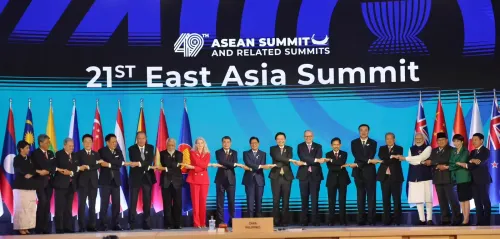
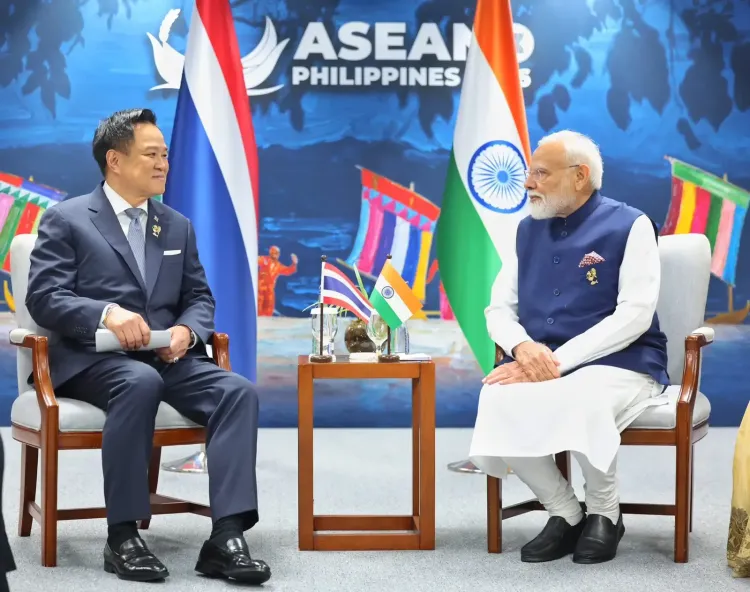
PM Narendra Modi met Thailand PM Anutin Charnvirakul on 17 November 2026 in Manila, Philippines on the sidelines of the 23rd ASEAN-India Summit and 21st East Asia Summit .
The leaders reviewed the India-Thailand Strategic Partnership , covering trade, defence, connectivity, digital technologies, culture, tourism, and people-to-people ties.
Foreign Secretary Vikram Misri and NSA Ajit Doval were among the officials present at the bilateral meeting.
India and Thailand elevated their ties to a Strategic Partnership in April last year , during Modi's visit to Bangkok.
Diplomatic relations between India and Thailand were established in 1947 ; both nations marked the 75th anniversary of ties in 2022 .
Thailand is a partner in multiple regional frameworks including ASEAN , BIMSTEC , and IORA , and is a cornerstone of India's Act East Policy .
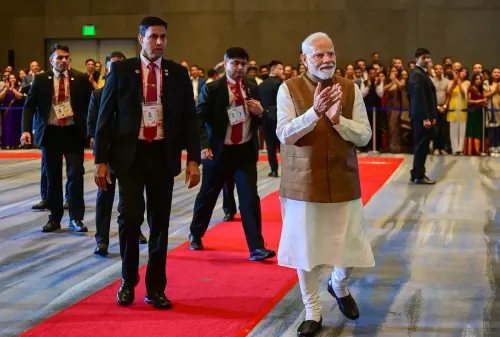
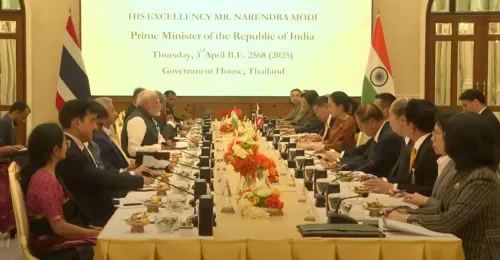
Prime Minister Narendra Modi on Tuesday, 17 November 2026 held bilateral talks with Thailand Prime Minister Anutin Charnvirakul on the sidelines of the 23rd ASEAN-India Summit and 21st East Asia Summit in Manila, Philippines. The two leaders reviewed the India-Thailand Strategic Partnership and discussed collaboration across trade, defence, digital technologies, and people-to-people ties.
What Was Discussed
According to the Ministry of External Affairs (MEA), the leaders covered a broad agenda spanning trade and investment, defence and security, connectivity, digital technologies, culture, tourism, and people-to-people ties. They also exchanged views on regional and global issues of mutual interest.
Foreign Secretary Vikram Misri, National Security Advisor (NSA) Ajit Doval, and other senior officials were present at the meeting. The MEA confirmed: 'Thailand is a key partner in India's Act East Policy and Indo-Pacific Vision.'
Background: A Relationship Upgraded to Strategic Level
India and Thailand elevated their bilateral relationship to a Strategic Partnership in April last year, during Prime Minister Modi's visit to Bangkok. That upgrade marked a significant deepening of ties that date back to the formal establishment of diplomatic relations in 1947. Both nations celebrated the 75th anniversary of those relations in 2022.
Earlier in March, Modi had congratulated Charnvirakul following his election as Thailand's Prime Minister. In a public message, Modi stated: 'Heartiest congratulations to Mr. Anutin Charnvirakul on his election as Prime Minister of the Kingdom of Thailand. I look forward to working closely with him. Together, we will further deepen the multifaceted India-Thailand Strategic Partnership. Our ties are rooted in shared civilisational heritage, close cultural connect and vibrant people-to-people ties. India and Thailand remain united in our shared aspirations for peace, progress and prosperity for our peoples.' Charnvirakul, a candidate from the Bhumjaithai Party, had secured a simple majority in a vote by Thailand's House of Representatives.
India-Thailand: Multilateral and Regional Ties
Beyond the bilateral relationship, Thailand is a key partner for India across multiple regional frameworks. These include ASEAN, the East Asia Summit (EAS), the Bay of Bengal Initiative for Multi-Sectoral Technical and Economic Cooperation (BIMSTEC), the Mekong Ganga Cooperation (MGC), the Asia Cooperation Dialogue (ACD), the Indian Ocean Rim Association (IORA), and the Ayeyawady-Chao Phraya-Mekong Economic Cooperation Strategy (ACMECS).
Notably, Thailand's 'Act West' policy serves as a natural complement to India's 'Act East' policy, reinforcing the two countries' strategic alignment. Thailand also qualifies as India's maritime neighbour, according to the MEA.
Significance for India's Act East Policy
The Manila meeting comes amid heightened Indian diplomatic activity across Southeast Asia, with the ASEAN-India and East Asia Summits offering Modi a platform for a series of bilateral engagements. For India's Act East Policy — aimed at strengthening its economic and security footprint in the Indo-Pacific — Thailand functions as a critical gateway, linking South Asia to mainland Southeast Asia.
As both nations continue to build on the Strategic Partnership framework, the next steps will likely involve follow-through on commitments made in the trade, connectivity, and defence domains.
Point of View
From defence to digital, reflects India's intent to transform Act East from a rhetorical posture into a network of binding commitments. What mainstream coverage underweights is the strategic geometry: Thailand is simultaneously a BIMSTEC, ASEAN, and EAS partner, making it a rare node where India's South Asian, Southeast Asian, and Indo-Pacific interests converge. The real test will be whether the connectivity and trade commitments made in this partnership translate into project-level delivery — a gap that has historically hobbled India's bilateral economic engagement in Southeast Asia.
NationPress
17 Nov 2026
Frequently Asked Questions
What did PM Modi and Thailand PM Charnvirakul discuss in Manila?
The two leaders reviewed the India-Thailand Strategic Partnership and discussed cooperation in trade and investment, defence and security, connectivity, digital technologies, culture, tourism, and people-to-people ties. They also exchanged views on regional and global issues of mutual interest, on the sidelines of the 23rd ASEAN-India Summit on 17 November 2026.
What is the India-Thailand Strategic Partnership?
The India-Thailand Strategic Partnership is an elevated bilateral framework established in April last year during PM Modi's visit to Bangkok. It formalises cooperation across multiple domains including defence, trade, digital technologies, and connectivity, building on diplomatic relations that date back to 1947.
Why is Thailand important to India's Act East Policy?
Thailand serves as a critical gateway linking South Asia to mainland Southeast Asia, and its 'Act West' policy directly complements India's 'Act East' policy. Thailand is also a partner in key regional groupings — ASEAN, BIMSTEC, the East Asia Summit, IORA, and Mekong Ganga Cooperation — making it a multilateral anchor for India's Indo-Pacific engagement.
Who accompanied PM Modi at the bilateral meeting?
Foreign Secretary Vikram Misri, National Security Advisor Ajit Doval, and other senior Indian officials were present during the meeting with Thailand PM Charnvirakul in Manila.
How long have India and Thailand maintained diplomatic relations?
India and Thailand established formal diplomatic relations in 1947. Both nations celebrated the 75th anniversary of those ties in 2022, and upgraded the relationship to a full Strategic Partnership in April last year.