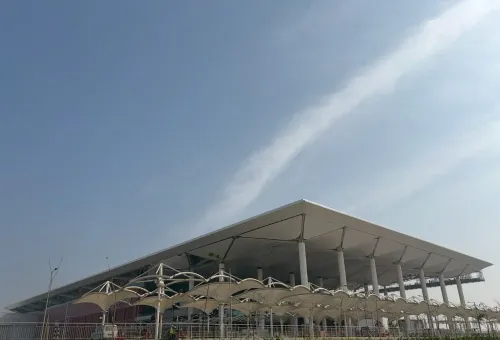
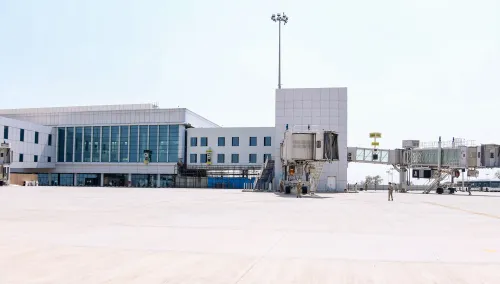
Prime Minister Modi Launches Noida International Airport, Elevating NCR's Aviation Landscape

Synopsis
Prime Minister Narendra Modi’s inauguration of the Noida International Airport marks a transformative moment for India's aviation sector, promising enhanced connectivity and a robust infrastructure for the NCR. Explore the details of this landmark project.
Key Takeaways
Inauguration Date: March 28, 2023 Investment: Rs 11,200 crore Passenger Capacity: 12 million initially, scalable to 70 million Runway Length: 3,900 metres Cargo Handling: Over 2.5 lakh metric tonnes annually Sustainability Goal: Net-zero emissions facility
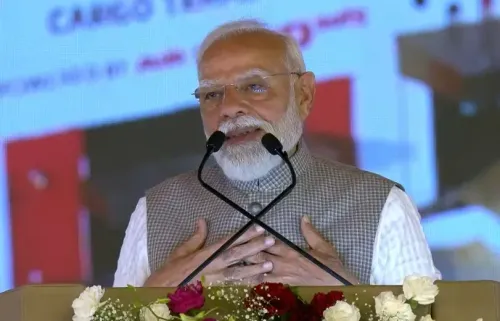
New Delhi, March 28 (NationPress) On Saturday, Prime Minister Narendra Modi officially opened the highly awaited Noida International Airport located in Jewar, Uttar Pradesh. This event represents a crucial step forward in the growth of India's aviation infrastructure.
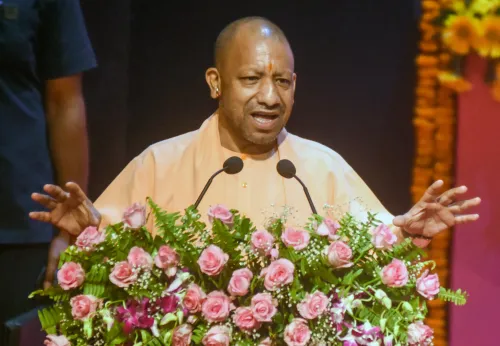
During his visit, the Prime Minister explored an exhibition that highlighted the construction milestones of the airport project and was joined by Uttar Pradesh Chief Minister Yogi Adityanath.
This ambitious airport initiative, executed under a Public-Private Partnership (PPP) framework, has seen an investment of around Rs 11,200 crore, with Phase I set to begin operations shortly.
As per the Prime Minister's Office (PMO), this airport is envisioned to serve as a pivotal international hub for the National Capital Region (NCR), significantly bolstering India's aviation infrastructure and enhancing connectivity at both regional and global levels.
The Noida International Airport will be the second international airport catering to the Delhi-NCR area, complementing the existing Indira Gandhi International Airport.
Together, both airports are anticipated to operate as an integrated aviation network, alleviating congestion, boosting passenger capacity, and positioning the Delhi-NCR as a key player among global aviation centers.
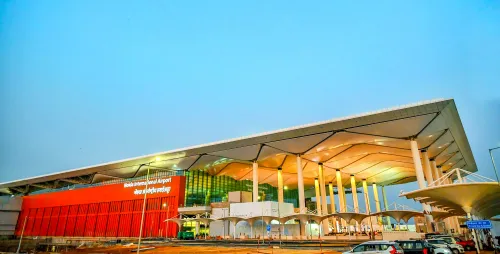
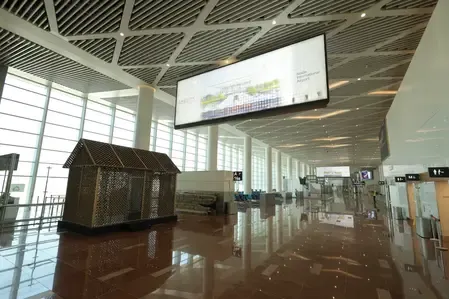
Regarded as one of the country's largest greenfield airport ventures, the facility is designed to initially accommodate around 12 million passengers annually, with potential scalability to 70 million passengers per year upon full completion.
The airport boasts a 3,900-metre-long runway suitable for wide-body aircraft and features sophisticated navigation systems like the Instrument Landing System (ILS) along with cutting-edge airfield lighting to facilitate efficient, all-weather operations.
A comprehensive cargo ecosystem is also part of the project, which includes a Multi-Modal Cargo Hub featuring an Integrated Cargo Terminal and dedicated logistics areas. This cargo facility is designed to manage over 2.5 lakh metric tonnes of cargo annually in its initial phase, with a future expansion capacity of up to 18 lakh metric tonnes.
Furthermore, a specialized 40-acre Maintenance, Repair and Overhaul (MRO) facility has also been established, according to the PMO.
The airport aims to be a sustainable and future-ready project, with plans to operate as a net-zero emissions facility through energy-efficient systems and environmentally-friendly practices.
Its architectural design reflects Indian culture, incorporating elements inspired by traditional ghats and havelis, merging cultural heritage with contemporary infrastructure.
Extensive security measures were implemented for the inauguration, with the area segmented into multiple security zones, ensuring a heavy presence of police and paramilitary personnel at strategic locations.
Surveillance was heightened in and around the venue to guarantee a smooth and incident-free event.
Point of View
Enhancing connectivity for the National Capital Region and positioning it as a global aviation hub. This project, backed by substantial investment and a focus on sustainability, is expected to meet the increasing demand for air travel while contributing to the region's economic growth.
NationPress
3 Oct 2026
Frequently Asked Questions
What is the significance of Noida International Airport?
The Noida International Airport serves as a major international gateway for the National Capital Region (NCR), enhancing both regional and global connectivity.
How much was invested in the Noida International Airport?
Approximately Rs 11,200 crore has been invested in the development of the Noida International Airport.
What is the capacity of the airport?
Initially, the airport is designed to handle around 12 million passengers annually, with the potential to scale up to 70 million passengers per year.
What features does the airport include?
The airport includes a 3,900-metre-long runway, advanced navigation systems, a cargo hub, and a dedicated MRO facility.
When will the airport begin operations?
Phase I of the Noida International Airport is ready to commence operations soon.