India's solar-powered farming model a scalable blueprint for Africa: PM Modi
Synopsis
PM Modi has positioned India's solar-powered farming model — built on PM-KUSUM and the International Solar Alliance — as a ready-to-replicate blueprint for Africa. With the Africa Union now inside the G20 tent and India deepening its continental ties, this is less a social media post and more a statement of agricultural soft power.
Key Takeaways
PM Modi on 17 June described India's solar agriculture model as a scalable solution for Africa , posting on social media platform X.
The PM-KUSUM scheme and the International Solar Alliance (ISA) were cited as the two flagship programmes underpinning the model.
Union Minister Pralhad Joshi co-amplified the message on X, calling India's solar revolution a pathway 'far beyond its borders.' India's model links solar-powered irrigation to improved farm productivity, higher farmer incomes, and reduced dependence on conventional energy.
No specific bilateral agreements or funding commitments were announced; the ISA's existing frameworks remain the primary transfer channel.
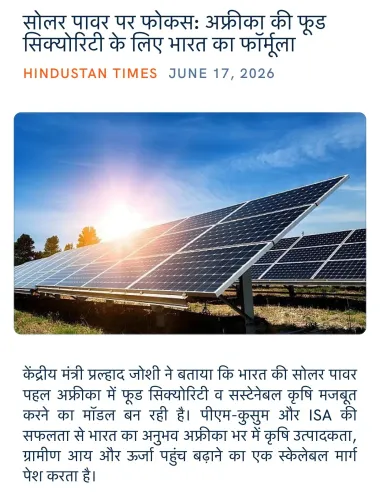
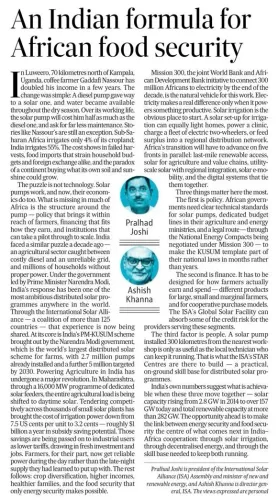
Prime Minister Narendra Modi on Wednesday, 17 June described India's solar-powered agriculture model as a scalable solution for Africa, highlighting its potential to strengthen food security, boost farmer incomes, and expand clean energy access across the continent. The remarks came as Modi shared an article authored by Union Minister Pralhad Joshi on social media platform X.
What Modi Said
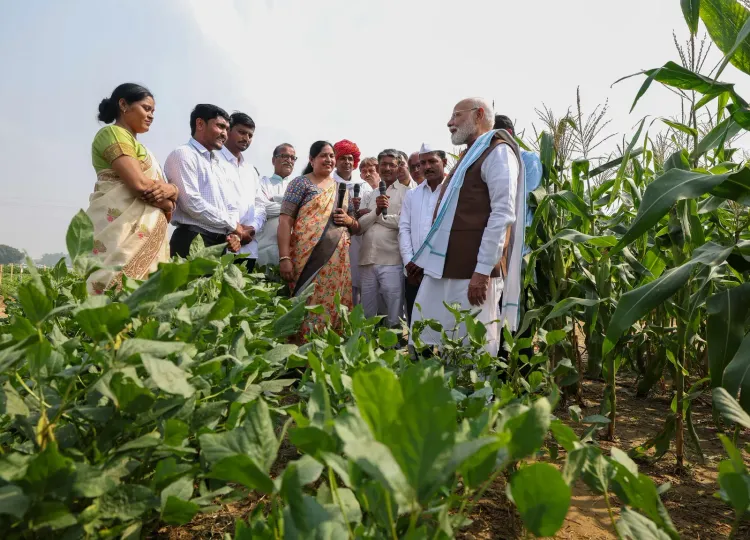
'Solar power is emerging as a transformative force. India's model of harnessing clean energy for agriculture offers a scalable model for Africa, strengthening shared prosperity, empowering communities and promising food security. Truly a matter of pride for our farmers and all of us!' the Prime Minister wrote in his post.
Modi framed India's agricultural solar transition not merely as a domestic achievement but as a replicable template for nations grappling with energy access, climate resilience, and food production challenges.
Key Initiatives Driving the Push
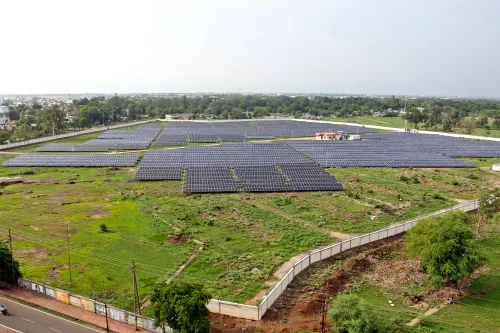
The article shared by Modi spotlights two flagship programmes as central to India's solar agriculture story. The Pradhan Mantri Kisan Urja Suraksha evam Utthaan Mahabhiyan (PM-KUSUM) has been instrumental in deploying solar-powered irrigation systems at scale, reducing farmers' dependence on grid electricity and diesel pumps. The International Solar Alliance (ISA), co-founded by India, has emerged as the multilateral vehicle for exporting this model to member nations across Africa and beyond.
According to the article, India's experience demonstrates how renewable energy can improve farm productivity, enhance farmer incomes, and reduce reliance on conventional energy sources — a combination of outcomes that African nations with large agrarian populations are actively seeking.
Joshi Amplifies the Message
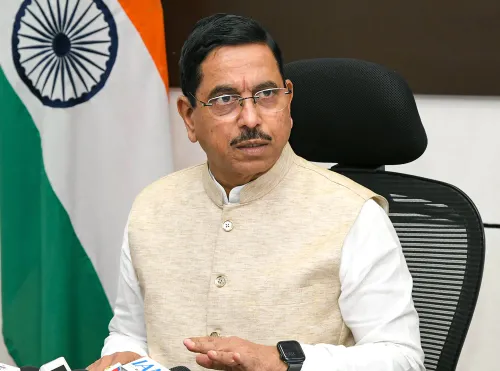
Union Minister Pralhad Joshi also shared the article on X, reinforcing the government's messaging. 'India's solar revolution is creating pathways far beyond its borders,' Joshi stated, adding that initiatives like PM-KUSUM and the ISA are helping strengthen food security and expand clean energy access across nations.
The coordinated sharing by both the Prime Minister and a senior Cabinet minister signals that solar agriculture diplomacy is being positioned as a key pillar of India's engagement with the African continent — a relationship that has gained strategic momentum since the Africa Union's inclusion in the G20 during India's presidency in 2023.
Why This Matters
Africa faces a compounding challenge: a rapidly growing agricultural workforce, persistent energy deficits, and escalating climate stress on food systems. India's PM-KUSUM model — which decentralises solar power generation to the farm level — addresses all three simultaneously. Notably, this is not the first time India has pitched its clean energy experience as a development export; the ISA was specifically designed to channel solar solutions toward tropical nations with high irradiance but low energy infrastructure.
The broader context is also diplomatic. India has been deepening bilateral and multilateral ties with African nations, and framing its solar agriculture success as a public good rather than a commercial offering strengthens its soft power positioning ahead of upcoming multilateral engagements.
What Comes Next
No specific bilateral agreements or funding commitments were announced alongside Modi's post. However, the ISA's existing frameworks provide a ready channel for technology transfer and capacity building. Observers will watch whether Wednesday's statements translate into concrete project announcements at upcoming India-Africa forums or ISA governing council meetings.
Point of View
Not incidental. Framing PM-KUSUM as an exportable model — rather than a domestic subsidy scheme — repackages a welfare programme as a geopolitical asset at a moment when India is competing with China for influence across Africa. The ISA gives this credibility: it is a multilateral institution India controls, and it already has the legal architecture for technology transfer. The missing piece is money — no fund or concessional credit line was announced, which means the 'blueprint' remains aspirational until project-level commitments follow. The real test will come at the next ISA governing council or an India-Africa summit, where rhetoric must convert to signed agreements.
NationPress
20 Sept 2026
Frequently Asked Questions
What did PM Modi say about India's solar agriculture model and Africa?
PM Modi said India's model of harnessing solar power for agriculture offers a scalable solution for Africa, strengthening shared prosperity, empowering communities, and promising food security. He made the remarks on 17 June while sharing an article by Union Minister Pralhad Joshi on X.
What is PM-KUSUM and why is it relevant to Africa?
PM-KUSUM (Pradhan Mantri Kisan Urja Suraksha evam Utthaan Mahabhiyan) is India's flagship scheme for deploying solar-powered irrigation and agricultural systems at the farm level. It is cited as a replicable model for African nations facing energy deficits, climate stress, and food security challenges.
What is the International Solar Alliance and how does it connect India to Africa?
The International Solar Alliance (ISA) is a multilateral body co-founded by India to channel solar energy solutions to tropical nations with high solar irradiance but limited energy infrastructure. It provides the institutional framework for India to transfer its solar agriculture experience to African member nations.
Were any specific agreements or funding commitments announced?
No specific bilateral agreements or funding commitments were announced alongside Modi's post. The ISA's existing frameworks remain the primary channel for technology transfer and capacity building between India and African nations.
Why is India positioning its solar agriculture model as a blueprint for Africa?
India has been deepening strategic and diplomatic ties with African nations, particularly after the Africa Union joined the G20 during India's 2023 presidency. Offering its solar agriculture experience as a development model strengthens India's soft power on the continent and positions the country as a partner in climate resilience and food security.