Modi sets 100 GW nuclear target, clears ₹85,000 crore offshore push on Independence Day
Synopsis
Modi's 80th Independence Day address was a declaration of energy sovereignty. A 100 GW nuclear target by 2047, ₹85,000 crore for seabed exploration, and a Critical Minerals Corridor signal a structural pivot — India is betting that controlling its energy inputs, not just its energy output, is the defining economic challenge of the next two decades.
Key Takeaways
PM Modi set a 100 GW nuclear power capacity target for India by 2047 , backed by the newly passed SHANTI Act .
The government approved ₹85,000 crore to accelerate the Samudra Manthan offshore resource exploration programme.
Five new nuclear reactors are to be commissioned within this decade.
India's piped gas network has expanded from 70 cities to 700 cities since 2014; piped gas households grew from 20–22 lakh to 1.75 crore .
Solar installed capacity has risen from 2 GW to 160 GW over the past twelve years.
Modi said 99 per cent of India's coastal areas were previously declared no-go zones for exploration — a policy the government has reversed.
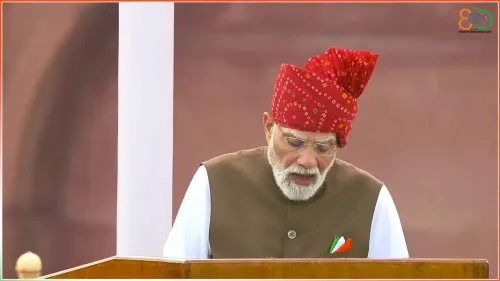
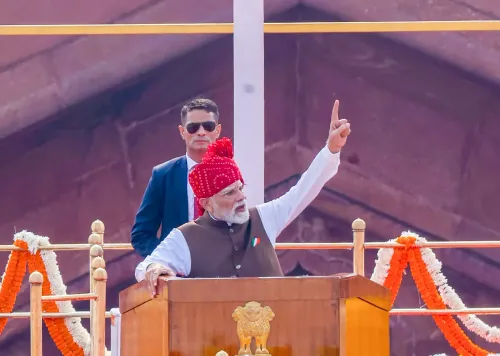
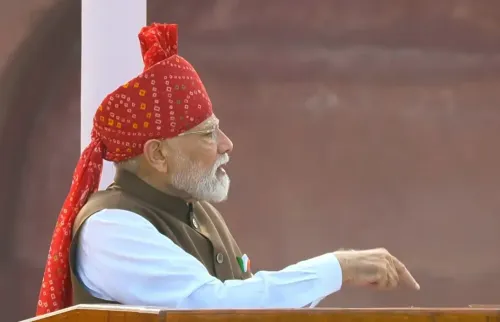
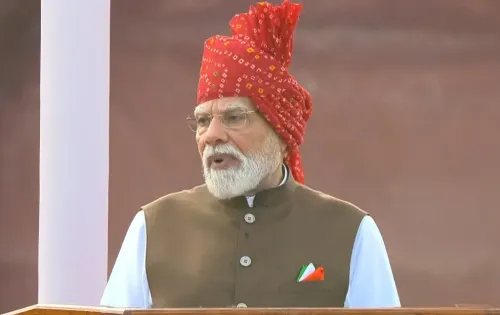
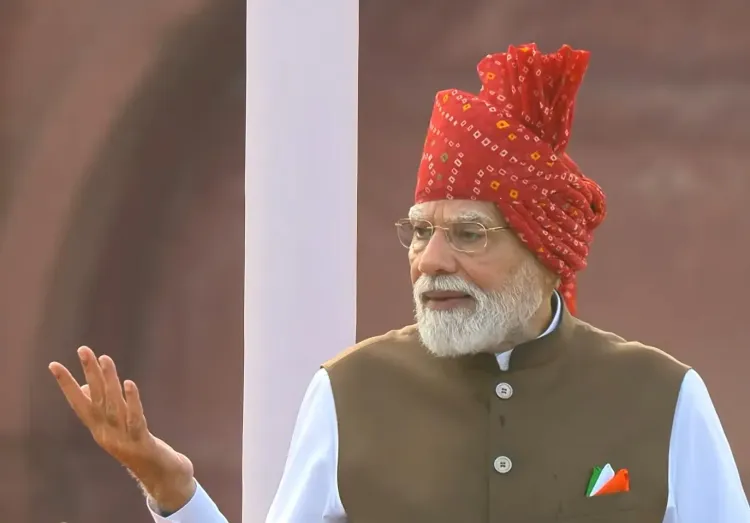
Prime Minister Narendra Modi on 15 August 2025 laid out an ambitious energy roadmap from the ramparts of the Red Fort, targeting 100 gigawatts (GW) of nuclear power capacity by 2047 and committing ₹85,000 crore to accelerate offshore resource exploration. Addressing the nation on the 80th Independence Day, Modi framed energy security, critical minerals, and domestic resource extraction as the three pillars of India's long-term growth strategy.
Nuclear Energy at the Centre of India's 2047 Vision
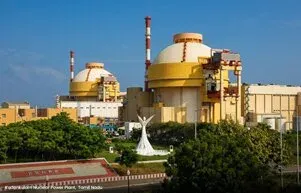
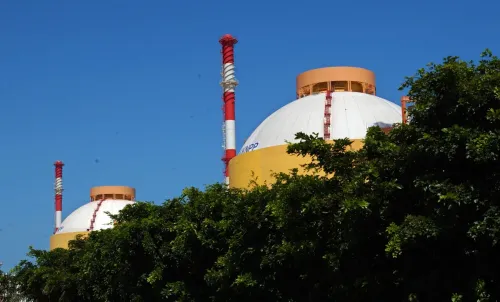
Modi cited Parliament's recent passage of the SHANTI Act as a legislative turning point that has opened fresh pathways for the nuclear sector. The government aims to commission five new nuclear reactors within this decade as part of the broader 100 GW nuclear capacity goal. He described nuclear energy as indispensable to powering the next generation of technologies — artificial intelligence, semiconductor manufacturing, and data centres — all of which, he noted, demand electricity 'in very large quantities.'
'It is now difficult to run the new world without energy,' Modi said, underlining that energy demand would rise sharply as these technologies scale globally.
₹85,000 Crore for Offshore Exploration Under Samudra Manthan
Referring to the Samudra Manthan initiative announced last year, Modi said the government had recently approved an outlay of ₹85,000 crore to accelerate the programme, which targets identification of new energy and mineral reserves beneath the seabed. He was pointed in his criticism of past policy, saying India had effectively declared 99 per cent of its coastal areas as no-go zones for exploration — a restriction the current government has moved to dismantle.
This comes amid a broader strategic push to reduce import dependence in energy and raw materials, particularly as global supply chains for critical inputs grow more contested.
Critical Minerals: Agreements, Corridors and Global Trust
Modi said India had launched the National Critical Minerals Mission and announced a Critical Minerals Corridor in the Union Budget, with agreements being signed with several countries. He argued that the entire technology sector — from chips to clean energy — is structurally dependent on critical minerals, and that nations were increasingly placing their trust in India in this domain.
Notably, the push on critical minerals dovetails with India's semiconductor ambitions and its positioning as a supply-chain alternative to China in strategic materials.
Solar and Gas: Charting a Decade of Progress
Modi highlighted the expansion of India's piped natural gas network from 70 cities before 2014 to 700 cities today, and said the number of households receiving piped gas had grown from 20–22 lakh to nearly 1.75 crore currently. On solar power, he said installed capacity had surged from 2 GW roughly twelve years ago to 160 GW at present — an eighty-fold increase that has made India one of the world's largest solar markets.
What Comes Next
With the SHANTI Act now in force and the ₹85,000 crore Samudra Manthan allocation cleared, the near-term focus will be on regulatory frameworks for offshore blocks and timelines for the five new reactors. Industry and energy analysts will watch whether the 100 GW nuclear target — requiring a sustained build-out over two decades — is backed by firm project pipelines and private-sector participation rules in the months ahead.
Point of View
But India's nuclear build record is slow: the country has taken decades to add capacity that other nations commission in years. The ₹85,000 crore Samudra Manthan allocation is significant, but offshore exploration timelines are long and returns uncertain. What the Independence Day address does not yet answer is who builds the reactors, on what terms, and with what technology — the details that will determine whether 100 GW is a plan or a slogan.
NationPress
30 Sept 2026
Frequently Asked Questions
What is India's 100 GW nuclear power target and when was it announced?
Prime Minister Narendra Modi announced on 15 August 2025, during his 80th Independence Day address, that India aims to achieve 100 GW of nuclear power capacity by 2047. The target is enabled by Parliament's passage of the SHANTI Act, which has opened new pathways for the nuclear sector.
What is the Samudra Manthan initiative and how much has been allocated to it?
Samudra Manthan is an Indian government programme focused on exploring and identifying energy and mineral reserves beneath the seabed. The government recently approved ₹85,000 crore to accelerate the initiative, which was originally announced last year.
What is the SHANTI Act and why does it matter for nuclear energy?
The SHANTI Act is legislation passed by India's Parliament that opens new regulatory and commercial pathways for the nuclear energy sector. Modi cited it as a key enabler for achieving the 100 GW nuclear capacity target by 2047 and for commissioning five new reactors this decade.
What did Modi say about India's critical minerals strategy?
Modi said India had launched the National Critical Minerals Mission and announced a Critical Minerals Corridor in the Union Budget, with agreements being signed with multiple countries. He linked critical mineral security directly to India's ambitions in AI, semiconductors, and clean energy.
How has India's solar and gas infrastructure grown since 2014?
According to Modi, India's solar installed capacity has grown from 2 GW to 160 GW over the past twelve years. The piped natural gas network has expanded from 70 cities to 700 cities, with household connections rising from 20–22 lakh to nearly 1.75 crore.