Khattar flags 100 GW nuclear target, SHANTI Act on I-Day
Synopsis
Union Power Minister Manohar Lal Khattar, on India's 80th Independence Day, announced a 100 GW nuclear power target by 2047, passage of the SHANTI Act, plans for five new reactors this decade, and India's mastery of five breeder nuclear technologies.
Key Takeaways
Union Power Minister Manohar Lal Khattar made the announcement on 15 August 2026 , India's 80th Independence Day .
The SHANTI Act has been passed in Parliament, establishing a new legislative framework for India's nuclear energy expansion.
India has set a target of 100 GW of nuclear power capacity by 2047 .
Five new nuclear reactors are targeted for commissioning within the current decade.
India claims to have achieved mastery over five breeder nuclear technologies in the current year, advancing Stage Two of its three-stage atomic energy programme.
India's existing nuclear legal framework dates to the Atomic Energy Act, 1962 ; the 2008 Indo-US civil nuclear deal was the last major structural shift before this.
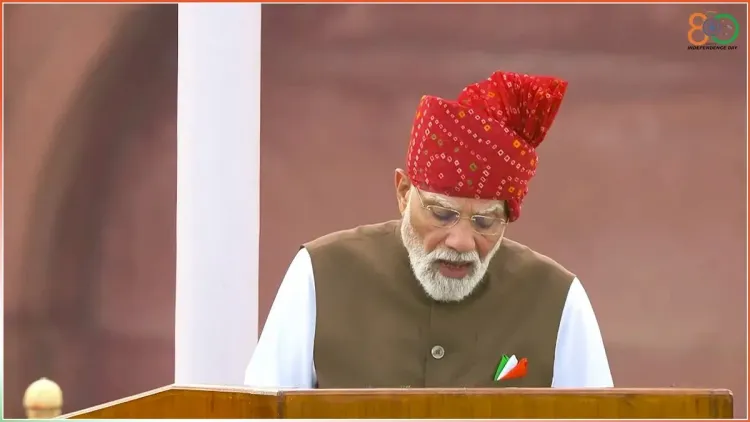
On India's 80th Independence Day, Union Power Minister Manohar Lal Khattar laid out an ambitious nuclear energy roadmap — 100 GW of nuclear power capacity by 2047, five new reactors this decade, and a landmark parliamentary act already clearing the path.
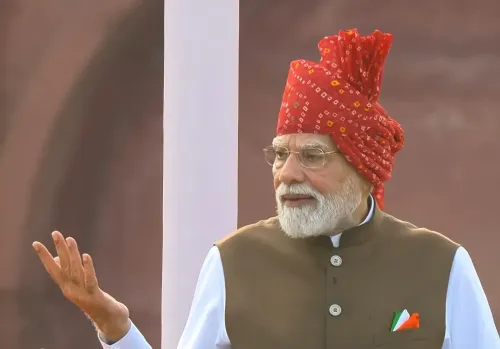
Posting in Hindi on 15 August 2026, Khattar declared: 'Energy Security की दिशा में हमने एक के बाद एक मजबूत कदम उठाए हैं' — 'We have taken one strong step after another in the direction of energy security.' The centrepiece of his statement: the passage of the SHANTI Act in Parliament, which he described as charting the course for India's nuclear ambitions.
What the SHANTI Act unlocks
Khattar positioned the SHANTI Act as the legislative backbone of India's renewed nuclear push — the mechanism that clears regulatory and structural hurdles for large-scale atomic energy expansion. India's nuclear legal architecture has historically been anchored by the Atomic Energy Act, 1962, which centralised all nuclear activity under government control. Any new legislation in this space would mark a significant structural shift, potentially opening the sector to broader participation and faster project execution.
The 2008 Indo-US civil nuclear agreement was the last watershed moment — ending decades of international isolation and enabling fuel and technology cooperation. If the SHANTI Act represents the next legislative leap, it signals that the government is not just setting targets but restructuring the legal environment to meet them.
Five reactors this decade, and a breeder milestone
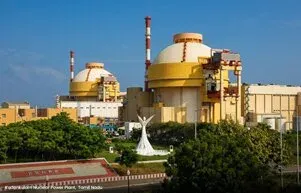
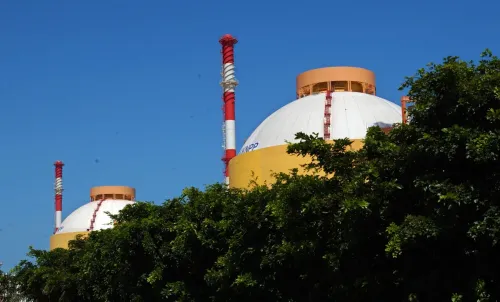
The minister also flagged a concrete near-term commitment: five new nuclear reactors to be established within the current decade. That is a significant acceleration from India's historically cautious pace of reactor commissioning, which has been constrained by supply chains, land acquisition, and regulatory timelines.
Equally notable is the claim that India has, in the current year, achieved mastery over five breeder nuclear technologies — a milestone in the country's long-running three-stage atomic energy programme. Fast Breeder Reactors are the centrepiece of Stage Two of that programme, designed to generate more fuel than they consume and eventually enable thorium utilisation at scale. India has been developing this capability at Kalpakkam for decades; a declared breakthrough would mark a generational payoff.
Nuclear power's place in India's 2047 energy picture
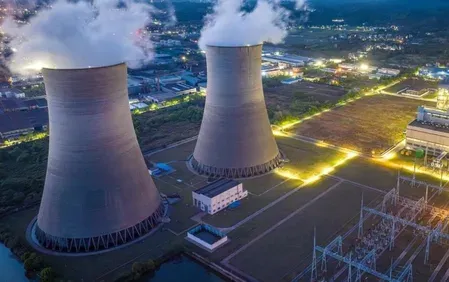
India's electricity demand is rising sharply, and renewables — while growing fast — cannot alone guarantee round-the-clock baseload power. Nuclear energy, as a low-carbon, high-density source, has long been the intended third pillar alongside solar and hydro. The 100 GW by 2047 target, if achieved, would represent a transformational scale-up from India's current installed nuclear capacity of roughly 7-8 GW.
The Department of Atomic Energy oversees this programme, and its commissioning timelines will be the real test. Announcements of reactor targets have historically outpaced actual construction schedules. The question now is whether the SHANTI Act's legislative changes and the breeder technology milestone translate into shovels in the ground — and reactors on the grid — before the decade is out.
India at 80 is not just celebrating independence. It is placing a very large bet on the atom.
Point of View
Not just intent. The SHANTI Act, if it restructures participation rules in the sector, could be as consequential as the 2008 civil nuclear deal. The 100 GW target is politically bold; India's current installed nuclear capacity makes it an order-of-magnitude leap that will test institutional capacity at the Department of Atomic Energy and in project execution. The breeder technology claim, if substantiated, would validate decades of indigenous R&D investment and set up Stage Three thorium utilisation as a realistic future horizon — placing India among a very small group of nations with that capability.
NationPress
29 Sept 2026
Frequently Asked Questions
What is the SHANTI Act India passed in Parliament?
The SHANTI Act is legislation passed in the Indian Parliament to provide a new legal framework for expanding nuclear energy capacity. Union Power Minister Manohar Lal Khattar cited it on Independence Day 2026 as the key policy instrument enabling India's 100 GW nuclear target by 2047.
What is India's nuclear power target for 2047?
India has set a target of 100 GW of nuclear power capacity by 2047, as announced by Union Power Minister Manohar Lal Khattar on India's 80th Independence Day. The government also aims to commission five new nuclear reactors within the current decade.
What is India's three-stage nuclear programme?
India's three-stage atomic energy programme, initiated in the 1950s, is designed to progressively use thorium as fuel. Stage One uses natural uranium in Pressurised Heavy Water Reactors; Stage Two uses Fast Breeder Reactors to generate plutonium; Stage Three uses thorium-uranium-233 fuel. Mastery of breeder technology advances Stage Two.
What is a breeder nuclear reactor and why does it matter for India?
A Fast Breeder Reactor produces more fissile material than it consumes, making it highly fuel-efficient. For India, breeder reactors are critical because they unlock the country's large thorium reserves for eventual use in Stage Three of its atomic energy programme, reducing long-term dependence on imported uranium.
What did Manohar Lal Khattar say on Independence Day 2026?
On 15 August 2026, Union Power Minister Manohar Lal Khattar posted that India has passed the SHANTI Act to advance nuclear energy, set a 100 GW nuclear power target by 2047, plans to establish five new nuclear reactors this decade, and has achieved mastery over five breeder nuclear technologies.