MP Cabinet Approves Uniform Civil Code Bill 2026
Synopsis
The Madhya Pradesh cabinet approved the 'Madhya Pradesh Samaan Nagrik Sanhita 2026 Bill' on 19 July 2026, following statewide public consultations. CM Dr. Mohan Yadav's government advances the UCC resolve, making MP one of the first states to move toward a Uniform Civil Code after Uttarakhand's 2024 precedent.
Key Takeaways
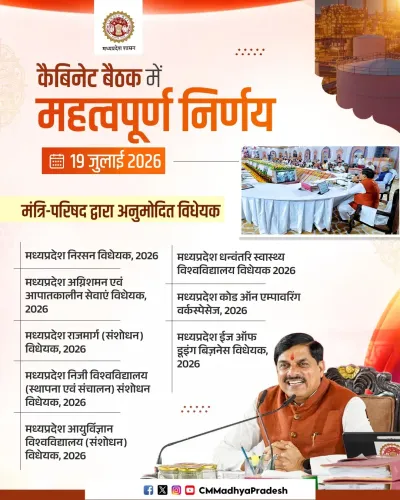
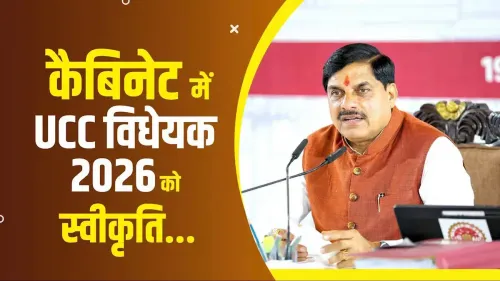
The Madhya Pradesh cabinet approved the Madhya Pradesh Samaan Nagrik Sanhita (UCC) 2026 Bill on 19 July 2026 .
Mohan Yadav chairs the cabinet that cleared the bill, fulfilling a stated BJP governance commitment.
Extensive public consultations ( jan paramarsh ) were conducted statewide before the cabinet approval, with large citizen participation.
Uttarakhand became the first Indian state to pass a UCC bill in February 2024 , serving as a legislative precedent for MP.
The bill will next be introduced in the Madhya Pradesh Legislative Assembly for debate and enactment.
The UCC is rooted in Article 44 of the Indian Constitution as a Directive Principle of State Policy.
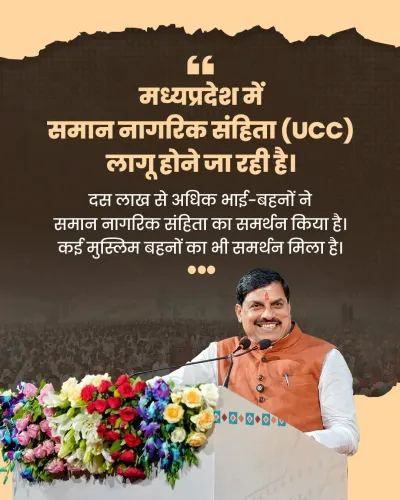
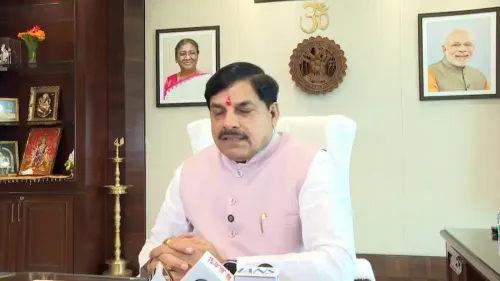
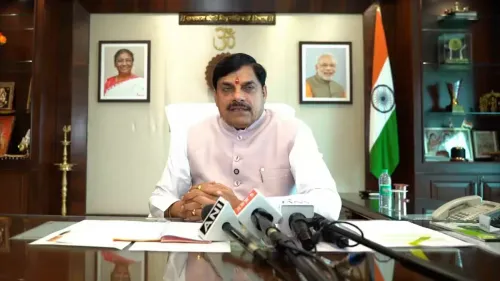
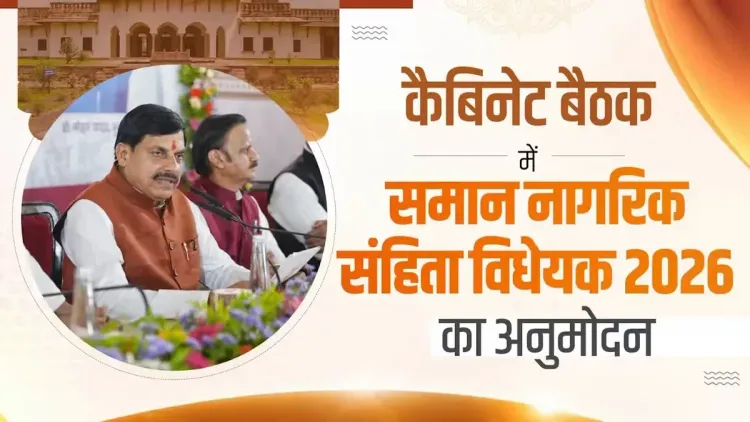
The Chief Minister's Office of Madhya Pradesh announced on Sunday, 19 July 2026, that the state cabinet has approved the 'Madhya Pradesh Samaan Nagrik Sanhita (Uniform Civil Code) 2026 Bill' — a landmark legal reform measure — during a cabinet meeting chaired by Chief Minister Dr. Mohan Yadav. The approval follows an extensive public consultation process conducted across the state, during which a large number of citizens submitted suggestions and the initiative received broad public support.
Context
The cabinet's decision advances a long-standing commitment articulated in the BJP's electoral platform. The post from the Chief Minister's Office stated that the approval fulfils the resolve of 'sabhī nāgarikōṃ ke lie samān kānūn' ('equal law for all citizens'). Chief Minister Dr. Mohan Yadav, who has led the state since December 2023, has consistently positioned legal uniformity across religious communities as a governance priority for Madhya Pradesh.
The announcement noted that prior to the cabinet approval, a comprehensive public consultation — jan paramarsh — was conducted across the state. Citizens participated in large numbers, offering suggestions that shaped the bill's formulation, according to the official post.
Policy Backdrop
Article 44 of the Indian Constitution lists a Uniform Civil Code as a Directive Principle of State Policy, calling for uniform personal laws irrespective of religion. Personal laws currently govern matters such as marriage, divorce, inheritance, and adoption differently across religious communities in India.
Uttarakhand became the first Indian state to pass a Uniform Civil Code bill in February 2024, establishing a legislative precedent that several other BJP-governed states have since referenced. Madhya Pradesh's cabinet approval of its own bill in 2026 follows this pattern of state-level legislative experimentation ahead of any potential national framework.
Stakeholders and Impact
The bill, if enacted, would apply uniformly to all citizens of Madhya Pradesh regardless of their religious affiliation. Proponents argue that it will standardise rights — particularly for women — in matters of marriage, divorce, maintenance, and inheritance, areas where personal laws have historically varied. Religious communities and civil society organisations have been among the most closely engaged stakeholders in the public consultation phase.
The breadth of the consultation process cited by the Chief Minister's Office suggests the government sought to pre-empt opposition by building a documented record of popular support before tabling the legislation.
What's Next
The approved bill is expected to be introduced in the Madhya Pradesh Legislative Assembly for debate and passage. A legislative majority would be required for it to become law, after which an implementation timeline and potential judicial review could follow. The progression of this bill will be closely watched as a marker for how state-level UCC legislation fares in the courts and in public discourse ahead of any prospective national-level move.
Point of View
Following the Uttarakhand template of 2024. By front-loading a documented public consultation process, the Mohan Yadav government has built a political and procedural buffer against opposition claims of minority exclusion. The move also signals that BJP-ruled states are willing to advance contentious constitutional reform at the state level without waiting for a national consensus. How the bill fares in the assembly and in potential judicial review will shape the trajectory of UCC efforts across other states.
NationPress
20 Jul 2026
Frequently Asked Questions
What is the Madhya Pradesh Uniform Civil Code Bill 2026?
The Madhya Pradesh Samaan Nagrik Sanhita 2026 Bill is a proposed law approved by the MP cabinet on 19 July 2026 that seeks to establish a single, uniform set of civil laws — covering marriage, divorce, inheritance, and adoption — applicable to all citizens of the state regardless of religion.
Which was the first Indian state to pass a Uniform Civil Code?
Uttarakhand was the first Indian state to pass a Uniform Civil Code bill, doing so in February 2024, setting a legislative precedent that other BJP-governed states including Madhya Pradesh have since referenced.
What is Article 44 of the Indian Constitution?
Article 44 is a Directive Principle of State Policy that directs the state to endeavour to secure a Uniform Civil Code for all citizens throughout India, though it is not enforceable in court as a fundamental right.
What happens after the MP cabinet approves the UCC bill?
After cabinet approval, the bill must be introduced and passed by the Madhya Pradesh Legislative Assembly. If enacted, it would then be subject to possible legal challenges and a government-defined implementation timeline.
Was there public consultation before the MP UCC bill was approved?
Yes, the Chief Minister's Office stated that a comprehensive statewide public consultation was conducted before the cabinet meeting, with a large number of citizens submitting suggestions and the initiative receiving broad public support.