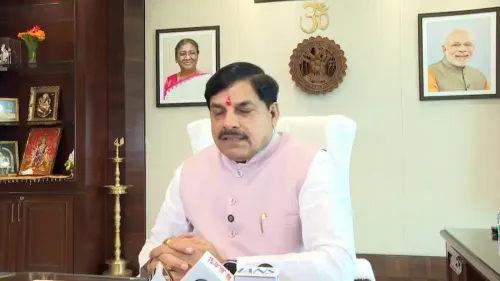
MP Cabinet Clears UCC Bill 2026 Unanimously: CM Mohan Yadav

Synopsis
The Madhya Pradesh cabinet on 19 July 2026 unanimously cleared the Uniform Civil Code Bill, 2026, CM Dr. Mohan Yadav announced. If passed by the assembly, MP would become the second BJP-governed state after Uttarakhand to enact UCC legislation, intensifying the national debate on replacing religion-specific personal laws.
Key Takeaways
The Madhya Pradesh cabinet unanimously approved the Uniform Civil Code (UCC) Bill, 2026 on 19 July 2026 .
Mohan Yadav made the announcement via a post on X, confirming cabinet consensus.
Uttarakhand enacted India's first state-level UCC statute in February 2024 ; MP would become the second state to do so.
The UCC aims to replace religion-specific personal laws on marriage, divorce, inheritance, and adoption with a single civil framework under Article 44 of the Constitution.
The bill must now pass the Madhya Pradesh Legislative Assembly , where the BJP holds a majority, before it can become law.
Legal challenges before the High Court or Supreme Court are widely anticipated once the legislation is enacted.
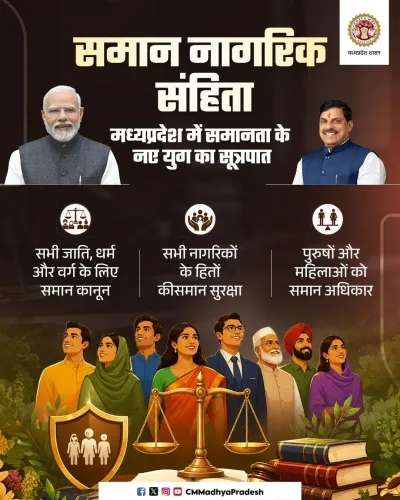
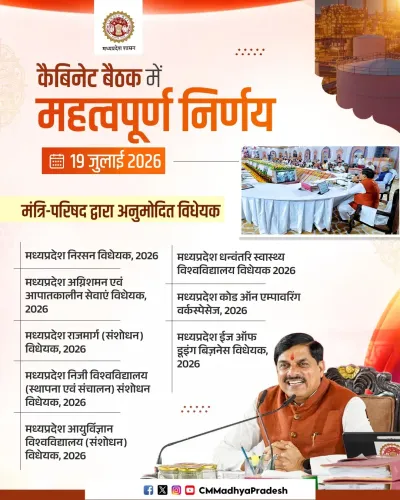
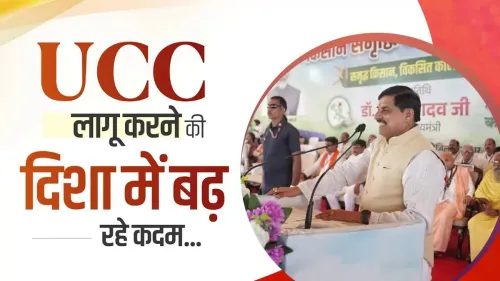
Madhya Pradesh Chief Minister Dr. Mohan Yadav announced on Sunday, 19 July 2026 that the state cabinet has unanimously approved the Uniform Civil Code (UCC) Bill, 2026, marking a landmark step toward replacing religion-specific personal laws in the state with a common civil framework. The decision was declared through a post on X, signalling the ruling BJP's intent to advance one of its most prominent ideological commitments at the state level.
Context
In his post, Dr. Mohan Yadav stated — 'Aaj Madhya Pradesh ki Cabinet ne Samaan Nagrik Sanhita (UCC) Vidheyak, 2026 ko sarvassammati se sweekriti pradaan ki hai' ('Today, the Cabinet of Madhya Pradesh has unanimously approved the Uniform Civil Code Bill, 2026'). The announcement was accompanied by the hashtags #UniformCivilCode, #UCC, and #cabinetdecision, indicating an official government communication rather than a personal opinion. Cabinet approval is the procedural step that precedes the introduction of a bill in the state legislature.
Policy Backdrop
The Uniform Civil Code is envisioned under Article 44 of the Indian Constitution as a Directive Principle of State Policy, calling for a common set of civil laws governing marriage, divorce, inheritance, and adoption across all religious communities. Uttarakhand became the first Indian state to enact a UCC statute in February 2024, providing the BJP with a working legislative template. Goa has long operated under a Portuguese-era common civil code dating to 1867, which proponents frequently cite as evidence that such a framework is constitutionally and practically viable.
The Bharatiya Janata Party has pledged UCC implementation in successive national manifestos, including its 2019 election manifesto. BJP-governed states have progressively moved to introduce similar legislation following Uttarakhand's precedent, reflecting an incremental state-level strategy that mirrors the party's approach to other social-reform legislation.
Stakeholders and Impact
Madhya Pradesh, a central Indian state under BJP governance since 2003 — with a brief interruption — is home to a diverse population including significant religious minority communities. A UCC, if enacted, would replace personal laws currently governing Muslims, Christians, Parsis, and other communities in matters of family law. Women's rights groups are divided on the issue: some welcome uniform provisions on marriage age, inheritance, and divorce, while others caution that the bill's specific provisions must be scrutinised before conclusions are drawn. Legal practitioners have flagged the likelihood of constitutional challenges before the Madhya Pradesh High Court or the Supreme Court of India once the bill becomes law.
What's Next
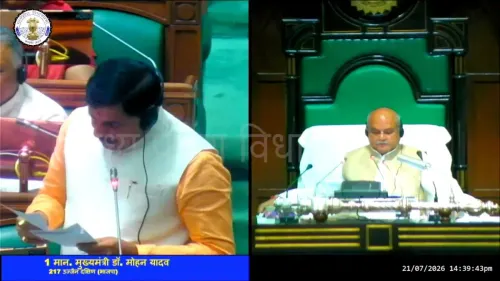
The UCC Bill, 2026 will now be introduced in the Madhya Pradesh Legislative Assembly, where the BJP holds a comfortable majority, making passage likely. Debate in the House is expected to draw responses from opposition parties and minority community representatives. Legal experts anticipate that constitutional challenges — particularly on grounds of federalism and fundamental rights — will follow enactment, potentially placing the legislation before higher courts. The bill's passage would make Madhya Pradesh the second Indian state after Uttarakhand to enact a UCC statute, adding significant momentum to the national debate on uniform civil laws ahead of future electoral cycles.
Point of View
Reinforcing its state-level incremental strategy to advance a policy it has championed nationally for decades. Following Uttarakhand's 2024 enactment, a second large BJP state moving toward UCC significantly raises the political cost for the central government to delay a national framework. The move is timed to consolidate the party's ideological base while testing constitutional limits that only higher courts can definitively settle. For opposition parties, the development sharpens a fault line on minority rights and federalism that will define political contestation in the run-up to assembly and general elections.
NationPress
18 Oct 2026
Frequently Asked Questions
What is the Uniform Civil Code Bill passed by Madhya Pradesh cabinet?
The Madhya Pradesh cabinet on 19 July 2026 unanimously approved the Uniform Civil Code (UCC) Bill, 2026, which proposes a common set of civil laws on marriage, divorce, inheritance, and adoption to replace religion-specific personal laws in the state.
Which was the first Indian state to pass a Uniform Civil Code?
Uttarakhand was the first Indian state to enact a Uniform Civil Code statute, passing the legislation in February 2024 under its BJP government.
Will the UCC Bill automatically become law after cabinet approval in MP?
No. Cabinet approval allows the bill to be introduced in the Madhya Pradesh Legislative Assembly. It must be debated and passed by the assembly before it can become law, after which it is likely to face legal challenges in higher courts.
How does the UCC affect religious minorities in Madhya Pradesh?
A UCC would replace the personal laws currently governing Muslims, Christians, Parsis, and other communities in family matters such as marriage, divorce, and inheritance with a single civil code applicable to all citizens regardless of religion.
What is Article 44 of the Indian Constitution?
Article 44 is a Directive Principle of State Policy that directs the state to endeavour to secure a Uniform Civil Code for all citizens across India, though it is not a justiciable right enforceable in court.