MP CM Mohan Yadav Pushes Milk Cooperatives to Boost Farm Income
Synopsis
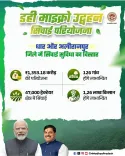
Chief Minister Dr. Mohan Yadav says Madhya Pradesh is forming milk cooperative societies in gram panchayats to help farmers earn from dairy alongside grain production, deepening a cooperative dairy model the state has pursued since the 1970s.
Key Takeaways
Mohan Yadav announced on November 10, 2026 that Madhya Pradesh is promoting dairy production to increase farmer and livestock keeper incomes.
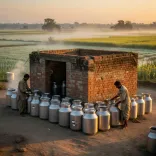
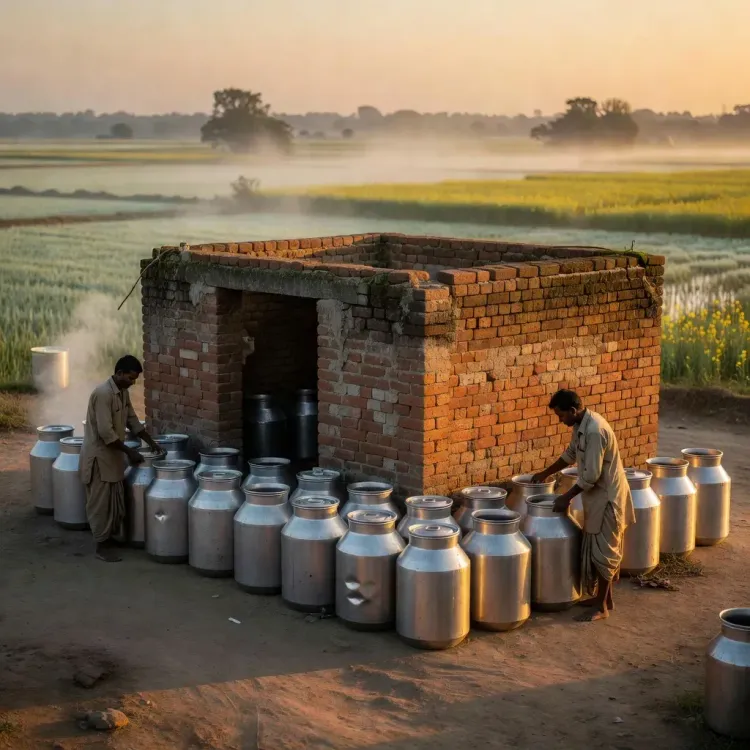
Dugdh Sahakari Samitis (milk cooperative societies) are being constituted specifically within gram panchayats for village-level milk collection.
The initiative builds on MP's cooperative dairy infrastructure , which dates back to the 1970s under the state Cooperative Dairy Federation.
The goal is for farmers to earn from both grain production and animal husbandry, reducing dependence on a single crop income.
The pace of society formation across the state's panchayats and changes in district milk procurement volumes will be the key indicators to watch.
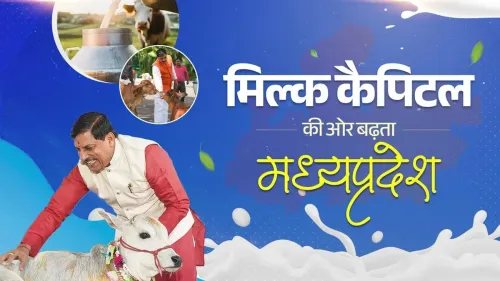
Milk, not just wheat and soybean, is now a pillar of Madhya Pradesh's rural income strategy. Chief Minister Dr. Mohan Yadav on Tuesday, November 10, 2026, declared that the state government is actively promoting dairy production to raise earnings for farmers and livestock keepers — and is setting up milk cooperative societies across village panchayats to make it happen.
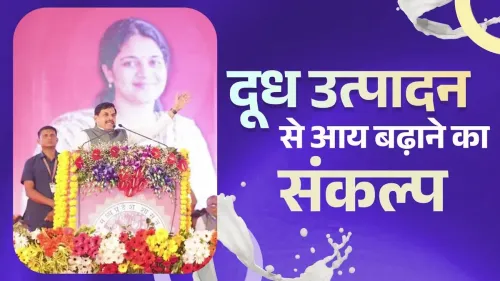
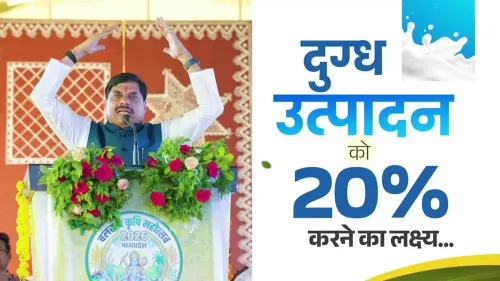
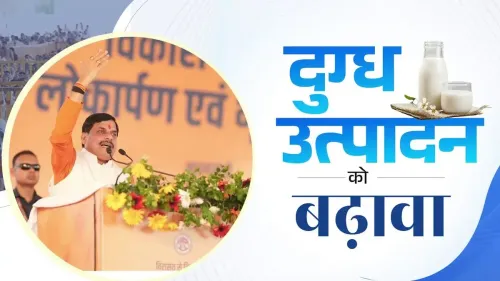
Speaking on the initiative, CM Dr. Yadav stated: 'The state government is encouraging milk production to increase the income of farmers and livestock keepers. Milk cooperative societies are being formed in gram panchayats across the state for milk collection. Our effort is that farmers increase their income not only from grain production but also from animal husbandry and milk production.'
Cooperative roots: a model decades in the making
This is not a fresh idea — it is a deepened commitment to a proven architecture. Madhya Pradesh has run dairy cooperatives under its state Cooperative Dairy Federation since the 1970s, drawing directly from the national Operation Flood blueprint that transformed India into the world's largest milk producer. What the current government is signalling is an expansion of that village-level infrastructure, specifically by anchoring new Dugdh Sahakari Samitis (milk cooperative societies) within gram panchayats — the most granular unit of elected rural governance.
The logic is straightforward: grain crops leave farmers exposed to monsoon failure and market price swings. Dairy provides a daily, year-round cash flow. A cow or buffalo does not wait for harvest season.
Why small farmers and livestock keepers stand to gain
Madhya Pradesh is a predominantly rural state in central India, with a large share of its population dependent on agriculture and livestock. For smallholders who already keep animals, the barrier to entry into dairy income is often not the animal itself — it is the absence of a nearby, reliable collection point that offers fair pricing. That is precisely the gap the Dugdh Sahakari Samitis are designed to close, by aggregating small volumes at the panchayat level and feeding them into larger processing and marketing chains.
The pattern mirrors what several other Indian states have pursued — treating allied agricultural activities like dairy, poultry, and fisheries as income shock-absorbers for crop-dependent households. In Madhya Pradesh's case, the institutional hook to gram panchayats gives the model a governance backbone that standalone private collection often lacks.
What to watch as the rollout unfolds
The announcement sets a direction; the proof will be in the pace. How quickly new cooperative societies are constituted across the state's thousands of gram panchayats, and whether district-level milk procurement volumes rise meaningfully, will be the real scorecard. The government's ability to link these village-level societies to cold-chain infrastructure and processing capacity will determine whether smallholder dairy income actually grows — or whether the initiative remains an aspiration on paper.
For now, CM Dr. Mohan Yadav has staked a clear policy position: in Madhya Pradesh, the next rupee of farm income will increasingly come from the dairy bucket, not just the grain store. The panchayat is the starting point.
Point of View
The Yadav government is essentially trying to plug smallholders into an institutional income safety net at the most local level of governance — a smart design choice if implementation follows. The move fits a broader national pattern of treating allied agriculture as a hedge against crop-income volatility, but Madhya Pradesh's explicit gram panchayat link gives it a governance specificity most state announcements lack. The real test is whether cold-chain and processing capacity keeps pace with collection expansion; without that back-end, village-level collection points risk becoming bottlenecks. For CM Yadav, who has consistently framed rural welfare as a core plank since taking office in late 2023, this is also a political signal — dairy is tangible, daily, and visible in ways that headline crop-support schemes often are not.
NationPress
10 Nov 2026
Frequently Asked Questions
What are Dugdh Sahakari Samitis in Madhya Pradesh?
Dugdh Sahakari Samitis are village-level milk cooperative societies being formed in gram panchayats across Madhya Pradesh to collect, aggregate, and market milk produced by local farmers and livestock keepers, connecting smallholders to larger dairy processing chains.
What did CM Mohan Yadav say about dairy farming in MP in 2026?
On November 10, 2026, CM Dr. Mohan Yadav stated that the Madhya Pradesh government is encouraging milk production to raise farmer and livestock keeper incomes, and that milk cooperative societies are being set up in gram panchayats to facilitate milk collection alongside grain farming.
How long has Madhya Pradesh had dairy cooperatives?
Madhya Pradesh has operated dairy cooperatives under its state Cooperative Dairy Federation since the 1970s, modelled on the national Operation Flood programme that made India the world's largest milk producer.
How does dairy farming help farmers in Madhya Pradesh?
Dairy provides a daily, year-round cash flow from milk sales, unlike grain crops that are seasonal and exposed to monsoon and market risks. The state government is expanding cooperative collection infrastructure so smallholders can earn from animal husbandry alongside their crop income.
What is the role of gram panchayats in MP's dairy scheme?
Gram panchayats — the village-level elected bodies — are being used as the base units for forming new Dugdh Sahakari Samitis, ensuring that milk collection infrastructure reaches the most local level of rural governance and is accessible to small farmers.