CM Mohan Yadav Orders UCC Awareness Drive Across MP Districts
Synopsis
Madhya Pradesh CM Dr. Mohan Yadav has directed all district collectors to run grassroots Uniform Civil Code awareness drives, asking citizens to submit suggestions by 22 June via ucc.mp.gov.in. The move follows Uttarakhand's landmark UCC law and reflects BJP-ruled states' push for sub-national UCC frameworks.
Key Takeaways
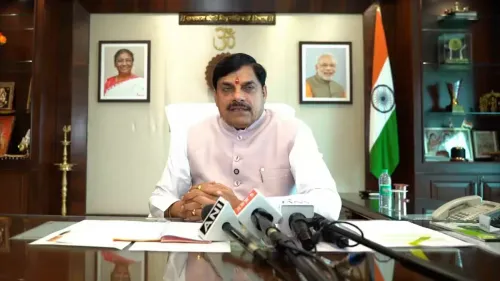
Mohan Yadav issued UCC awareness instructions to all Madhya Pradesh collectors via video-conference from Bhopal Niwas on 13 June 2026 .
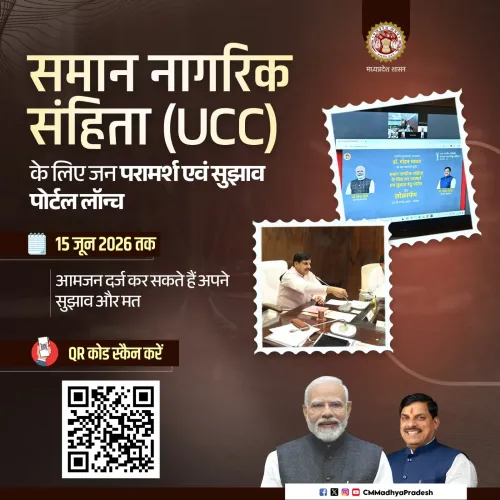
Citizens have until 22 June 2026 to submit suggestions on the Uniform Civil Code at ucc.mp.gov.in .
Outreach will cover both urban areas and village-level forums, including special gram sabha meetings .
Rozgar sahayaks , panchayat secretaries , self-help groups, mahila mandals, and social organisations are enlisted to spread awareness.
Uttarakhand enacted India's first state-level UCC law in February 2024 ; Madhya Pradesh's consultation follows that precedent.
Article 44 of the Constitution mandates the State to endeavour to secure a Uniform Civil Code for all citizens.
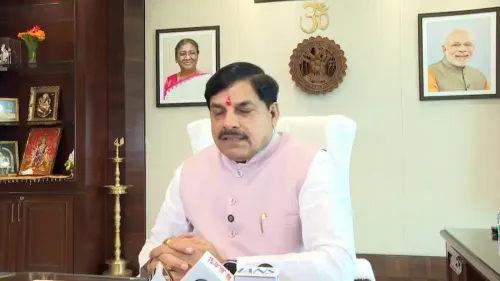
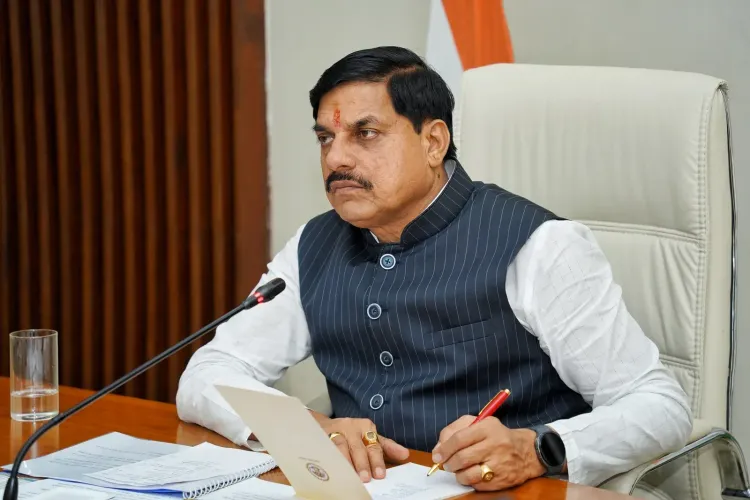
Madhya Pradesh Chief Minister Dr. Mohan Yadav on Saturday, 13 June 2026, directed all district collectors across the state to launch public awareness campaigns on the Uniform Civil Code (UCC), urging citizens to submit their suggestions by 22 June via the state portal ucc.mp.gov.in. The instructions were issued from Bhopal Niwas through a video-conferencing session with collectors.
Context
Posting on X, Dr. Yadav announced: 'समान नागरिक संहिता को लेकर 22 जून तक अपने सुझाव दें' ('Submit your suggestions on the Uniform Civil Code by 22 June'). He outlined that awareness drives would extend beyond urban centres to the village level, with employment assistants (rozgar sahayak), panchayat secretaries, and other local functionaries tasked with encouraging community discussion. Special gram sabha meetings are also to be convened as part of the outreach.
The chief minister specifically called on self-help groups (SHGs), women's organisations (mahila mandals), and social organisations to participate in building awareness. Members of the public have been invited to log suggestions directly on the state's dedicated UCC portal.
Policy Backdrop
Article 44 of the Indian Constitution lists a Uniform Civil Code — common personal laws on marriage, divorce, inheritance, and adoption applicable to all citizens regardless of religion — as a Directive Principle of State Policy. The Law Commission of India released a consultation paper on UCC reform in 2018, and the BJP's 2024 Lok Sabha election manifesto reiterated the party's commitment to enacting one.
Uttarakhand became the first Indian state to pass a UCC law in February 2024, setting a legislative precedent for other BJP-governed states. Madhya Pradesh's district-level consultation drive follows this sub-national pattern, using grassroots outreach to build a policy foundation before drafting legislation.
Stakeholders and Impact
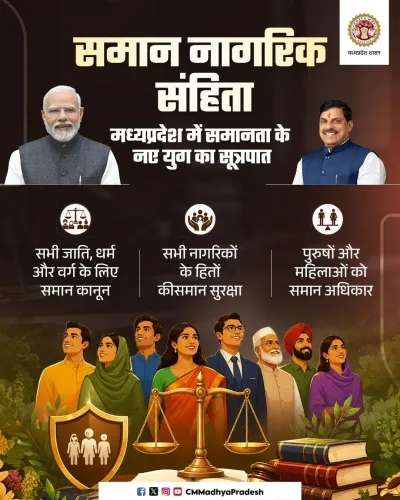
The awareness campaign targets a wide cross-section of society, with particular emphasis on women through mahila mandals and SHGs — a deliberate signal that gender-equality provisions are central to the UCC's stated objectives. Religious communities, whose personal laws on marriage and inheritance would be directly affected by a UCC, are also key stakeholders in the consultation process.
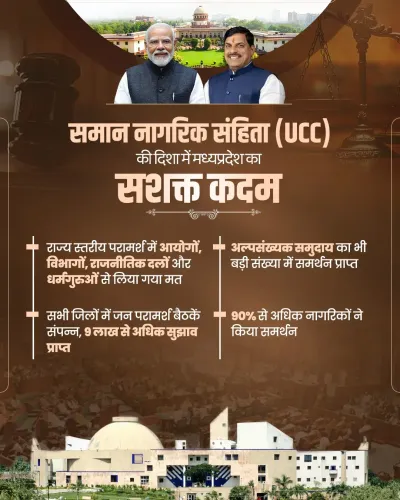
By routing the outreach through gram sabhas and panchayat-level functionaries, the state government is attempting to gather input from rural Madhya Pradesh — home to a large tribal and agrarian population — alongside urban residents. This bottom-up consultation model is designed to give the eventual draft law a broader democratic mandate.
What's Next
With the public suggestion window closing on 22 June 2026, the state government is expected to collate district-level feedback before moving to draft a formal UCC bill. Observers will watch whether Madhya Pradesh introduces legislation in the state assembly in the months that follow, and whether the national momentum around a central UCC bill in Parliament gathers pace in parallel. The Madhya Pradesh exercise could serve as a template for other BJP-ruled states considering similar consultations.
Point of View
Gram sabhas, and women's self-help groups rather than a purely online mechanism, Dr. Mohan Yadav is building a participatory record that can pre-empt criticism of elite or urban bias in the eventual draft. The 22 June deadline suggests the state is moving on a deliberate legislative calendar, likely timed to align with broader BJP political messaging on uniform personal laws ahead of any central bill. Madhya Pradesh's model — decentralised awareness followed by a state-level draft — mirrors Uttarakhand's path and could pressure other BJP-governed states to accelerate their own UCC timelines. The emphasis on women's groups signals that gender equity, rather than religious uniformity, will be the primary public-facing argument for the code.
NationPress
13 Sept 2026
Frequently Asked Questions
What is the deadline to submit UCC suggestions in Madhya Pradesh?
The deadline is 22 June 2026 . Citizens can submit their suggestions on the Uniform Civil Code at the state portal ucc.mp.gov.in .
What is the Uniform Civil Code and why is Madhya Pradesh consulting on it?
The Uniform Civil Code is a proposed set of common personal laws — covering marriage, divorce, inheritance, and adoption — applicable to all citizens regardless of religion. Madhya Pradesh is conducting a public consultation to gather citizen input before drafting state-level legislation, following Uttarakhand's UCC law passed in February 2024.
How will the UCC awareness campaign reach rural areas in MP?
Rozgar sahayaks and panchayat secretaries will facilitate village-level discussions, and special gram sabha meetings will be convened. Self-help groups, mahila mandals, and social organisations are also part of the outreach.
Which Indian state was the first to pass a Uniform Civil Code?
Uttarakhand became the first Indian state to enact a Uniform Civil Code law in February 2024 , setting a legislative precedent for other BJP-governed states including Madhya Pradesh.
What does the Indian Constitution say about the Uniform Civil Code?
Article 44 of the Indian Constitution, under the Directive Principles of State Policy, directs the State to endeavour to secure a Uniform Civil Code for all citizens across India.