MP CM Mohan Yadav Orders Fast Track Courts for Paper Leaks
Synopsis
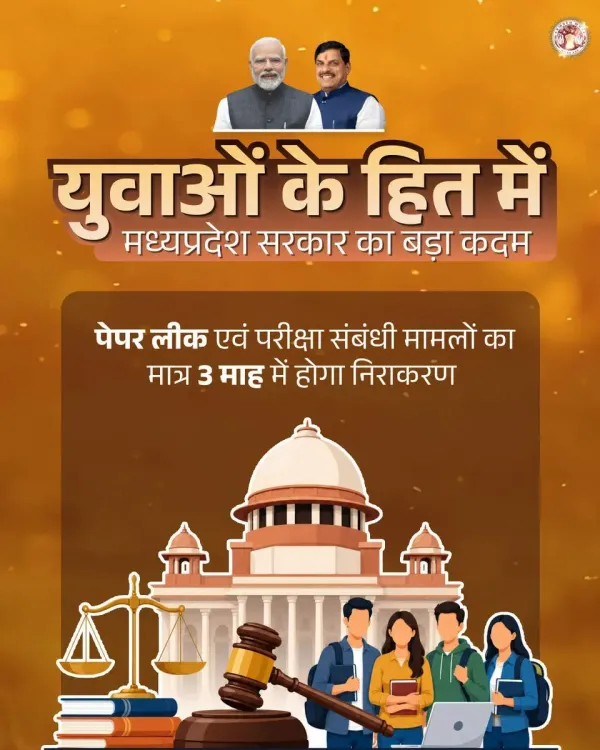
Madhya Pradesh will set up fast track courts in Bhopal, Indore, Gwalior, and Jabalpur to resolve paper leak and exam-related cases within three months, CM Dr. Mohan Yadav announced on July 30, 2026, calling youth protection the government's top priority.
Key Takeaways
Four fast track courts will be established in Bhopal , Indore , Gwalior , and Jabalpur specifically for paper leak and exam-related cases.
All cases must be resolved within a three-month (90-day) mandate.
The initiative was announced by the Chief Minister's Office of Madhya Pradesh on July 30, 2026 .
Mohan Yadav framed protecting youth futures as the 'highest priority' of his government.
India's fast track court mechanism dates to 2000 ; this deployment is targeted exclusively at examination fraud offences.
Operational start dates and current case pendency figures have not yet been disclosed.
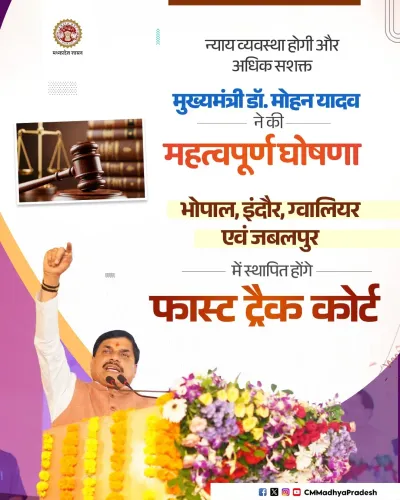
Exam fraud now has a deadline. The Chief Minister's Office of Madhya Pradesh announced on Thursday, July 30, 2026 that the state government will establish dedicated fast track courts in Bhopal, Indore, Gwalior, and Jabalpur — with a hard mandate to resolve paper leak and examination-related cases within just three months.
The post, shared from the official handle of Chief Minister Dr. Mohan Yadav, framed the move in unambiguous terms: 'युवाओं के भविष्य की सुरक्षा, मध्यप्रदेश सरकार की सर्वोच्च प्राथमिकता' — 'Protecting the future of youth is the highest priority of the Madhya Pradesh government.' Four of the state's largest cities will each host one of these courts, placing the legal machinery where the highest concentration of exam aspirants live and compete.
Why four cities, and why now
The choice of Bhopal (the state capital), Indore (its commercial and educational hub), Gwalior, and Jabalpur is not accidental — together they anchor the four administrative corners of Madhya Pradesh and concentrate the bulk of its competitive-exam ecosystem. Fast track courts are not a new instrument in India; the mechanism dates to 2000, when the central government first introduced them to clear backlogs in criminal cases. What is new here is the specificity: courts ring-fenced exclusively for exam-related offences, with a 90-day disposal target baked into the mandate from day one.
Paper leaks have become a recurring crisis across Indian states over the past decade, gutting the credibility of public recruitment and university entrance examinations alike. Aspirants who spend years preparing watch their chances evaporate — not because of merit, but because of criminal networks that monetise question papers before the exam hall even opens. The reputational and psychological cost falls entirely on students.
The 90-day clock and what it demands
A three-month resolution window is ambitious by any judicial standard. For the courts to meet it, they will need dedicated benches, priority docketing, and prosecutorial readiness from day one — the kind of institutional coordination that often proves harder than the political announcement itself. The exact operational start dates for the four courts have not been specified yet, and actual case disposal rates will be the real test of the initiative's teeth.
Dr. Mohan Yadav, who took charge as Chief Minister in December 2023, has consistently positioned youth employment and education integrity as signature governance themes. This announcement, directed to the state's Department of Higher Education (@mohdept) and the Department of Sports and Youth Welfare (@MP_DSYW), signals that the administration intends to move those themes from rhetoric into enforceable legal architecture.
The courts are now announced. The calendar starts the moment the first bench sits — and every student who has ever lost a fair shot to a leaked paper will be watching that clock.
Point of View
And the electoral cost of failing exam aspirants has become tangible. By naming four specific cities and a hard 90-day deadline, the Yadav administration is converting a vague governance promise into a measurable commitment — one that will be easy to hold it accountable to. The move also fits a broader BJP-governed-state pattern of deploying specialised judicial mechanisms to signal law-and-order seriousness on youth issues. The real test is institutional: fast track courts succeed when backed by dedicated prosecutorial resources, not just a political announcement.
NationPress
30 Jul 2026
Frequently Asked Questions
What are the fast track courts announced in Madhya Pradesh for?
The fast track courts are dedicated exclusively to paper leak and examination-related criminal cases, with a mandate to resolve each case within three months.
Which cities will get fast track courts for paper leak cases in MP?
Bhopal , Indore , Gwalior , and Jabalpur are the four cities designated for the new fast track courts.
When did Madhya Pradesh announce fast track courts for exam fraud?
The announcement was made on Thursday, July 30, 2026 , by the Chief Minister's Office of Madhya Pradesh.
Who is the Chief Minister of Madhya Pradesh in 2026?
Dr. Mohan Yadav is the Chief Minister of Madhya Pradesh, having assumed office in December 2023 .
How long will it take to resolve paper leak cases in MP fast track courts?
The stated target is resolution within three months (90 days) of a case being taken up by the fast track court.