MP CM's Office Marks 12 Years of Modi's Garib Kalyan Governance
Synopsis
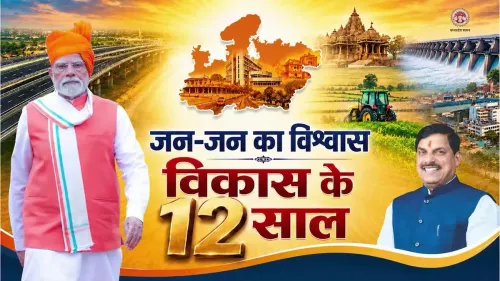
The Chief Minister's Office of Madhya Pradesh celebrated 12 years of Prime Minister Narendra Modi's Garib Kalyan governance on June 10, 2026, tagging the PMO and CM Mohan Yadav in a post marking the longest elected PM tenure in Indian history.
Key Takeaways
PM Narendra Modi crossed 12 years as Prime Minister in 2026 , making him India's longest-serving elected PM.
The Chief Minister's Office of Madhya Pradesh marked the milestone with a post tagging @PMOIndia and CM Mohan Yadav .
The post used hashtags #12YearsOfGaribKalyan and #12YearsOfSeva , referencing the central welfare governance brand.
The Pradhan Mantri Garib Kalyan Anna Yojana , launched in 2020 , is a flagship programme under the Garib Kalyan umbrella providing free foodgrain to vulnerable households.
Madhya Pradesh under BJP has consistently positioned itself as a high-saturation implementer of central welfare schemes.
Three videos were attached to the post, underlining a coordinated inter-governmental communication effort.
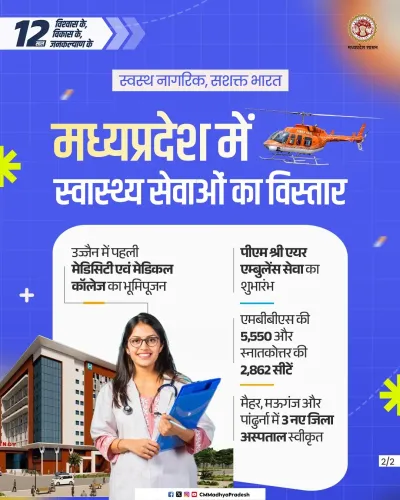
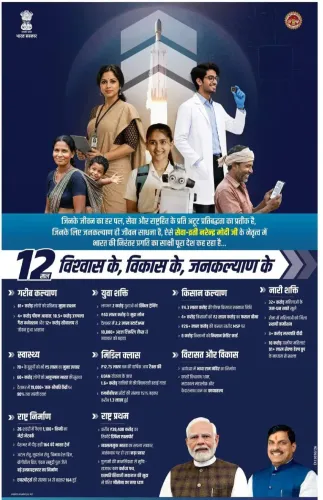
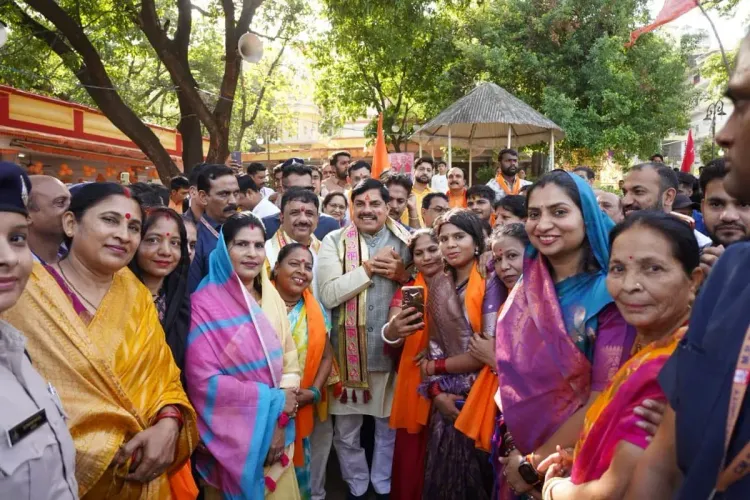
The Chief Minister's Office of Madhya Pradesh marked 12 years of Prime Minister Narendra Modi's welfare-focused governance on Wednesday, June 10, 2026, tagging the Prime Minister's Office and Chief Minister Mohan Yadav in a post celebrating the milestone under the hashtags #12YearsOfGaribKalyan and #12YearsOfSeva — translating broadly to '12 years of welfare for the poor' and '12 years of service.'
Context
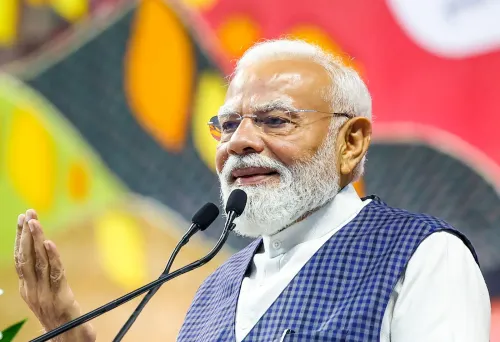
Narendra Modi was first sworn in as Prime Minister in May 2014, making June 2026 the point at which his unbroken tenure crosses the 12-year mark — a stretch that makes him the longest-serving elected Prime Minister in India's history, a distinction the post's hashtag #LongestServingElectedPMModi explicitly references. The Chief Minister's Office of Madhya Pradesh used the occasion to publicly align the state's governance record with the broader national welfare narrative.
The post tags both @PMOIndia and @DrMohanYadav51, the official handle of Chief Minister Mohan Yadav, signalling a coordinated inter-governmental message rather than a routine social media update. Three videos were attached, though their specific content has not been independently detailed.
Policy Backdrop
The 'Garib Kalyan' — welfare of the poor — brand has been central to the Modi government's communication strategy since 2014. It encompasses a wide range of direct-benefit transfer programmes, from subsidised cooking gas connections to free foodgrain distribution. The Pradhan Mantri Garib Kalyan Anna Yojana, launched in 2020 during the pandemic, extended free foodgrain to vulnerable households and was subsequently made a permanent fixture of the welfare architecture.
Madhya Pradesh, governed by the Bharatiya Janata Party, has consistently positioned itself as an early and high-saturation implementer of central flagship schemes. Chief Minister Mohan Yadav, who took office in December 2023, has continued this alignment, framing state-level delivery as an extension of the national Garib Kalyan agenda.
Stakeholders and Impact
The primary beneficiaries of the programmes being celebrated are poor and low-income households across Madhya Pradesh and the country at large — particularly those enrolled in free foodgrain, housing, and direct cash-transfer schemes. The state has a large rural population that depends heavily on these welfare pipelines.
For the BJP at both the state and central levels, the 12-year milestone serves as a political landmark, reinforcing a narrative of consistent, long-term welfare delivery. State governments echoing central messaging on such occasions is a well-established pattern within the party's communication architecture, and Madhya Pradesh has been among the most active participants in that coordination.
What's Next
The 12-year mark is likely to be accompanied by further state-level announcements on scheme-saturation targets — the percentage of eligible households actually enrolled in flagship programmes. The 2026 monsoon session of Parliament is also expected to see references to Modi's welfare record as the ruling coalition reinforces its governance credentials ahead of future electoral cycles.
Observers will watch whether the Chief Minister's Office of Madhya Pradesh follows this post with concrete data on beneficiary counts or new scheme rollouts, which would give the milestone commemoration measurable policy weight beyond its symbolic value.
Point of View
The Madhya Pradesh CM's office is not merely congratulating the Prime Minister but actively associating the state's own welfare delivery record with a nationally resonant identity. The 'longest-serving elected PM' framing is also a pointed electoral signal, positioning continuity itself as a policy virtue ahead of future cycles. Whether the commemoration translates into fresh scheme announcements or remains symbolic will determine its lasting political weight.
NationPress
19 Sept 2026
Frequently Asked Questions
Why is 2026 significant for PM Modi's tenure?
2026 marks 12 continuous years since Narendra Modi was first sworn in as Prime Minister in May 2014 , making him the longest-serving elected Prime Minister in India's history.
What is Garib Kalyan and which schemes does it cover?
'Garib Kalyan' — meaning welfare of the poor — is the umbrella brand for a range of central government direct-benefit programmes, most notably the Pradhan Mantri Garib Kalyan Anna Yojana , which provides free foodgrain to vulnerable households.
Why did the Madhya Pradesh CM's Office post about Modi's 12-year milestone?
The Chief Minister's Office of Madhya Pradesh posted to publicly align the state's governance record with the national Garib Kalyan narrative, tagging both @PMOIndia and CM Mohan Yadav as part of a coordinated inter-governmental message.
Who is Mohan Yadav and what is his role?
Mohan Yadav is the Chief Minister of Madhya Pradesh , in office since December 2023 , representing BJP state leadership aligned with central welfare and development policies.
What is the Pradhan Mantri Garib Kalyan Anna Yojana?
The Pradhan Mantri Garib Kalyan Anna Yojana was launched in 2020 to provide free foodgrain to vulnerable households during the pandemic and was subsequently made a permanent welfare scheme by the central government.