12 years of Garib Kalyan: Modi marks tenure milestone, cites Antyodaya as welfare compass
Synopsis
Modi's #12YearsOfGaribKalyan post is more than a welfare scorecard — it lands two days before he becomes India's longest-serving elected Prime Minister, overtaking Nehru's 4,398-day record on 10 June. The timing fuses a policy legacy claim with a historic political milestone.
Key Takeaways
PM Modi marked 12 years of Garib Kalyan on 8 June 2025 , posting on X under #12YearsOfGaribKalyan .
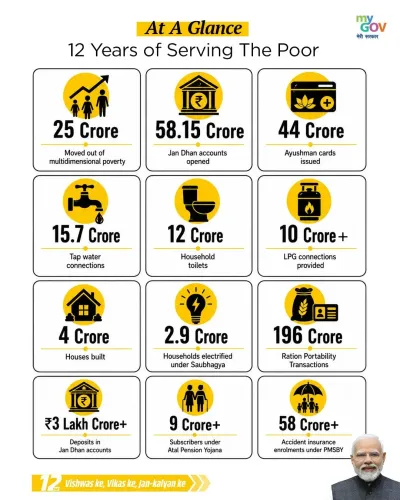
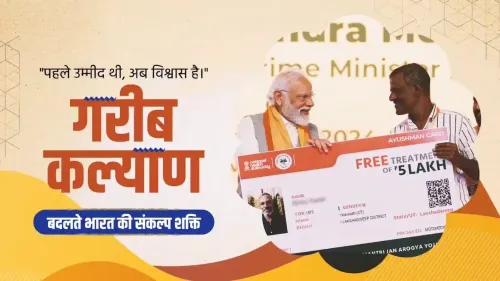
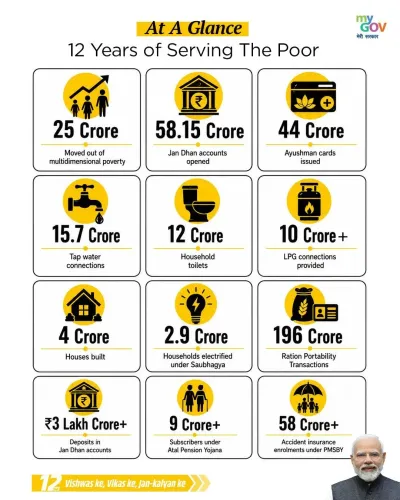
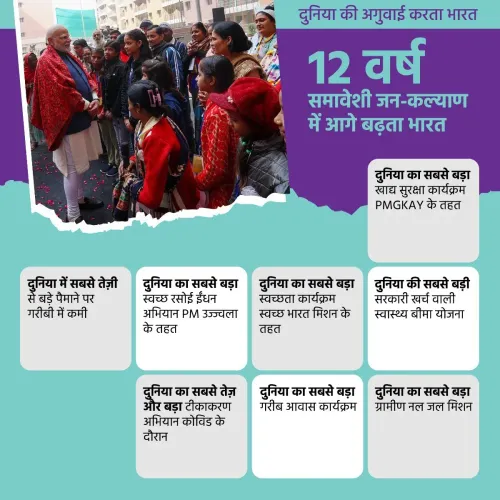
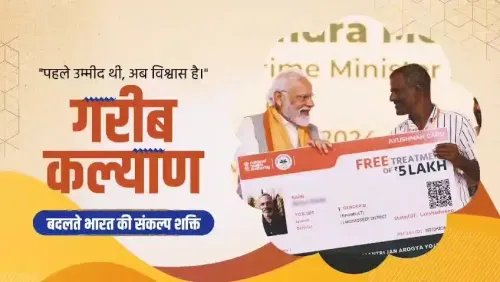
He cited Jan Dhan accounts , DBT , Swachh Bharat Mission , PM Awas Yojana , Jal Jeevan Mission , and Ayushman Bharat as flagship welfare achievements.
The guiding principle cited is Antyodaya — directing development benefits to the most deprived.
On 10 June 2025 , Modi will complete 4,399 consecutive days as elected PM, surpassing Jawaharlal Nehru's record of 4,398 days .
Modi has led the BJP to three consecutive Lok Sabha victories — 2014 , 2019 , and 2024 .
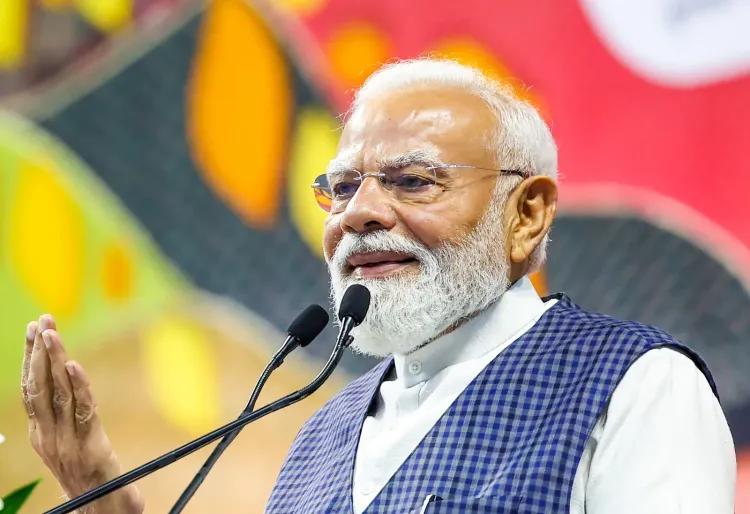
Prime Minister Narendra Modi on Monday, 8 June 2025, marked 12 years of Garib Kalyan governance by reaffirming that the Centre's welfare agenda has been guided by the principle of Antyodaya — ensuring development benefits reach those who have remained deprived for decades. The Prime Minister used the social media platform X, posting under the hashtag #12YearsOfGaribKalyan, to catalogue the flagship schemes launched under his administration and their impact on millions of citizens.
The Antyodaya Doctrine
'Over the last 12 years, India has witnessed many transformations and at the core of these changes is the welfare of the poor and downtrodden. We have always been inspired by Antyodaya and our effort has always been to ensure that the benefits of development reach those who were left behind for decades,' Modi wrote. The philosophy of Antyodaya — a concept rooted in serving the last person in the queue — has been invoked repeatedly by the government as the ideological foundation for its social spending.
Flagship Schemes Cited
Modi highlighted several programmes as cornerstones of the welfare push: Jan Dhan accounts, Direct Benefit Transfer (DBT), Swachh Bharat Mission, Pradhan Mantri Awas Yojana, Jal Jeevan Mission, and Ayushman Bharat. 'From Jan Dhan accounts and Direct Benefit Transfer to Swachh Bharat, PM Awas Yojana, Jal Jeevan Mission, Ayushman Bharat and more, every initiative has been driven by a simple objective of ensuring people have dignity and opportunity,' he said.
Technology as a Governance Tool
The Prime Minister also underscored the role of digital infrastructure in plugging leakages and improving delivery efficiency. 'Through Direct Benefit Transfer and digital platforms, support is reaching people directly and transparently. This has reduced leakages, improved efficiency and strengthened trust in governance. This is how the journey of furthering Garib Kalyan has become a collective movement towards human empowerment and realising our dream of a Viksit Bharat,' Modi wrote. The DBT architecture has, according to government data, transferred funds across dozens of schemes directly into beneficiary accounts, bypassing intermediaries.
A Historic Milestone in Office
The welfare commemoration coincides with a significant political landmark. On 10 June 2025, Modi is set to complete 4,399 consecutive days in office as an elected Prime Minister — surpassing the record of 4,398 days held by India's first Prime Minister, Jawaharlal Nehru. Nehru's elected tenure ran from 13 May 1952, following India's first general elections, until his death on 27 May 1964; his earlier service as head of the interim government from 15 August 1947 is counted separately. Modi first assumed office on 26 May 2014 and has since led the Bharatiya Janata Party (BJP) to three consecutive Lok Sabha mandates — in 2014, 2019, and 2024. The completion of 4,399 days on 10 June marks a notable moment in the history of independent India.
What Comes Next
The government is expected to continue rolling out Garib Kalyan-branded messaging ahead of key state elections. Analysts note that welfare delivery metrics — housing completions under PM Awas Yojana, tap-water connections under Jal Jeevan Mission, and health cover utilisation under Ayushman Bharat — will be central to the political narrative in the months ahead.
Point of View
It anchors his political legacy in welfare delivery rather than mere longevity. Yet the real accountability question lies in outcomes — housing completion rates under PM Awas Yojana remain contested, Jal Jeevan Mission's 'functional tap connections' metric has faced independent scrutiny, and Ayushman Bharat utilisation varies sharply by state. Celebrating 12 years of Garib Kalyan is legitimate; the harder test is whether the bottom quartile of India's population has seen commensurate income and opportunity gains, not just scheme enrolment numbers.
NationPress
22 Oct 2026
Frequently Asked Questions
What is '12 Years of Garib Kalyan' that PM Modi referred to?
It refers to the 12-year period since Narendra Modi first assumed office on 26 May 2014, during which the government launched a series of welfare schemes under the Garib Kalyan (welfare of the poor) umbrella. Modi marked the occasion on 8 June 2025 with a post on X, highlighting programmes such as Jan Dhan, DBT, Swachh Bharat, PM Awas Yojana, Jal Jeevan Mission, and Ayushman Bharat.
What is the Antyodaya principle Modi cited?
Antyodaya is a concept meaning 'upliftment of the last person,' originally associated with social thinker Pandit Deendayal Upadhyaya and the RSS-BJP ideological tradition. Modi has consistently cited it as the guiding philosophy for directing welfare benefits to the most deprived sections of society first.
When will Modi become India's longest-serving elected Prime Minister?
Modi will become India's longest-serving elected Prime Minister on 10 June 2025, when he completes 4,399 consecutive days in office — surpassing the 4,398-day elected tenure of Jawaharlal Nehru, which ran from 13 May 1952 to 27 May 1964.
How does Modi's tenure compare with Nehru's?
Nehru served as Prime Minister from 15 August 1947, but his elected term began on 13 May 1952 after India's first general elections and lasted 4,398 days until his death on 27 May 1964. Modi, who took office on 26 May 2014, will cross 4,399 consecutive elected days on 10 June 2025, making him the longest-serving elected Prime Minister in Indian history.
Which welfare schemes did Modi highlight in his Garib Kalyan post?
Modi highlighted Jan Dhan accounts, Direct Benefit Transfer (DBT), Swachh Bharat Mission, Pradhan Mantri Awas Yojana, Jal Jeevan Mission, and Ayushman Bharat. He said each was designed to provide dignity, opportunity, and improved living standards, with digital platforms reducing leakages in delivery.