MP CM Announces Cyber Security Research Centre with Army College

Synopsis
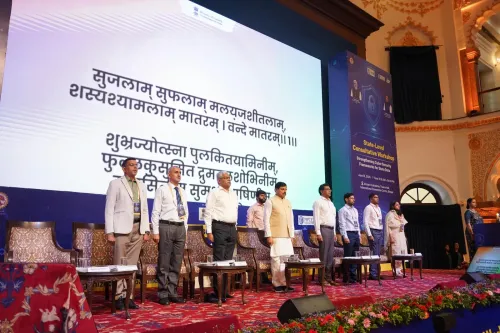
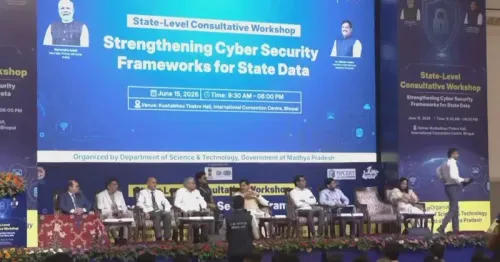
Madhya Pradesh CM Dr. Mohan Yadav has announced a Cyber Security Research Centre to be established in partnership with the Military College of Telecommunication Engineering in Mhow, positioning data and cyber security as the state government's foremost priorities.
Key Takeaways
The Chief Minister's Office of Madhya Pradesh announced a Cyber Security Research Centre on June 15, 2026 .
The centre will be set up in collaboration with the Military College of Telecommunication Engineering (MCTE) , located in Mhow, Madhya Pradesh .
MCTE has specialised in telecommunications, IT, and cyber warfare training for the Indian Army since 1962 .
The initiative is aligned with India's National Cyber Security Policy 2013 and Madhya Pradesh IT Policy 2016 .
MAPIT (Madhya Pradesh Agency for Promotion of Information Technology) is the state nodal body expected to coordinate the project.
Formal MoU timelines, funding details, and an operational launch date have not yet been announced.
The Chief Minister's Office of Madhya Pradesh announced on Monday, June 15, 2026, that the state government will establish a Cyber Security Research Centre in collaboration with the Military College of Telecommunication Engineering (MCTE), Mhow, underlining data security and cyber security as top government priorities.
Chief Minister Dr. Mohan Yadav stated: 'Data suraksha aur cyber suraksha sarkar ki pramukh prathamikta hai' ('Data security and cyber security are the government's foremost priorities'). He added that the proposed centre will be set up across the state in partnership with the Mhow-based defence institution.
Context
The Military College of Telecommunication Engineering, located in Mhow (Dr. Ambedkar Nagar), is a premier Indian Army institution that has specialised in telecommunications, information technology, and cyber warfare training for defence personnel since 1962. Its involvement lends the proposed centre both technical depth and defence-grade expertise rarely available to state-level civilian research bodies.
Madhya Pradesh Agency for Promotion of Information Technology (MAPIT), the state's nodal IT body tagged in the post, is expected to play a central role in coordinating the initiative with the defence establishment and state departments.
Policy Backdrop
India's National Cyber Security Policy 2013 called for secure computing ecosystems and public-private partnerships for cyber defence, a framework that has since been extended to sub-national institutions. Madhya Pradesh's IT Policy 2016 and its subsequent amendments promoted state data centres and cyber security cells within police and IT departments, laying groundwork for a dedicated research facility.
The announcement fits a broader national pattern in which Indian states have increasingly partnered with military technical colleges to build indigenous cyber expertise, particularly as ransomware incidents and state-sponsored threats have grown in frequency. This also aligns with the central government's Atmanirbhar Bharat push for dual-use defence and civilian technology development.
Stakeholders and Impact
The centre is expected to benefit state IT departments, law enforcement cyber cells, IT professionals, and citizens whose data flows through government digital infrastructure. Capacity-building programmes emerging from the centre could feed into national frameworks overseen by bodies such as CERT-In and the National Cyber Security Coordinator.
For Mhow and the broader Indore region — already a growing technology hub in central India — the collaboration signals potential for research partnerships with private sector firms and academic institutions, reinforcing the state's ambition to position itself as a cyber-resilient governance model.
What's Next
Key milestones to watch include the formal signing of a memorandum of understanding between the Madhya Pradesh government and MCTE, state budget allocations earmarked for the centre's infrastructure, and any potential integration with national cyber ranges or IIT research networks. The specific operational launch date and funding quantum have not yet been disclosed.
If executed, the centre would mark one of the more substantive civil-military technology collaborations at the state level in India, potentially serving as a replicable model for other states seeking to harden their digital governance infrastructure.
Point of View
The state signals intent to access military-grade cyber capabilities while keeping the initiative within its geographic and administrative orbit. The move also positions CM Dr. Mohan Yadav as a technology-forward administrator ahead of a competitive political cycle in which digital governance credentials carry increasing weight. Whether the centre translates into operational capacity or remains a policy signal will depend heavily on budget commitments and the pace of MoU formalisation.
NationPress
14 Sept 2026
Frequently Asked Questions
What is the Cyber Security Research Centre announced by MP CM?
It is a proposed state-level research facility in Madhya Pradesh that will be established in collaboration with the Military College of Telecommunication Engineering (MCTE) in Mhow to focus on data protection, cyber threat analysis, and capacity building.
Where is the Military College of Telecommunication Engineering located?
The Military College of Telecommunication Engineering (MCTE) is located in Mhow, also known as Dr. Ambedkar Nagar, in Madhya Pradesh. It has been a premier Indian Army institution for telecommunications and cyber warfare training since 1962.
What role will MAPIT play in the Madhya Pradesh cyber security centre?
MAPIT, the Madhya Pradesh Agency for Promotion of Information Technology, is the state's nodal IT body and is expected to coordinate the cyber security centre initiative between the state government and MCTE.
When will the Madhya Pradesh Cyber Security Research Centre be launched?
No specific operational launch date has been announced. The next steps include the formal signing of an MoU between the state government and MCTE and allocation of funds in the state budget.
How does this initiative relate to national cyber security policy?
The initiative aligns with India's National Cyber Security Policy 2013, which called for public-private and civil-military partnerships in cyber defence, and fits the broader Atmanirbhar Bharat push for indigenous dual-use technology development.