MP to grant industry status to fisheries, extend MSME benefits: CM Yadav
Synopsis
Madhya Pradesh is betting ₹40,000 crore and a brand-new industrial classification on fisheries — a sector long treated as a subsistence occupation. By integrating it with the MSME framework, CM Mohan Yadav is attempting to turn the state's 4.5 lakh hectares of water area into an export engine, targeting a doubling of fish output within three years.
Key Takeaways
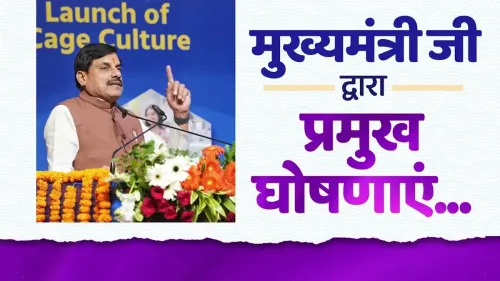
CM Mohan Yadav announced industry status for fisheries in Madhya Pradesh , making the sector eligible for MSME exemptions and incentives .
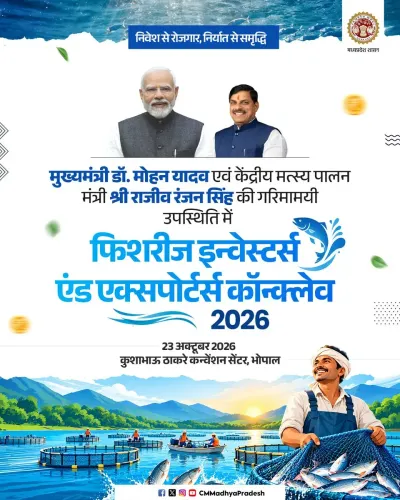
The 'Madhya Pradesh Fisheries Investment and Export Guide' was unveiled at the National Fisheries Conference in Bhopal on 22 October .
Investment proposals worth ₹40,000 crore have been received, expected to generate 3.5 lakh direct and indirect jobs .
Under the MP Integrated Fisheries Policy-2026 , nearly one lakh cages will be installed across 4.5 lakh hectares of water area, targeting a doubling of the 4.95 lakh metric tonne record output within three years .
India is now the world's second-largest fish producer , with output rising to 19.8 million tonnes and exports reaching ₹62,408 crore , according to Union Minister Rajiv Ranjan Singh .
The Central Government has included MP in its Reservoir Fisheries Cluster programme, with Halali and Indira Sagar designated as model sites.
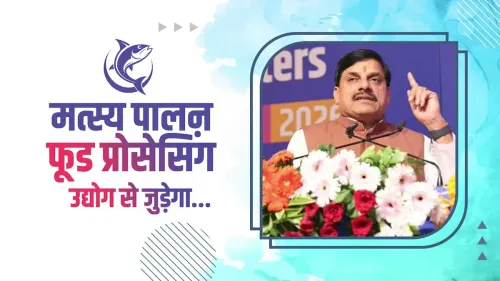
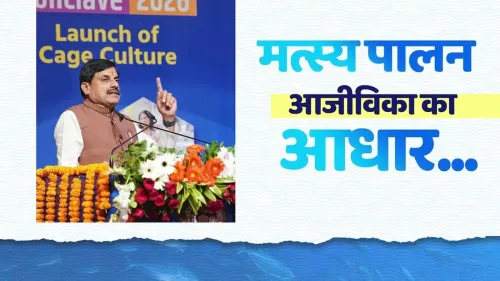
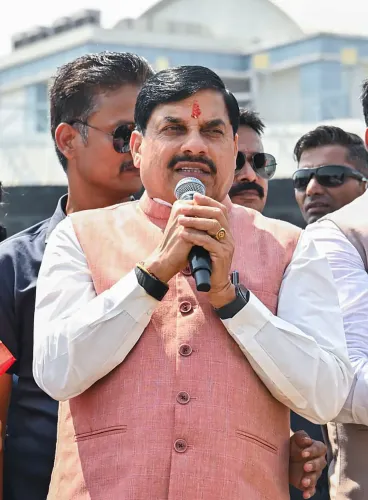
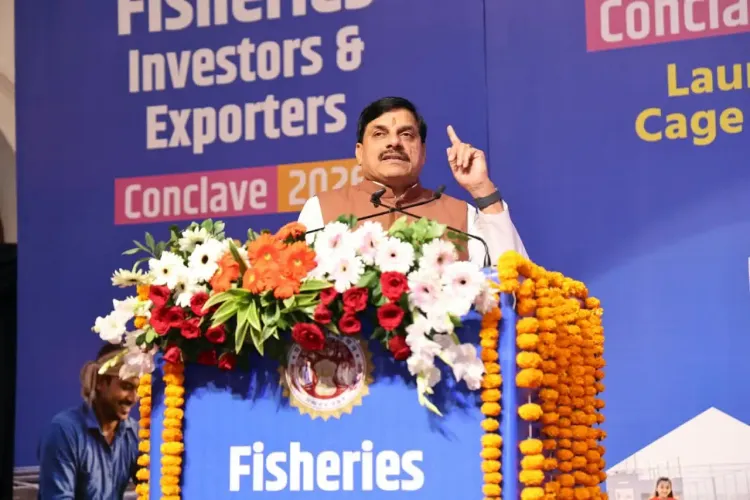
Madhya Pradesh Chief Minister Mohan Yadav on 22 October announced that fisheries will be elevated to a full-fledged industry in the state, making the sector eligible for the same exemptions and incentives available to established industries. Speaking at the National Fisheries Conference held at the Kushabhau Thakre Auditorium in Bhopal, Yadav said the fisheries sector will be integrated with food processing and the MSME framework, unlocking a new wave of private investment and export potential.
Key Announcements at the Conference
At the event, the 'Madhya Pradesh Fisheries Investment and Export Guide' was unveiled with the aim of attracting large-scale private investment and boosting exports. Chief Minister Yadav described the current period as a 'golden period' for both the nation and the state, and noted that Madhya Pradesh's rich water resources — including its role as the origin point of numerous rivers — position it uniquely for aquaculture growth. He also recalled the rapid expansion of irrigation capacity since 2003 and the launch of what he described as the country's first river-linking project in the state.
India's Fisheries Surge: The National Context
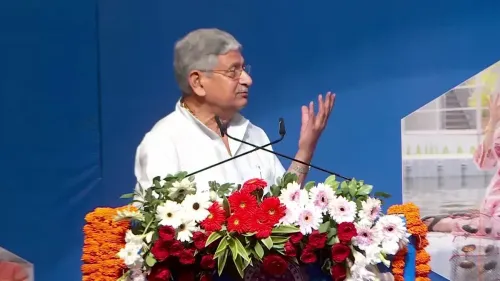
Union Minister Rajiv Ranjan Singh (Lalan Singh) informed attendees that India has become the world's second-largest fish producer, with national output rising from 9.5 million tonnes to 19.8 million tonnes and exports climbing from ₹30,213 crore to ₹62,408 crore. The sector currently supports the livelihoods of six crore people across the country. He stressed the need to strengthen export potential in landlocked states like Madhya Pradesh and praised the platform that brought fish farmers, fishermen and exporters together in Bhopal.
Union Minister of State SP Singh Baghel noted that the creation of a dedicated fisheries ministry in 2019 has driven unprecedented progress. He highlighted that inland fisheries now contribute 75% of national output, and that states without a coastline, including Madhya Pradesh, hold immense untapped potential.
Madhya Pradesh Integrated Fisheries Policy-2026
Under the Madhya Pradesh Integrated Fisheries Policy-2026, nearly one lakh cages will be installed across the state's 4.5 lakh hectares of water area. The state plans to develop modern cage culture infrastructure in the Indira Sagar, Bargi, Bansagar and Barna reservoirs, targeting an additional four lakh metric tonnes of fish production. The stated goal is to double the record 4.95 lakh metric tonnes produced in 2025-26 within three years.
The Central Government has also included Madhya Pradesh in its Reservoir Fisheries Cluster programme, developing Samrat Ashok Sagar (Halali) and Indira Sagar as model sites. Halali has already achieved the highest productivity among medium reservoirs in the country, according to officials.
Investment, Jobs and Integrated Activities
Investment proposals worth approximately ₹40,000 crore have already been received, which are expected to generate 3.5 lakh direct and indirect jobs across infrastructure segments including seed, feed, processing, cold storage, transport and exports. Beyond fish cultivation, integrated activities such as lotus, singhara and makhana cultivation, duck rearing, poultry, pearl production and aquaponics are planned to create additional employment avenues.
The policy push signals a structural shift — transforming a sector historically treated as a subsistence occupation into an organised, incentive-linked industry with global export ambitions. With the MSME framework now extended to fisheries, entrepreneurs and cooperatives in the sector will gain access to credit support, subsidies and easier regulatory clearances previously unavailable to them.
Point of View
Subsidies and regulatory ease that have long been denied to fish farmers — but the real test is implementation. Madhya Pradesh has a chequered history with ambitious sectoral targets, and ₹40,000 crore in 'received proposals' is not the same as committed investment. The MSME integration is the most consequential detail here: if cooperative fish farmers genuinely gain access to priority-sector lending, the multiplier effect on rural incomes could be substantial. Without a credible disbursement and monitoring framework, however, this risks becoming another headline scheme that moves the dial on paper and not in the reservoir.
NationPress
23 Oct 2026
Frequently Asked Questions
What did Madhya Pradesh CM Mohan Yadav announce for the fisheries sector?
CM Mohan Yadav announced that fisheries in Madhya Pradesh will be granted full industry status and integrated with the MSME framework, making the sector eligible for the same exemptions and incentives as other major industries. The announcement was made at the National Fisheries Conference in Bhopal on 22 October.
What is the Madhya Pradesh Integrated Fisheries Policy-2026?
It is a state policy under which nearly one lakh cages will be installed across 4.5 lakh hectares of water area in Madhya Pradesh. The goal is to double the record 4.95 lakh metric tonnes produced in 2025-26 within three years, with modern cage culture infrastructure planned in Indira Sagar, Bargi, Bansagar and Barna reservoirs.
How much investment has Madhya Pradesh received for fisheries?
Investment proposals worth approximately ₹40,000 crore have been received for the fisheries sector in Madhya Pradesh. These are expected to generate 3.5 lakh direct and indirect jobs across seed, feed, processing, cold storage, transport and export infrastructure.
What is India's current standing in global fisheries production?
India is the world's second-largest fish producer, according to Union Minister Rajiv Ranjan Singh. National output has grown from 9.5 million tonnes to 19.8 million tonnes, and fisheries exports have risen from ₹30,213 crore to ₹62,408 crore. The sector supports the livelihoods of six crore people.
Why is the industry status for fisheries significant for landlocked states like Madhya Pradesh?
Inland fisheries contribute 75% of India's national fish output, and landlocked states hold large untapped water resources. By granting industry status and extending MSME benefits, Madhya Pradesh enables fish farmers and entrepreneurs to access credit support, subsidies and regulatory clearances previously unavailable, opening a pathway to organised, export-oriented aquaculture.