MP High Court reserves verdict on Twisha Sharma mother-in-law's anticipatory bail
Synopsis
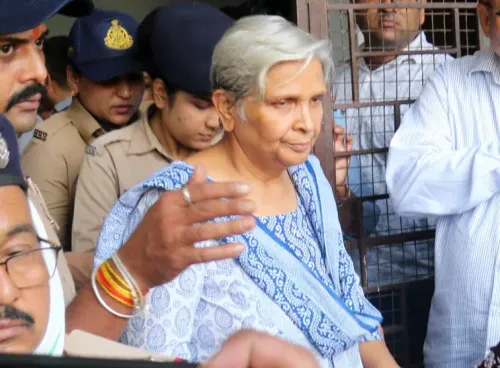
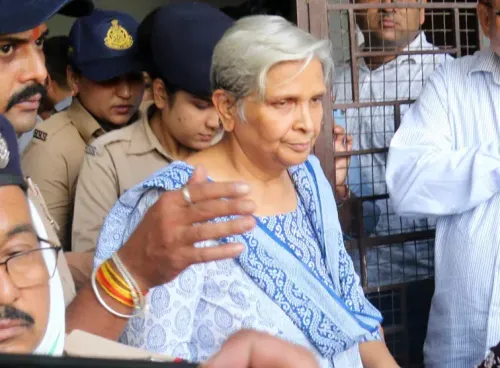
The Madhya Pradesh High Court has reserved its verdict on whether a retired judge — the mother-in-law of deceased actor-model Twisha Sharma — should retain her anticipatory bail. With the CBI now formally seeking custodial interrogation and the Supreme Court urging media restraint, the case has moved from a local crime story to a high-stakes legal confrontation over judicial accountability and due process.
Key Takeaways
The Madhya Pradesh High Court reserved its verdict on 27 May on pleas challenging anticipatory bail granted to Giribala Singh , retired judge and mother-in-law of Twisha Sharma .
Justice Devnarayan Mishra heard submissions from the state government, the complainant family, the CBI , and the defence before reserving the order.
The CBI submitted written grounds seeking custodial interrogation of Giribala Singh; Solicitor General Tushar Mehta argued the trial court should have exercised greater restraint.
The prosecution cited WhatsApp messages in which Twisha Sharma reportedly said she was 'feeling suffocated', and pointed to post-mortem injuries suggesting possible head trauma.
Twisha Sharma , 33 , was found hanging at her Bhopal matrimonial home on 12 May ; her family has alleged dowry harassment and foul play.
The Supreme Court this week urged a fair, independent probe and called on media to exercise restraint over potential witness statements.
The Madhya Pradesh High Court on Wednesday, 27 May reserved its verdict on pleas challenging the anticipatory bail granted to Giribala Singh, a retired judge and mother-in-law of deceased actor-model Twisha Sharma, in the alleged dowry death case. A single-judge bench of Justice Devnarayan Mishra concluded extensive hearings after submissions from the state government, the complainant family, the Central Bureau of Investigation (CBI), and the defence.
Key Arguments Against the Bail
Senior advocate Siddharth Luthra, appearing for Twisha Sharma's parents, contended that the Bhopal district court had prematurely granted anticipatory bail to Giribala Singh without requiring her to join the investigation 'even for a single day'. He referred to WhatsApp messages purportedly sent by Twisha Sharma days before her death, in which she reportedly expressed that she was 'feeling suffocated' and had urged her parents to take her back from her matrimonial home.
Luthra further argued that the trial court had wrongly focused on a single line in the FIR suggesting the 'main allegations were against the husband', while disregarding the broader record of evidence against the mother-in-law.
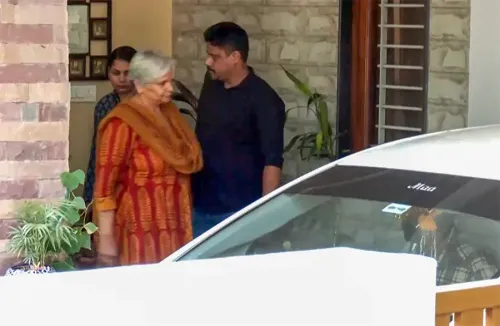
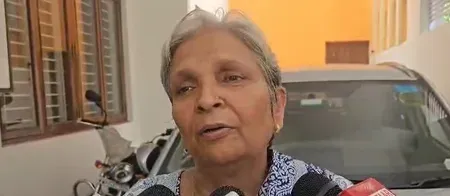
Advocate General Prashant Singh, representing the Madhya Pradesh Police, also opposed the bail, alleging the trial court had effectively conducted a 'mini-trial' at the anticipatory bail stage by considering documents — including the deceased's medicines and mental health records — that had not yet been formally collected by the investigating agency. He further alleged that Giribala Singh had failed to appear before investigators despite notices, while freely addressing the media to 'widely circulate her own narrative.'
Post-mortem findings were also cited by the prosecution, which submitted that the 'possibility of hitting her on her head cannot be ruled out', based on injuries allegedly found on Twisha Sharma's body.
CBI Seeks Custodial Interrogation
The CBI, which has since taken over the probe from the Madhya Pradesh Police, submitted written grounds before the High Court seeking custodial interrogation of Giribala Singh. Solicitor General Tushar Mehta argued that while anticipatory bail before FIR registration may not be legally barred, the trial court should have exercised greater restraint given the seriousness of the allegations and the accused's background as a former judicial officer. He also raised concerns that post-bail media interactions were creating a public narrative capable of influencing witnesses and the ongoing investigation.
Defence's Rebuttal
Senior advocate Nitya Ramakrishnan, appearing for Giribala Singh, countered that several prosecution allegations were 'contrary to the record' and based on 'false statements'. She argued that Giribala Singh had remained accessible to investigators and had voluntarily handed over her mobile phone. Ramakrishnan also contended that anticipatory bail was legally maintainable in dowry death cases and that the statutory presumption under dowry death provisions could only arise after foundational facts were established in trial.
On the WhatsApp messages cited by the prosecution, she argued that the complainant side was attributing meanings 'where none existed' and that Twisha Sharma's grievances, as reflected in the chats, were directed primarily against her husband. She also cited separate WhatsApp exchanges reportedly showing affectionate communication between Twisha Sharma and her mother-in-law shortly before the incident.
Background: The Twisha Sharma Case
Twisha Sharma, a 33-year-old model-turned-actor, was found hanging at her matrimonial home in Bhopal on 12 May. Her family has alleged dowry harassment, mental cruelty, and foul play by her husband Samarth Singh and his family. The probe was transferred to the CBI amid public outcry and allegations of bias against the state police. The CBI has since examined the crime scene, conducted searches, and taken Samarth Singh into custody.
The Supreme Court, earlier this week, observed that the case must be investigated in a 'fair, independent and unbiased' manner and appealed to both parties to refrain from public statements that could influence the probe. A bench headed by Chief Justice of India Surya Kant also urged media organisations to exercise restraint while covering statements by potential witnesses. The court clarified it had expressed no opinion on the merits of the allegations.
With the High Court verdict now reserved, the question of whether Giribala Singh will face custodial interrogation — and what it signals for the CBI's case — is expected to be answered in the days ahead.
Frequently Asked Questions
What is the Twisha Sharma case about?
Twisha Sharma, a 33-year-old model-turned-actor, was found hanging at her matrimonial home in Bhopal on 12 May. Her family has alleged dowry harassment, mental cruelty, and foul play by her husband Samarth Singh and his family, including her mother-in-law Giribala Singh, a retired judge. The CBI took over the investigation from the Madhya Pradesh Police amid public outcry.
Why is Giribala Singh's anticipatory bail being challenged?
The state government and Twisha Sharma's parents argue that the Bhopal district court granted anticipatory bail prematurely, without requiring Giribala Singh to cooperate with the investigation even once. They also allege the trial court conducted a 'mini-trial' by considering documents not yet formally collected by investigators.
What has the CBI asked for in the High Court?
The CBI submitted written grounds before the Madhya Pradesh High Court seeking custodial interrogation of Giribala Singh, arguing that her continued protection under anticipatory bail is hampering the investigation into Twisha Sharma's death.
What did the Supreme Court say about this case?
A Supreme Court bench headed by Chief Justice of India Surya Kant observed this week that the case must be investigated in a 'fair, independent and unbiased' manner. The court appealed to both parties and media organisations to refrain from public statements that could influence the probe or potential witnesses, while clarifying it had expressed no opinion on the merits.
What is Giribala Singh's defence?
Senior advocate Nitya Ramakrishnan, appearing for Giribala Singh, argued that she had cooperated with investigators and voluntarily surrendered her mobile phone. The defence also contended that the WhatsApp messages cited by the prosecution showed Twisha Sharma's grievances were directed at her husband, not her mother-in-law, and that separate messages showed an affectionate relationship between the two.