MP CM Office: 90% Subsidy Solar Pumps for Farmers via Kusum B
Synopsis
The Chief Minister's Office of Madhya Pradesh highlighted the Mukhyamantri Solar Pump Yojana – Kusum B on 17 October 2026, stating farmers receive solar irrigation pumps at 90% subsidy. The scheme draws on the central PM-KUSUM framework, combining central and state funding to cut irrigation costs and expand off-grid solar across the state's agricultural belt.
Key Takeaways
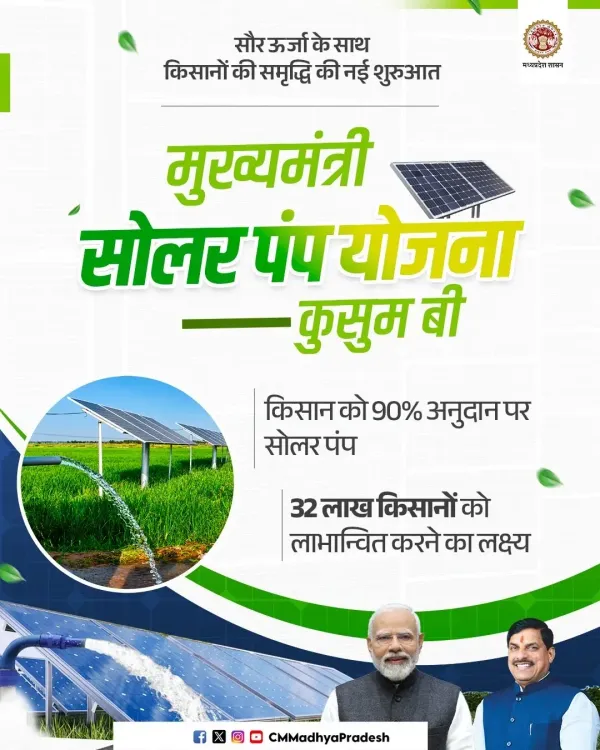
The Chief Minister's Office of Madhya Pradesh announced solar pumps are being provided to farmers at a 90% subsidy under Mukhyamantri Solar Pump Yojana – Kusum B.
Kusum B is Component B of the central PM-KUSUM scheme , launched in 2019 to promote off-grid solar pump adoption in agriculture.
The scheme reduces dependence on diesel and unreliable grid power for farm irrigation across Madhya Pradesh .
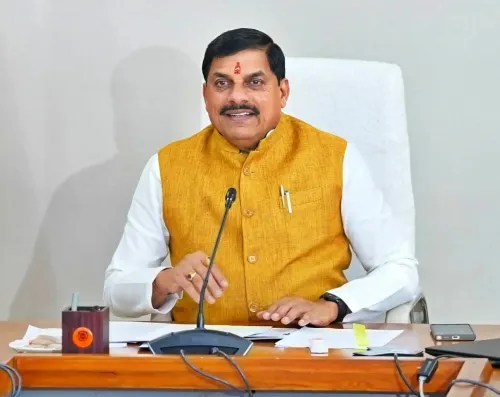
Mohan Yadav , in office since December 2023 , is overseeing the state-level implementation.
State-level installation targets and disbursement figures for the current rollout phase remain a key metric to watch.
Farmers in Madhya Pradesh are being offered solar-powered irrigation pumps at a fraction of their actual cost — the state government says it is bearing 90 per cent of the expense, leaving cultivators to pay only a tenth. The Chief Minister's Office of Madhya Pradesh posted on Saturday, 17 October 2026, highlighting the rollout of solar pumps under the Mukhyamantri Solar Pump Yojana – Kusum B scheme.
What Kusum B actually gives a farmer
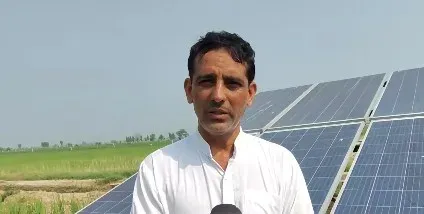
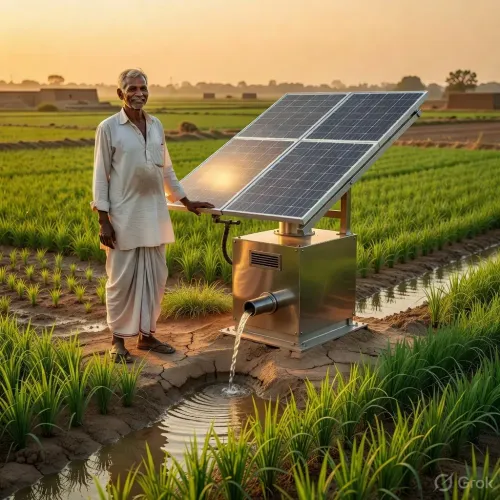
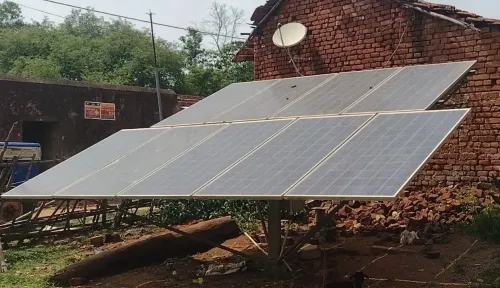
The post, captioned 'सौर ऊर्जा से समृद्धि की ओर' ('Towards prosperity through solar energy'), points to Component B of PM-KUSUM — the central scheme launched by the Government of India in 2019 to solarise agricultural pumps and wean farmers off expensive diesel. Under Kusum B, standalone off-grid solar pumps are installed directly at farm sites, freeing cultivators from the twin burdens of erratic grid power and volatile fuel costs.
Madhya Pradesh has layered its own state subsidy on top of the central framework, with the combined support advertised at 90 per cent of pump cost. That means a pump priced at, say, one lakh rupees costs the farmer just ten thousand. The scheme is being implemented under the watch of Chief Minister Dr. Mohan Yadav, who has been in office since December 2023.
MP's push within India's broader solar agriculture drive
Madhya Pradesh sits at the heart of India's agricultural belt, and irrigation costs are a persistent drag on farm incomes across the state. The PM-KUSUM framework was specifically designed to address this — combining central and state funding to put off-grid solar capacity directly in farmers' hands, rather than waiting for rural grid expansion.
The state has been scaling this distribution steadily, with the Kusum B component targeting areas where grid connectivity is thin or unreliable. The announcement signals continued momentum on that rollout, even as analysts and policymakers watch closely for granular installation targets and disbursement figures in coming quarters.
Why the subsidy depth matters
A subsidy at or near the 90 per cent level is not merely generous — it is often the threshold at which a scheme converts intent into actual adoption. Farmers who would otherwise defer a capital purchase see the barrier effectively disappear. If the figure holds at scale, it places Madhya Pradesh among the more aggressive state-level implementers of the PM-KUSUM architecture in central India.
The real test, as always, will be last-mile execution: whether pumps are installed, commissioned, and maintained in the field — not just approved on paper. Those numbers will tell the fuller story.
Point of View
The model attempts to bridge the adoption gap that has hobbled similar schemes elsewhere. The 90% subsidy figure, if delivered at scale, would mark a significant commitment; but the scheme's credibility will ultimately rest on verifiable installation data and farmer uptake numbers. Dr. Mohan Yadav's administration has an incentive to demonstrate tangible farm-sector wins ahead of any electoral cycle, making this rollout both a policy priority and a political signal.
NationPress
17 Oct 2026
Frequently Asked Questions
What is the Mukhyamantri Solar Pump Yojana Kusum B in Madhya Pradesh?
It is a state scheme that provides off-grid solar irrigation pumps to farmers at a heavily subsidised rate — currently advertised at 90% subsidy — under the central PM-KUSUM framework's Component B.
What is PM-KUSUM and how does Kusum B work?
PM-KUSUM is a central government scheme launched in 2019 to solarise agricultural pumps. Kusum B specifically covers standalone off-grid solar pumps installed directly on farmland, combining central and state subsidies.
How much does a farmer pay under the 90% subsidy solar pump scheme in MP?
Under the announced scheme, farmers are required to bear only 10% of the pump's cost, with the remaining 90% covered by a combination of central and state government funds.
Who is implementing the solar pump scheme in Madhya Pradesh?
The scheme is being rolled out by the Madhya Pradesh state government under Chief Minister Dr. Mohan Yadav, in coordination with the central PM-KUSUM programme.
What problem does the Kusum B solar pump scheme solve for farmers?
It reduces dependence on expensive diesel and unreliable grid electricity for irrigation, cutting recurring farm costs and supporting off-grid renewable energy adoption in rural Madhya Pradesh.