MP Railways fences 530-km Khandwa-Bina track to curb cattle accidents
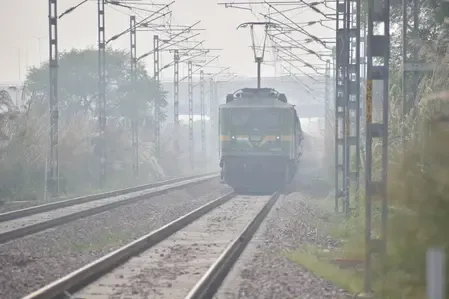
Synopsis
The West Central Railway's Bhopal Division is erecting fencing across a 530-km stretch between Khandwa and Bina in Madhya Pradesh — one of the most extensive cattle-safety infrastructure drives on India's rail network. With trains targeted to run at 130 kmph-plus on this corridor, keeping livestock off the tracks is no longer just an animal welfare issue; it is a core speed-safety requirement.
Key Takeaways
West Central Railway's Bhopal Division is installing fencing along a 530-km corridor between Khandwa and Bina in Madhya Pradesh .
74 km of fencing has been completed so far at a cost of around ₹2.88 crore .
The full project is targeted for completion by March 2027 .
Four animal overpasses have been built in the Budhni-Barkhera Ghat section to give cattle safe crossing routes.
The initiative supports plans to operate trains at speeds of 130 kmph and above on the corridor.
The project is being executed under Divisional Railway Manager Pankaj Tyagi .
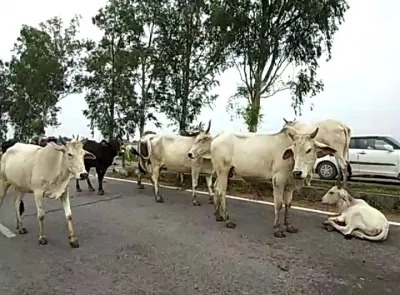
The West Central Railway's Bhopal Division has launched a large-scale fencing initiative along a 530-km railway corridor between Khandwa and Bina in Madhya Pradesh, aiming to stop cattle from straying onto tracks and reduce collisions that endanger both livestock and train operations. The project, announced on 10 November, is expected to be fully completed by March 2027.
Project Status and Cost
Of the total 530 km of proposed fencing, work covering 74 km has already been completed at a cost of approximately ₹2.88 crore, according to Senior Divisional Commercial Manager Saurabh Kataria. The completed sections include 49 km on the Khandwa-Itarsi stretch, 4 km on the Itarsi-Bhopal stretch, and 21 km on the Bhopal-Bina stretch.
Animal Overpasses in Budhni-Barkhera Ghat
Beyond fencing, the division has constructed four animal overpasses in the Budhni-Barkhera Ghat section to provide cattle with designated, safe crossing routes. Three of these structures have been built on the up line and one on the middle line. The overpasses are specifically engineered to allow animals to cross the railway corridor without entering the tracks, further reducing collision risk.
Why This Matters for Safety and Speed
Cattle straying onto railway lines pose a compound threat: animal deaths cause financial hardship for rural livestock-owning families, while derailments or emergency braking can damage rolling stock and disrupt passenger services. This concern becomes more acute as the division plans to operate trains at speeds of 130 kmph and above — a threshold at which unimpeded tracks are non-negotiable. Notably, cattle-related incidents have historically been among the leading causes of unscheduled train halts on rural stretches in central India.
What Officials Said
'The Bhopal Division gives the highest priority to passenger safety and is committed to making railway operations safer through modern technology, improved infrastructure and effective safety measures,' Kataria said. He added that the combination of fencing and animal overpasses would help eliminate cattle entry points along the corridor and reduce disruptions to train movement. The project is being implemented under the guidance of Divisional Railway Manager Pankaj Tyagi.
What Happens Next
Once fully completed, the fencing will span the entire Khandwa-Bina corridor, while the animal overpasses will provide permanent crossing infrastructure in the Budhni-Barkhera Ghat section. The railway expects these combined measures to strengthen safety infrastructure, protect livestock, and support more reliable, higher-speed train operations along the route ahead of the March 2027 deadline.
Point of View
And the Bhopal Division's 530-km fencing push is one of the more systematic attempts to address it. The real test, however, is execution: with only 74 km complete and the remaining 456 km still pending, the March 2027 deadline is tight. The addition of animal overpasses is a sensible engineering supplement — but four structures across a 530-km corridor is a modest number. As the Centre pushes semi-high-speed operations on more routes, the pressure to clear and secure track will only intensify, making projects like this a template worth watching — and auditing.
NationPress
10 Nov 2026
Frequently Asked Questions
What is the West Central Railway's 530-km fencing project in Madhya Pradesh?
It is a railway safety initiative by the Bhopal Division of West Central Railway to install fencing on both sides of a 530-km track between Khandwa and Bina in Madhya Pradesh. The goal is to prevent cattle from straying onto the tracks and reduce collisions that disrupt train services and harm livestock.
How much of the fencing work has been completed so far?
As of 10 November 2026, 74 km of fencing has been completed at a cost of around ₹2.88 crore. This covers 49 km on the Khandwa-Itarsi section, 4 km on the Itarsi-Bhopal section, and 21 km on the Bhopal-Bina section.
When will the full fencing project be completed?
The West Central Railway's Bhopal Division has set a target of completing the entire 530-km fencing project by March 2027. The remaining work will cover the balance of the Khandwa-Bina corridor.
What are the animal overpasses built by the Bhopal Division?
The division has constructed four animal overpasses in the Budhni-Barkhera Ghat section to give cattle designated crossing points above the railway corridor. Three are on the up line and one is on the middle line, designed so animals can cross without entering the tracks.
Why is cattle fencing especially important for high-speed train operations?
At speeds of 130 kmph and above — which the Bhopal Division is planning for this corridor — a cattle strike can be catastrophic, potentially derailing trains or causing severe damage. Fencing and overpasses reduce that risk and support reliable, faster train scheduling on this key central India route.