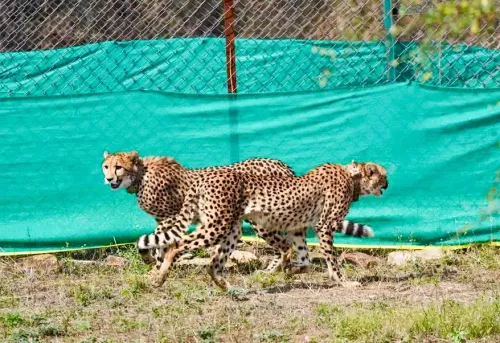
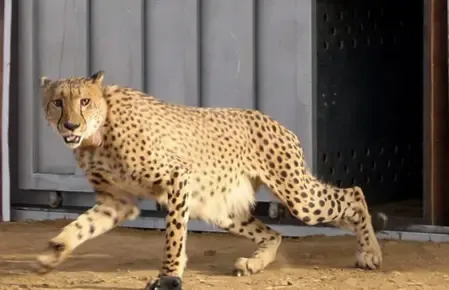
Nauradehi becomes India's 3rd cheetah habitat as 2 big cats released in MP
Synopsis
India now has three cheetah habitats — with Nauradehi Wildlife Sanctuary in Madhya Pradesh joining Kuno National Park and Gandhisagar as a home for the big cats. With 60 cheetahs in the country (41 born in India) and the Banni grasslands of Gujarat next in line, Project Cheetah is quietly evolving from a single-site experiment into a landscape-scale recovery programme with global conservation significance.
Key Takeaways
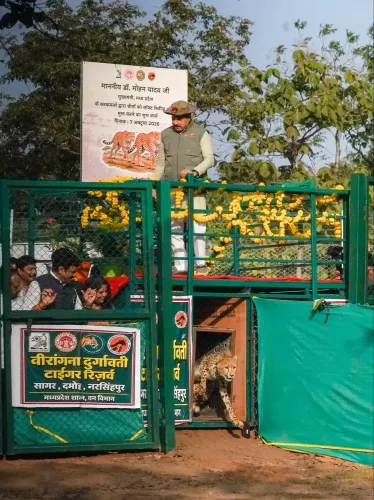
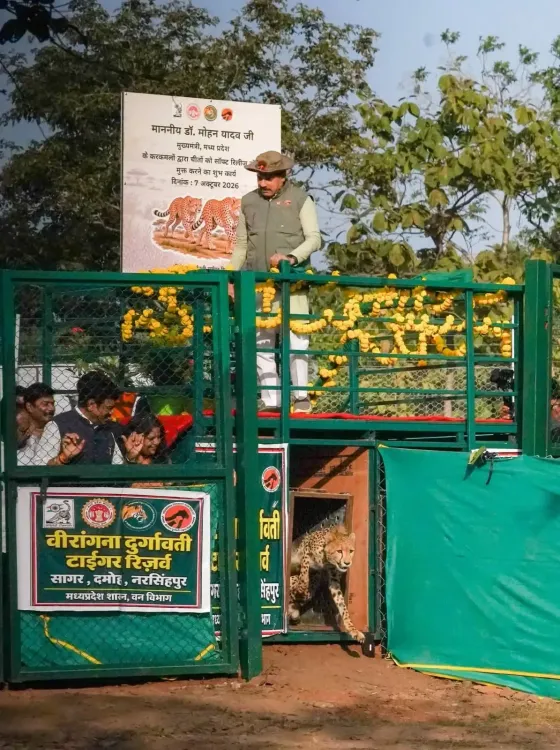
Two cheetahs were released at Nauradehi Wildlife Sanctuary , Madhya Pradesh , on 8 October 2026 , making it India's third cheetah habitat .
India's cheetah population has reached 60 , with 41 born within the country.
The birth of five cubs recently marked the beginning of the Botswana lineage in India.
Project Cheetah began with 20 cheetahs translocated from Namibia and South Africa , later supplemented by 9 from Botswana .
Expansion to the Banni grasslands in Gujarat is underway, with habitat and prey readiness deemed satisfactory.
A high-level review chaired by Union Minister Bhupender Yadav assessed the project's progress ahead of the Nauradehi release.
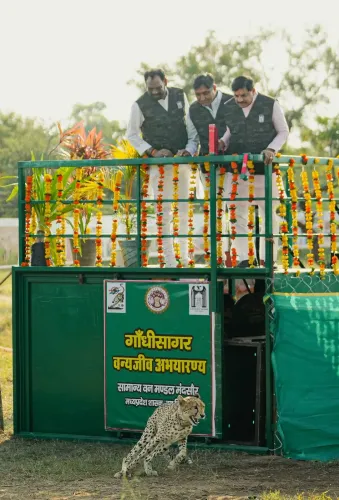
Two cheetahs were released at the Nauradehi Wildlife Sanctuary in Madhya Pradesh on Thursday, 8 October 2026, making it India's third cheetah habitat after Kuno National Park and the Gandhisagar Wildlife Sanctuary. The release, conducted in the presence of Madhya Pradesh Chief Minister Mohan Yadav, marks a significant milestone in Project Cheetah, India's pioneering initiative to reintroduce a species that was declared extinct in the country decades ago.
India's Cheetah Count Reaches 60
India's total cheetah population now stands at 60, of which 41 have been born within the country — a figure the National Tiger Conservation Authority (NTCA) has called further evidence of a thriving cheetah population. The recent birth of five cubs also marked the start of the Botswana lineage in India, adding genetic diversity to the growing metapopulation.
The NTCA described the Nauradehi translocation as another step in the long-term consolidation of a national cheetah metapopulation framework, designed to facilitate dispersal and genetic exchange across interconnected central Indian landscapes.
Project Cheetah: Origins and Progress
Project Cheetah was launched with the translocation of a founder population of 20 cheetahs from Namibia and South Africa, subsequently supplemented by nine cheetahs from Botswana through coordinated international cooperation and scientific planning. Despite initial challenges associated with wildlife translocation, the project has recorded what authorities describe as encouraging outcomes.
Scientific monitoring indicates that the introduced animals have adapted well to Indian conditions, with stable ranging behaviour, effective prey utilisation, and no significant physiological stress observed across different management settings. Survival rates of introduced individuals and cubs have reportedly been in line with — and in certain cases better than — global benchmarks.
Government Review and Expansion Plans
A high-level review meeting, chaired by Union Environment, Forest and Climate Change Minister Bhupender Yadav, was convened in the days preceding the Nauradehi release to assess Project Cheetah's progress and deliberate on future expansion. Preparatory work is now underway to extend the project to new areas, including the Banni grasslands in Gujarat, where habitat readiness and prey augmentation measures have reportedly reached satisfactory levels.
Sustained sourcing of cheetahs from African countries is also envisaged to maintain genetic diversity and support continued population growth, according to officials.
Why Nauradehi Matters for Conservation
The addition of Nauradehi Wildlife Sanctuary as a third cheetah site reflects the project's shift from a single-site model to a landscape-based approach, critical for long-term sustainability. While Kuno National Park remains the primary establishment site, and Gandhisagar serves as an expansion habitat, Nauradehi strengthens the interconnected corridor across central India.
Conservationists note that a multi-site metapopulation strategy reduces disease and disaster risk concentrated in any one location — a lesson drawn from cheetah recovery programmes in southern Africa. With the Banni grasslands on the horizon, India's reintroduction effort is increasingly being watched as a globally significant model for large carnivore restoration.
Point of View
And the pressure to sustain genetic diversity through continued African sourcing underlines how far India is from a self-sustaining wild population. The pivot to a metapopulation framework is scientifically sound, but execution timelines for Banni and future sites will determine whether this becomes a conservation success story or a decades-long holding pattern. India has the momentum — the question is whether institutional commitment outlasts the news cycle.
NationPress
8 Oct 2026
Frequently Asked Questions
Which is India's third cheetah habitat?
Nauradehi Wildlife Sanctuary in Madhya Pradesh is India's third cheetah habitat, after Kuno National Park and Gandhisagar Wildlife Sanctuary. Two cheetahs were released there on 8 October 2026 in the presence of Chief Minister Mohan Yadav.
How many cheetahs are there in India now?
India's cheetah population stands at 60 as of October 2026, of which 41 were born within the country. The recent birth of five cubs also initiated the Botswana lineage in India.
What is Project Cheetah and when did it begin?
Project Cheetah is India's initiative to reintroduce the cheetah after its extinction in the country. It began with the translocation of 20 cheetahs from Namibia and South Africa, later supplemented by 9 from Botswana, through international scientific cooperation.
Where will cheetahs be introduced next in India?
The Banni grasslands in Gujarat are the next planned expansion site for Project Cheetah, with habitat readiness and prey augmentation reportedly at satisfactory levels. Preparatory work is currently underway.
How is Project Cheetah performing compared to global benchmarks?
According to scientific monitoring cited by the NTCA, survival rates of introduced cheetahs and cubs are in line with — and in some cases better than — global benchmarks. Authorities report stable ranging behaviour, effective prey utilisation, and no significant physiological stress across management sites.