President Murmu at Muria Darbar: 'I Am a Manjhi's Daughter'
Synopsis
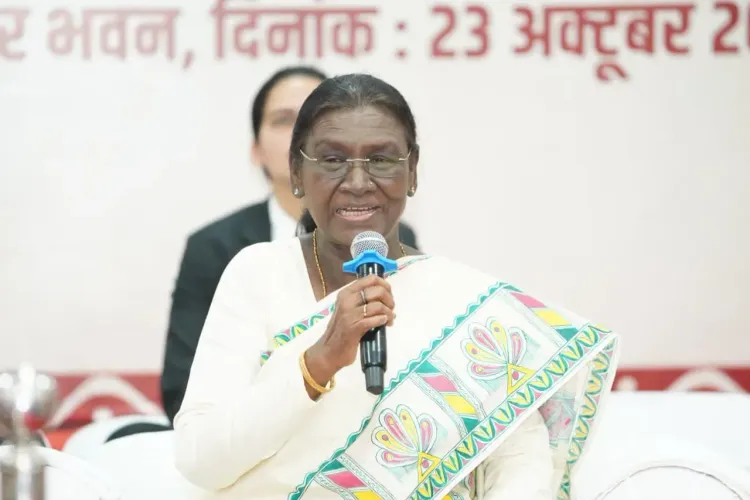
President Droupadi Murmu attended the Muria Darbar during Bastar Dussehra 2026, praised tribal democratic traditions, and declared personal kinship with the Manjhi community. Chief Minister Vishnu Deo Sai and Governor Ramen Deka were also present at the landmark gathering in Chhattisgarh.
Key Takeaways
President Droupadi Murmu attended the Muria Darbar as part of Bastar Dussehra 2026 on 23 October 2026 .
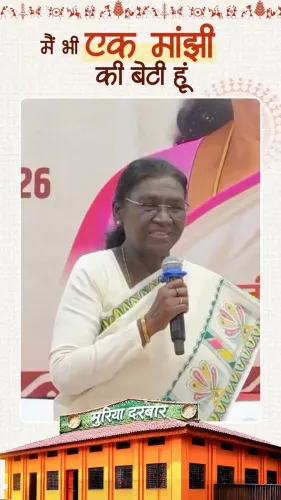
She declared 'Main bhi Manjhi ki beti hoon' ('I too am a daughter of the Manjhi'), affirming personal tribal kinship with the assembly.
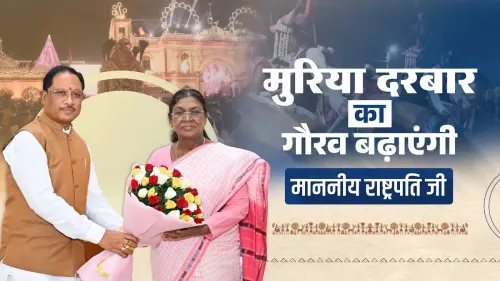
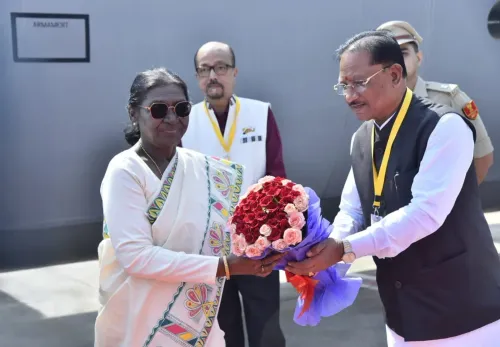
Murmu praised the Muria Darbar as a symbol of 'social unity, mutual cooperation, and democratic traditions.' Governor Ramen Deka and Chief Minister Vishnu Deo Sai were present at the event in Bastar, Chhattisgarh .
She urged tribal communities to pursue development while preserving cultural identity and social solidarity.
The visit echoes the policy arc of Janjatiya Gaurav Divas (2021) and the PESA Act, 1996 , which formally recognised traditional tribal governance in scheduled areas.
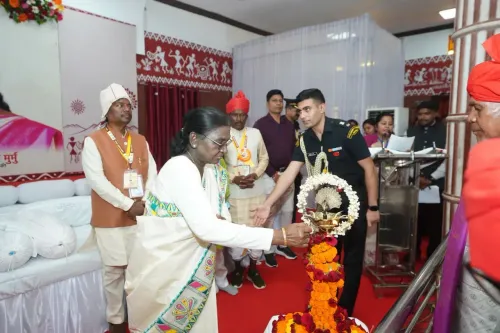
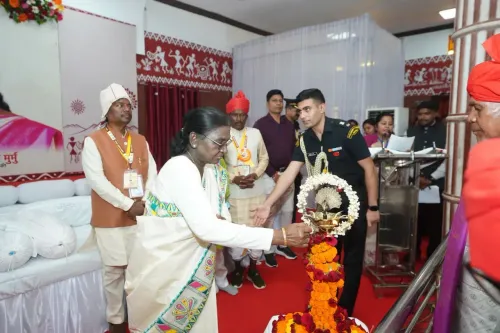
In the heart of southern Chhattisgarh, where a festival older than most democracies continues to practise one, President Droupadi Murmu stepped into the Muria Darbar on 23 October 2026 and declared herself kin. 'Main bhi Manjhi ki beti hoon' — 'I too am a daughter of the Manjhi' — she told the tribal assembly gathered under the canopy of Bastar Dussehra, in words that carried the full weight of a head of state who is herself a daughter of India's oldest indigenous communities.
What the Muria Darbar is — and why a President's presence matters
The Muria Darbar is not a cultural show. It is a working assembly embedded within the Bastar Dussehra festival in which tribal representatives — including the hereditary Manjhi and Chalki headmen — deliberate on community matters through customary processes that predate the Indian Constitution by centuries. President Murmu praised this system as a living symbol of 'social unity, mutual cooperation, and democratic tradition,' placing it on a continuum with the constitutional democracy she leads rather than outside it.
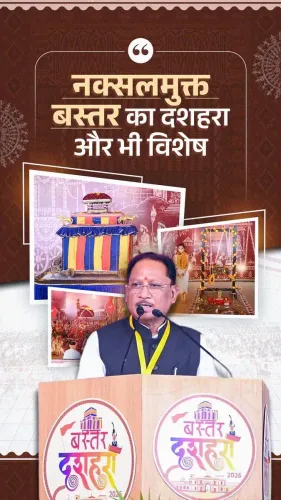
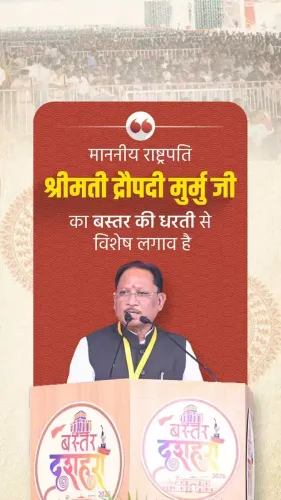
The Chhattisgarh Chief Minister's Office confirmed that Governor Ramen Deka and Chief Minister Vishnu Deo Sai were also present at the occasion. Murmu engaged directly with Manjhi-Chalki representatives and tribal delegates, calling for the preservation of Bastar's 'rich traditions and cultural heritage' even as communities integrate with modern development programmes.
Murmu's tribal identity as political and symbolic currency
President Murmu — India's first head of state from a tribal community, elected in July 2022 and belonging to the Santhal tribe of Odisha — has consistently used her office to foreground indigenous governance as a legitimate, sophisticated tradition. Her personal declaration at the Muria Darbar distilled that posture into three Hindi words that the assembled headmen would have felt viscerally. It was not protocol; it was lineage.
The gesture lands against a deliberate policy backdrop. The Panchayats (Extension to Scheduled Areas) Act, 1996 formally recognised traditional tribal decision-making institutions in scheduled areas. Janjatiya Gaurav Divas, instituted by the Government of India in 2021, added a national day of honour. A presidential visit to the Muria Darbar is the highest-profile expression yet of that arc.
The call: development without losing the thread
Murmu's message was not purely retrospective. She urged tribal communities to advance with social solidarity while retaining their cultural identity — a call that directly addresses the tension felt in scheduled areas between infrastructure growth and the erosion of collective customs. Chhattisgarh, one of India's states with the largest scheduled-tribe populations, sits at the sharpest edge of that tension, particularly in Bastar, where decades of conflict have been layered over extraordinary cultural depth.
Chief Minister Vishnu Deo Sai, himself from a tribal community in the state, represents the same political convergence at the state level — a BJP-led government that has staked significant symbolic capital on tribal identity and heritage alongside welfare delivery in scheduled areas.
When India's President walks into a centuries-old tribal assembly, calls herself a Manjhi's daughter, and asks the headmen to hold the thread — the message to every scheduled area in the country is unmistakable: the constitution and the Darbar are not rivals. They are kin.
Point of View
Which governs both the Centre and Chhattisgarh under CM Sai — himself tribally identified — the event is high-value symbolic politics in a state where scheduled-tribe votes are structurally decisive. The deeper policy question is whether presidential attendance translates into binding state-level commitments: documentation, legal protection, and resource allocation for Muria Darbar-style assemblies. If it does not, the moment risks being a powerful gesture that leaves the institution it celebrates no more secure than before.
NationPress
23 Oct 2026
Frequently Asked Questions
What is the Muria Darbar in Bastar Dussehra?
The Muria Darbar is a traditional tribal assembly held as part of the annual Bastar Dussehra festival in Chhattisgarh, where hereditary headmen called Manjhi and Chalki representatives gather to discuss community matters through customary decision-making processes that predate modern democratic institutions.
Why did President Droupadi Murmu say 'I am a Manjhi's daughter'?
President Murmu, herself a member of the Santhal tribal community of Odisha and India's first tribal head of state, used the phrase to express personal kinship with the Manjhi headmen of Bastar and to signal that the constitutional offices she holds are rooted in, not separate from, India's indigenous heritage.
Who attended the Muria Darbar with President Murmu in 2026?
Chhattisgarh Governor Ramen Deka and Chief Minister Vishnu Deo Sai were present alongside President Droupadi Murmu at the Muria Darbar during Bastar Dussehra 2026 on 23 October.
What is Bastar Dussehra and why is it significant?
Bastar Dussehra is an extended annual festival in southern Chhattisgarh that blends indigenous tribal customs with traditional Dussehra observances. It is considered one of the longest-running tribal festivals in India and includes the Muria Darbar — a living example of indigenous democratic governance.
What government policies protect tribal self-governance in India?
The Panchayats (Extension to Scheduled Areas) Act, 1996 formally recognised traditional tribal decision-making institutions in scheduled areas. Janjatiya Gaurav Divas, instituted in 2021, established a national day to honour tribal heritage and contributions across India.