Nadda contrasts performance politics with vote-bank era
Synopsis
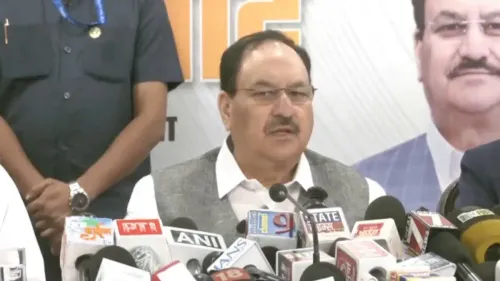
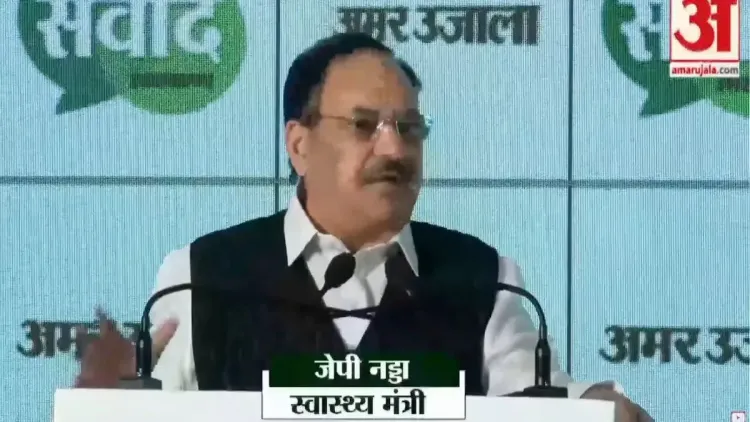
Union Health Minister and BJP president J. P. Nadda on June 24, 2026, posted on X contrasting earlier vote-bank and dynastic politics with the BJP's performance and accountability-driven model, asserting that the government has delivered on its promises and beyond.
Key Takeaways
Union Health Minister J.
Nadda posted on X on June 24, 2026 , drawing a contrast between earlier patronage politics and today's accountability model.
He characterised previous governments as driven by vote-bank politics, appeasement and dynastic interests confined to a few families.
Nadda asserted that current governance is anchored in performance, report cards and accountability .
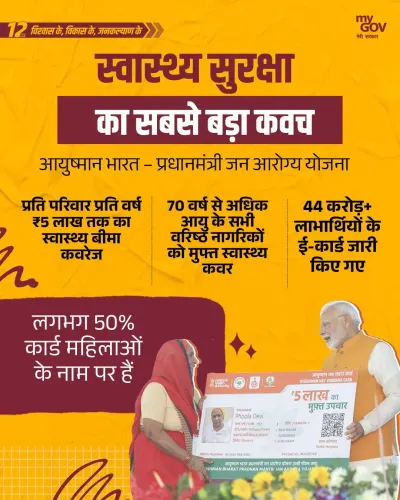
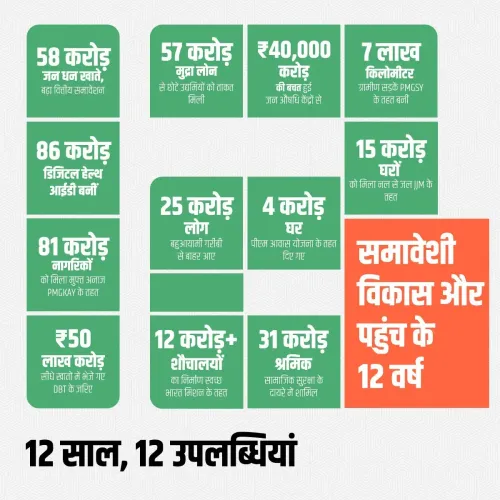
The post reflects a BJP rhetorical framework in place since 2014 , supported by schemes such as DBT, Swachh Bharat and Ayushman Bharat .
As both BJP national president and a senior Cabinet minister, Nadda's statement carries organisational and executive weight ahead of upcoming state elections.
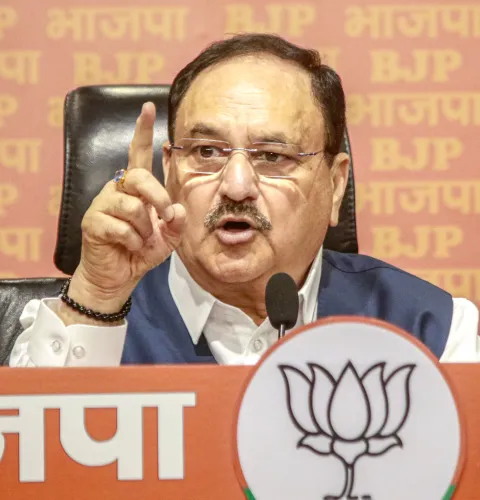
Union Health Minister J. P. Nadda on Wednesday, June 24, 2026, took to X to draw a sharp contrast between what he described as the patronage-driven politics of earlier governments and the accountability-first model he attributes to the current dispensation, asserting that promises made have been kept — and more.
Context
In his post, written in Hindi, Nadda stated: 'पहले की राजनीति वोट बैंक, तुष्टीकरण और परिवारवाद के आधार पर चलती थी' — 'Earlier politics ran on the basis of vote-bank, appeasement and dynastic politics.' He added that governments of the past remained confined to limited interests and a handful of families. In contrast, he wrote, today's politics moves forward on the basis of 'performance, report card and accountability.'
Nadda concluded with a pointed assertion: 'What was said has been delivered, and what was not even promised has also been demonstrated.' The post, which carries a video attachment, is consistent with the Bharatiya Janata Party's long-running public messaging framing welfare delivery as a measurable departure from earlier patronage models.
Policy Backdrop
The rhetorical framework Nadda invokes has deep roots in BJP positioning since 2014, when the party's national executive and manifesto explicitly rejected vote-bank politics in favour of 'maximum governance, minimum government.' Since then, senior leaders have consistently pointed to direct benefit transfer (DBT) mechanisms, the Swachh Bharat Mission and the Ayushman Bharat health insurance scheme as evidence of a shift from clientelist politics to outcome-linked governance.
As BJP national president and a senior Cabinet minister, Nadda occupies a dual platform — organisational and executive — that gives his statements on governance both a party-political and a policy dimension. His framing of 'report card' politics echoes the government's periodic self-assessments released ahead of election cycles.
Stakeholders and Impact
The primary audience for such messaging is the Indian voter, particularly in states approaching assembly elections, where the BJP seeks to consolidate its governance narrative against opposition parties it characterises as dynastic or identity-driven. Opposition parties, for their part, have consistently disputed this framing, arguing that welfare scheme implementation remains uneven across states.
Civil society observers note that the 'performance politics' argument cuts both ways: it raises the bar for the ruling party's own accountability, inviting scrutiny of delivery gaps in health infrastructure, fertiliser supply chains and other areas under Nadda's ministerial remit.
What's Next
Attention will turn to state-level implementation reports of centrally sponsored health schemes and any parliamentary debate on governance benchmarks in the months ahead. With assembly elections on the horizon in several states, the BJP's performance narrative — and the opposition's counter-narrative — is likely to intensify. Nadda's post signals that the party intends to anchor its electoral pitch firmly in the language of delivery and accountability rather than identity-based mobilisation.
Point of View
Timed to sharpen the party's identity ahead of state elections. By invoking 'report card' language, the BJP simultaneously claims the moral high ground on delivery and sets a measurable standard it will have to defend. The dual role Nadda holds — party president and Cabinet minister — means the statement carries both electoral signalling and policy intent. The sharper risk for the ruling party is that performance-based framing invites independent audits of scheme delivery, a double-edged sword in states where implementation gaps persist.
NationPress
24 Jun 2026
Frequently Asked Questions
What did J. P. Nadda say about vote-bank politics?
Nadda said that earlier politics was driven by vote-bank considerations, appeasement and dynastic interests, while today's politics is based on performance, report cards and accountability.
Why is Nadda talking about performance politics now?
As BJP national president and Union Minister, Nadda regularly articulates the party's governance narrative, particularly ahead of state elections where the BJP contrasts its delivery record with opposition parties it labels as dynastic.
What schemes does BJP cite as examples of performance-based governance?
The BJP has consistently pointed to direct benefit transfer (DBT), the Swachh Bharat Mission and the Ayushman Bharat health insurance scheme as measurable departures from earlier patronage-driven welfare models.
What is J. P. Nadda's current role in government and the BJP?
J. P. Nadda is the Union Minister of Health and Family Welfare and Minister of Chemicals and Fertilizers, and he has served as BJP national president since 2024.
What does 'parivaarvaad' mean in Nadda's post?
'Parivaarvaad' translates to dynastic politics or familyism — a term the BJP uses to criticise political parties where power is seen as concentrated within a single family across generations.