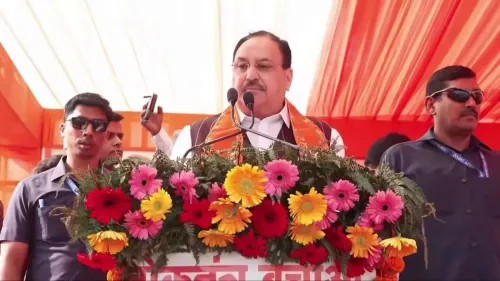
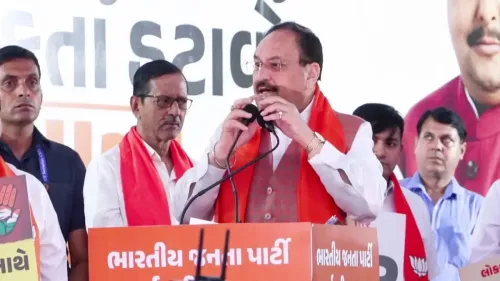
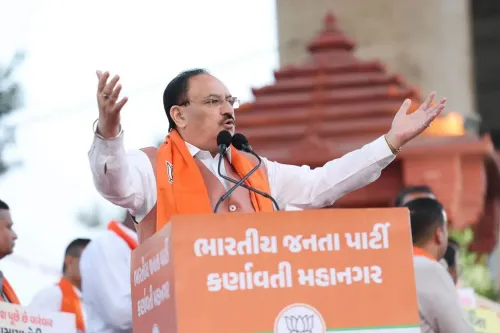
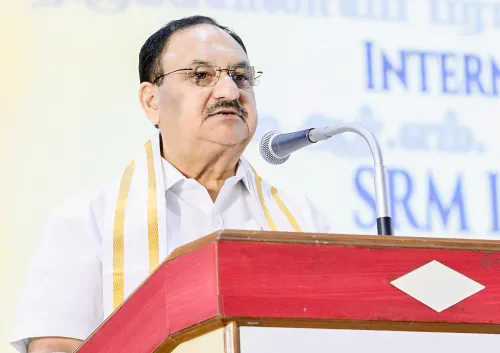
Nadda fires back on Gyanesh Kumar row, cites opposition hypocrisy
Synopsis
Union Health Minister and BJP chief J. P. Nadda launched a pointed counter-attack on November 3, 2026, accusing the opposition of hypocrisy for questioning Election Commissioner Gyanesh Kumar's appointment while their own governments had placed retired election officials in high offices.
Key Takeaways
Nadda , BJP national president and Union Health Minister, posted a sharp rebuttal on November 3, 2026 targeting opposition criticism of Election Commissioner Gyanesh Kumar .
Nadda listed roles — vice chancellor, Home Ministry advisor, UN representative, governor — that opposition-era governments allegedly gave to retired election commissioners.
He used the proverb '70 चूहे खाकर बिल्ली चली हज को' to accuse critics of rank hypocrisy.
The post was tagged #SaveDemocracyRemoveAnarchy , indicating a coordinated BJP counter-narrative.
The controversy connects to the Chief Election Commissioner and Other Election Commissioners (Appointment, Conditions of Service and Terms of Office) Act, 2023 , which the opposition has long opposed for altering the selection panel.
Post-retirement appointments of election officials have triggered partisan accusations across multiple governments in India.
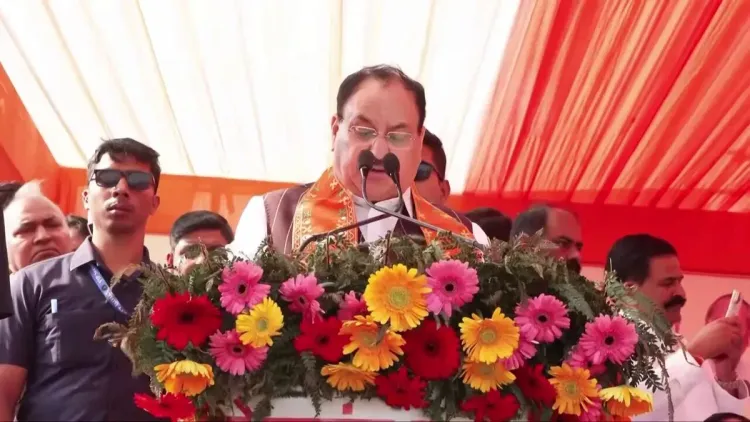
A sharp political counter-punch landed on Tuesday, November 3, 2026, as Union Health Minister and BJP national president J. P. Nadda turned the tables on critics of Election Commissioner Gyanesh Kumar, charging the opposition with brazen double standards over post-retirement appointments of election officials.
Posting in Hindi, Nadda asked — pointedly — how those who had themselves appointed former election commissioners to roles such as vice chancellor, Home Ministry advisor, United Nations representative, and governor could now question Gyanesh Kumar's appointment. 'पहले अपने गिरेबान में झांकिए' ('First look at your own collar'), he wrote, deploying one of Hindi's sharpest idioms for calling out hypocrisy. He capped the attack with an old proverb: '70 चूहे खाकर बिल्ली चली हज को' — a cat that has devoured seventy mice now sets off on a holy pilgrimage — a folk image universally understood to mean that past sins cannot be washed away by a sudden show of virtue.
The Gyanesh Kumar appointment controversy
The post draws its ammunition from a well-worn fault line in Indian politics. The Election Commission of India — the constitutional body that supervises free and fair elections — has long been at the centre of debates about institutional independence. When commissioners retire or complete their terms, successive governments have placed them in diplomatic, gubernatorial, or advisory roles, prompting opposition protests at each turn.
Nadda's charge is that critics of the current appointment to Gyanesh Kumar's position are the same forces whose governments ran the identical playbook. The hashtag #SaveDemocracyRemoveAnarchy signals this is not a stray remark but part of a coordinated BJP messaging push.
The 2023 appointment law hanging over the debate
The backdrop to this political slugfest is the Chief Election Commissioner and Other Election Commissioners (Appointment, Conditions of Service and Terms of Office) Act, 2023, which restructured the selection panel for election commissioners — removing the Chief Justice of India from the committee. Opposition parties contested that change strenuously, arguing it gave the executive undue influence over appointments. The current controversy over Gyanesh Kumar fits squarely into that ongoing argument about who guards the guardians of elections.
A recurring Indian political pattern
India has seen this script before. Accusations of rewarding 'pliable' commissioners with plum post-retirement postings are not new — and critically, they have been levelled at every government in power, including those now doing the accusing. Nadda's post exploits exactly that history, essentially daring the opposition to produce a clean record. The combative register — equal parts proverb and hashtag — suggests the ruling party intends to fight this battle in the court of public opinion, not just in Parliament.
The episode is a live test of whether electoral-body appointments can survive the cycle of partisan charge and counter-charge — or whether the credibility of the Election Commission itself becomes collateral damage every time a new commissioner is named.
Point of View
Attack the attacker's own record. By listing specific categories of post-retirement roles given to former election commissioners by past governments, the BJP is attempting to reframe the Gyanesh Kumar controversy as partisan opportunism rather than a principled stand for institutional independence. The move also serves a second purpose — keeping the 2023 Election Commissioner Appointment Act off the headlines by turning the conversation into a character contest over who has the cleaner hands. The proverb-laced, hashtag-driven tone suggests the party believes this argument plays well in the Hindi-speaking heartland, where such idioms carry immediate cultural resonance.
NationPress
4 Nov 2026
Frequently Asked Questions
Who is Gyanesh Kumar and why is his appointment controversial?
Gyanesh Kumar is a former election commissioner whose recent appointment has drawn criticism from opposition parties, who allege the ruling government has undue influence over Election Commission appointments — an argument that intensified after the 2023 Act changed the selection panel.
What did J. P. Nadda say about the opposition and the Election Commission?
Nadda accused the opposition of hypocrisy, saying the same parties that appointed former election commissioners to roles including vice chancellor, Home Ministry advisor, UN representative, and governor are now questioning Gyanesh Kumar's appointment.
What is the meaning of '70 चूहे खाकर बिल्ली चली हज को'?
It is a Hindi proverb meaning 'the cat that ate seventy mice now goes on a holy pilgrimage' — used to mock someone who has committed many wrongs but suddenly pretends to be virtuous.
What is the Chief Election Commissioner Appointment Act 2023?
The Chief Election Commissioner and Other Election Commissioners (Appointment, Conditions of Service and Terms of Office) Act, 2023 changed the panel that selects election commissioners, removing the Chief Justice of India and replacing that seat with a Cabinet minister, which opposition parties argued gives the executive greater control.
Have previous Indian governments appointed retired election officials to other posts?
Yes. Multiple governments across party lines have appointed former election commissioners to positions such as governors, ambassadors, advisors, and university heads. This pattern is the core of Nadda's counter-argument against current opposition criticism.