Nadda hails Gayatri Parivar's body-donation drive
Synopsis
Union Health Minister J. P. Nadda has publicly praised the Akhil Vishwa Gayatri Parivar for launching a body-donation campaign, framing it as a contribution to national renaissance and social service. The move aligns with a long-standing policy of engaging faith-based groups to address India's chronic cadaver shortage in medical education.
Key Takeaways
Nadda , Union Health Minister, publicly endorsed the Akhil Vishwa Gayatri Parivar's body-donation ( dehdaan ) campaign on 27 June 2026 .
The Gayatri Parivar, founded by Pt.
Shriram Sharma Acharya , is a large faith-based organisation active in education, welfare, and social service across India.
Body donation to medical colleges remains critically under-supplied in India, constraining anatomy education at institutions nationwide.
The Transplantation of Human Organs and Tissues Act, 1994 (amended 2011 ) provides the legal framework for voluntary body and organ donation.
Nadda's endorsement continues a policy pattern of leveraging religious and civil-society organisations to normalise donation and expand public-health outreach.
A potential formal MoU between the Health Ministry and the Gayatri Parivar could institutionalise the campaign and feed data into state donation registries.
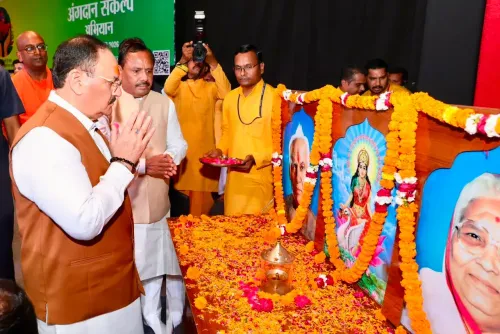
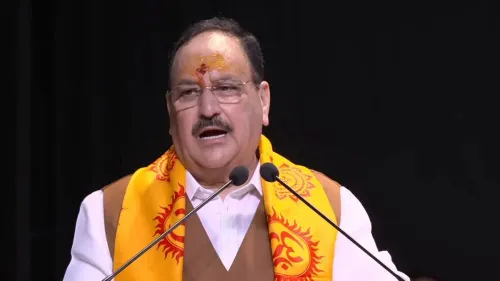
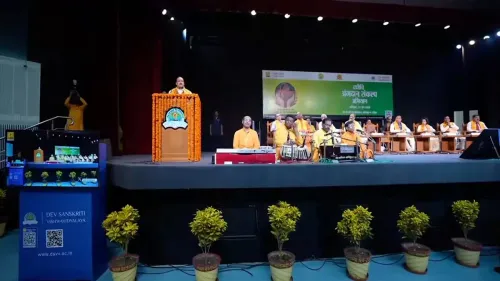
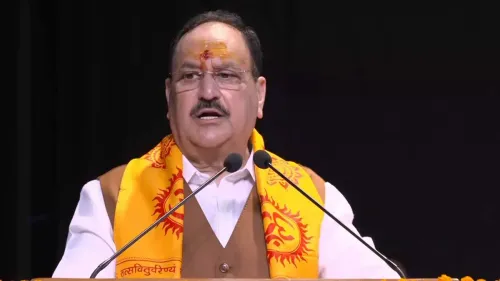
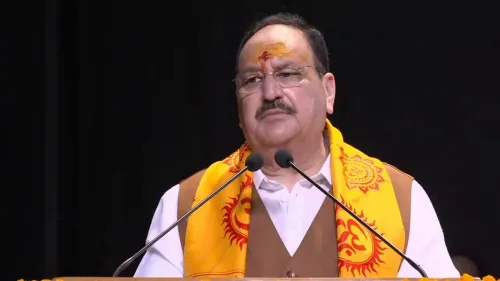
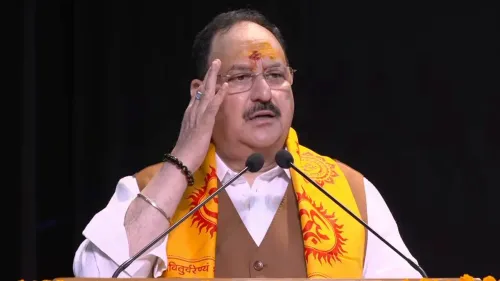
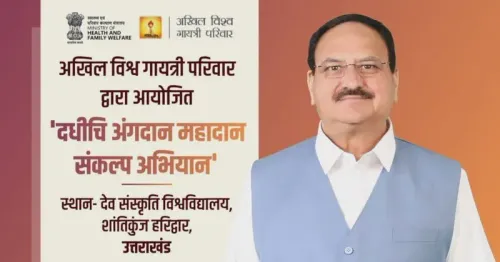
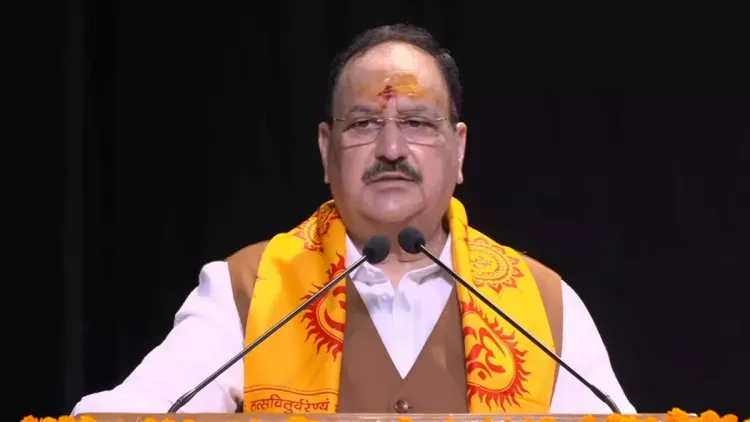
Union Health Minister J. P. Nadda on Saturday, 27 June 2026 praised the Akhil Vishwa Gayatri Parivar for launching a body-donation campaign, calling it a matter of great personal joy and commending the organisation's contribution to social service and national regeneration.
Posting on X, Nadda wrote: 'मेरे लिए बहुत ही ख़ुशी का विषय है कि अखिल विश्व गायत्री परिवार द्वारा देहदान का अभियान शुरू किया है' — 'It is a matter of great joy for me that the Akhil Vishwa Gayatri Parivar has launched a body-donation campaign.' He added that the organisation's contribution to social service, national service, and the punarjagaran (renaissance) of the nation is 'praiseworthy.'
Context
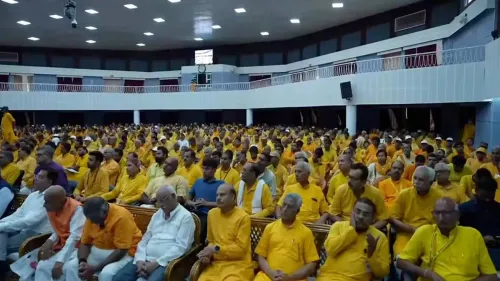
The Akhil Vishwa Gayatri Parivar, founded by Pt. Shriram Sharma Acharya, is one of India's most prominent faith-based social-service organisations, active across education, welfare, and yagya programmes. Its decision to formally launch a dehdaan (body-donation) campaign marks a significant institutional push to normalise posthumous body donation within its large volunteer and devotee network.
Body donation to medical colleges remains chronically under-supplied in India. Anatomy departments across the country face persistent cadaver shortages that constrain the quality of medical education, making civil-society endorsement of such campaigns especially consequential.
Policy Backdrop
The Transplantation of Human Organs and Tissues Act, 1994, amended in 2011, provides the legal framework governing voluntary body and organ donation for therapeutic and medical-education purposes. Since the early 2000s, the Union Health Ministry and state governments have periodically run awareness drives to bridge the gap between institutional demand and actual donations.
Nadda's public endorsement fits a long-standing policy approach of leveraging the social capital of religious and civil-society organisations to shift public attitudes on donation. Faith-based groups carry trust and reach in communities where government messaging alone has limited penetration.
Stakeholders and Impact
Medical colleges and their anatomy departments stand to be the most direct beneficiaries if the Gayatri Parivar campaign succeeds in registering a significant number of pledges. The organisation's nationwide presence — spanning urban centres and rural districts — gives the drive potential scale that targeted government campaigns have historically struggled to match.
For prospective donors and their families, the campaign provides a culturally rooted framework for a decision that many Indians find emotionally or religiously complex. Aligning body donation with the concept of seva (selfless service) may reduce hesitation among communities that are otherwise reluctant.
What's Next
Observers will watch for any formal memorandum of understanding between the Union Health Ministry and the Gayatri Parivar that could institutionalise the campaign and feed registration data into state-level donation registries. State health departments may also be prompted to coordinate outreach events with local Gayatri Parivar chapters.
If the campaign generates measurable uptake in body-donation pledges, it could serve as a replicable model for engaging other large faith-based organisations in similar public-health objectives — reinforcing the government's broader agenda of expanding voluntary donation across India.
Point of View
The Health Ministry signals that it intends to close India's cadaver gap through social mobilisation rather than regulation alone. The choice of a spiritually influential organisation is deliberate: framing body donation as seva and national renaissance gives the ask cultural legitimacy that bureaucratic messaging rarely achieves. If a formal partnership follows, this could become a template for engaging other large faith networks in organ and body donation — a significant shift in how India's health establishment approaches voluntary donation policy.
NationPress
27 Jun 2026
Frequently Asked Questions
What is the Akhil Vishwa Gayatri Parivar body-donation campaign?
The Akhil Vishwa Gayatri Parivar has launched a dehdaan (body-donation) campaign encouraging its members and the wider public to pledge their bodies to medical colleges after death. Union Health Minister J. P. Nadda praised the initiative on 27 June 2026, calling it a praiseworthy act of social and national service.
Why is body donation important for medical colleges in India?
Indian medical colleges face a persistent shortage of cadavers for anatomy training, which affects the quality of medical education. Voluntary body donation is the primary legal source of cadavers under the Transplantation of Human Organs and Tissues Act, 1994, making public awareness campaigns critical to bridging the supply gap.
What did J. P. Nadda say about the Gayatri Parivar campaign?
Nadda said it was a matter of 'great joy' that the Akhil Vishwa Gayatri Parivar had launched a body-donation campaign, and described the organisation's contribution to social service and national renaissance as 'praiseworthy.'
Is body donation legal in India and how does it work?
Yes, body donation is legal and regulated under the Transplantation of Human Organs and Tissues Act, 1994, amended in 2011. Individuals can register a pledge during their lifetime, and after death their next of kin can authorise the donation to a medical institution for anatomical study and education.
What could follow from Nadda's endorsement of the Gayatri Parivar campaign?
Observers are watching for a formal memorandum of understanding between the Union Health Ministry and the Gayatri Parivar that could institutionalise the campaign, link pledge data to state donation registries, and potentially serve as a model for engaging other faith-based organisations in body and organ donation drives.