Nadda Hits Congress Over Election Commission Appointments
Synopsis
BJP president J. P. Nadda accused Congress of hypocrisy for questioning Election Commission functioning, citing past appointments of T. N. Seshan, M. S. Gill, and Naveen Chawla, while defending PM Modi's 2023 law that included the Leader of Opposition in the selection panel.
Key Takeaways
BJP national president J.
Nadda posted on 27 October 2026 accusing Congress of hypocrisy over Election Commission appointments.
Nadda cited three former Chief Election Commissioners — T.
Gill , and Naveen Chawla — as evidence of Congress's alleged practice of partisan appointments.
The Supreme Court in March 2023 directed that a three-member panel including the Chief Justice oversee Election Commission appointments pending legislation.
Parliament's December 2023 Act replaced the Chief Justice with a Union Cabinet Minister on the selection panel, retaining the Lok Sabha Leader of Opposition .
Congress has criticised the removal of the Chief Justice from the panel as weakening judicial oversight over executive appointments.
Nadda's post is tagged #SaveDemocracyRemoveAnarchy , indicating a broader BJP campaign framing.
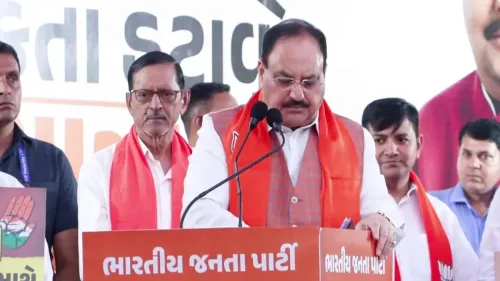
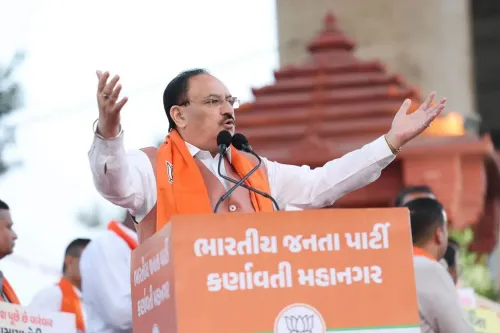
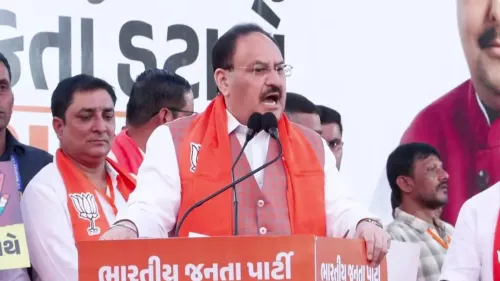
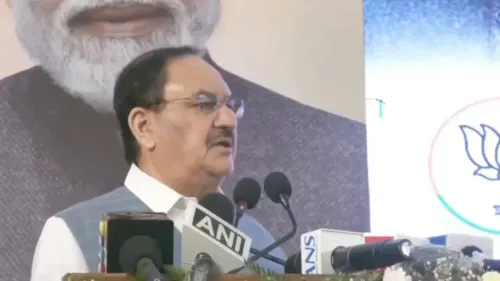
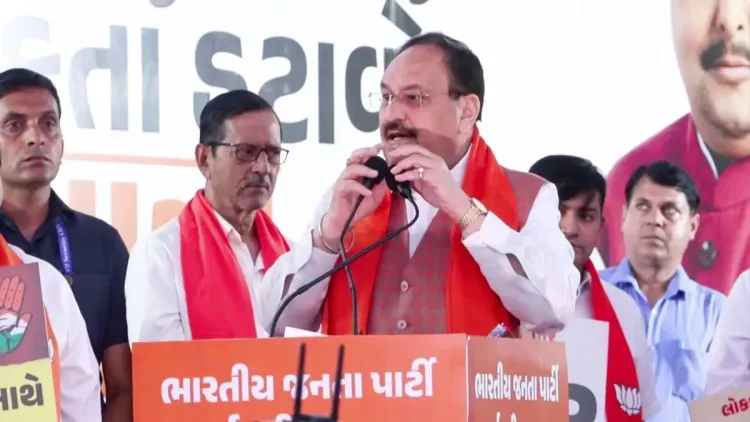
The institution that referees Indian democracy is once again at the centre of a political firefight — and Union Health Minister and BJP National President J. P. Nadda has fired the opening salvo. On Tuesday, 27 October 2026, Nadda posted sharply on X, accusing the Congress party of hypocrisy for questioning the Election Commission's functioning after decades of allegedly packing it with sympathetic appointees.
Nadda's post, in Hindi, cuts straight to the accusation: 'Jo Congress party kabhi chunav aayog mein apne paksh ke logon ko niyukt kar use prabhavit karne ka prayas karti thi, wahi aaj uski karyapranali par sawal utha rahi hai.' ('The same Congress party that once tried to influence the Election Commission by appointing people loyal to it is today raising questions about its functioning.')
Seshan, Gill, Chawla — Three Names, One Charge
Nadda names three former Chief Election Commissioners as evidence: T. N. Seshan, M. S. Gill, and Naveen Chawla. The invocation is deliberate. Seshan served from 1990 to 1996 and ironically became the CEC most celebrated for asserting the Commission's independence — eventually clashing bitterly with the Congress government that appointed him. M. S. Gill served from 1996 to 2001, overseeing the rollout of electronic voting machines. Naveen Chawla's 2009–2010 tenure attracted the loudest political controversy, with opposition parties alleging partisan leanings at the time of his appointment — a charge Congress denied.
Nadda's argument is that these names represent a pattern: a party that shaped the Commission's composition for decades now casting doubt on the very institution it moulded. It is a charge that Congress has consistently rejected, pointing instead to the BJP government's own changes to the appointment law.
The 2023 Law That Replaced the Chief Justice
The legislative backdrop here is critical. In March 2023, the Supreme Court directed that the Chief Election Commissioner and Election Commissioners be appointed by a three-member panel comprising the Prime Minister, the Leader of the Opposition in the Lok Sabha, and the Chief Justice of India — pending formal legislation. By December 2023, Parliament enacted the Chief Election Commissioner and Other Election Commissioners (Appointment, Conditions of Service and Term of Office) Act, which retained the Prime Minister and Leader of Opposition on the panel but replaced the Chief Justice with a Union Cabinet Minister.
Nadda frames the inclusion of the Lok Sabha Leader of Opposition as Prime Minister Narendra Modi's contribution to transparency: giving the Opposition a formal seat at the table for the first time in statute. Congress and its allies have countered that removing the Chief Justice from the panel weakens the judiciary's check on executive influence — the very critique that animated the Supreme Court's original order.
A Long-Running Institutional Battle
The dispute over Election Commission appointments is as old as the republic itself, and neither side in Indian politics has clean hands. Successive governments — Congress and BJP alike — have been accused of timing appointments to suit electoral calendars. What has changed is the legislative framework: for the first time, the selection process is codified in statute rather than left to executive discretion alone.
Nadda's hashtag #SaveDemocracyRemoveAnarchy signals this is not an isolated jab but part of a coordinated BJP messaging campaign positioning the party as the defender of institutional order against what it characterises as Congress-led destabilisation.
The real test of the 2023 Act will come the next time a vacancy opens in the Election Commission — when the world will see whether the statutory panel, with the Opposition formally at the table, delivers a more consensus-driven appointment or merely a new arena for the same old fight.
Point of View
Gill, and Chawla, the BJP seeks to shift the debate from the 2023 law's removal of the Chief Justice — which courts and Opposition have challenged — to Congress's own pre-2014 conduct. The inclusion of the Leader of Opposition in the statutory panel is the BJP's strongest shield against 'executive capture' accusations, even as critics argue it is insufficient without an independent judicial voice. With Election Commission vacancies likely on the horizon, this exchange is a preview of the political battle over who gets to shape India's electoral referee.
NationPress
28 Oct 2026
Frequently Asked Questions
Why is J. P. Nadda criticising Congress over the Election Commission?
Nadda accused Congress of hypocrisy for questioning the Election Commission's functioning, pointing to past appointments of T. N. Seshan, M. S. Gill, and Naveen Chawla as evidence that Congress tried to influence the body when it was in power.
What is the 2023 Election Commissioner appointment law?
The Chief Election Commissioner and Other Election Commissioners (Appointment, Conditions of Service and Term of Office) Act, enacted in December 2023, established a selection panel comprising the Prime Minister, the Lok Sabha Leader of Opposition, and a Union Cabinet Minister — replacing an earlier Supreme Court-directed panel that included the Chief Justice of India.
Why was Naveen Chawla's appointment controversial?
Naveen Chawla served as Chief Election Commissioner from 2009 to 2010, and opposition parties at the time alleged he had partisan associations with the Congress party; Congress denied the charge.
What did the Supreme Court say about Election Commission appointments in 2023?
In March 2023 the Supreme Court directed that a three-member panel of the Prime Minister, Leader of Opposition, and Chief Justice of India oversee Election Commission appointments pending new legislation.
What does #SaveDemocracyRemoveAnarchy mean in BJP's messaging?
The hashtag is part of a BJP campaign framing the party as a defender of democratic institutions against what it characterises as Congress-backed destabilisation efforts targeting constitutional bodies like the Election Commission.