Nadda marks World Zoonoses Day, backs One Health push
Synopsis
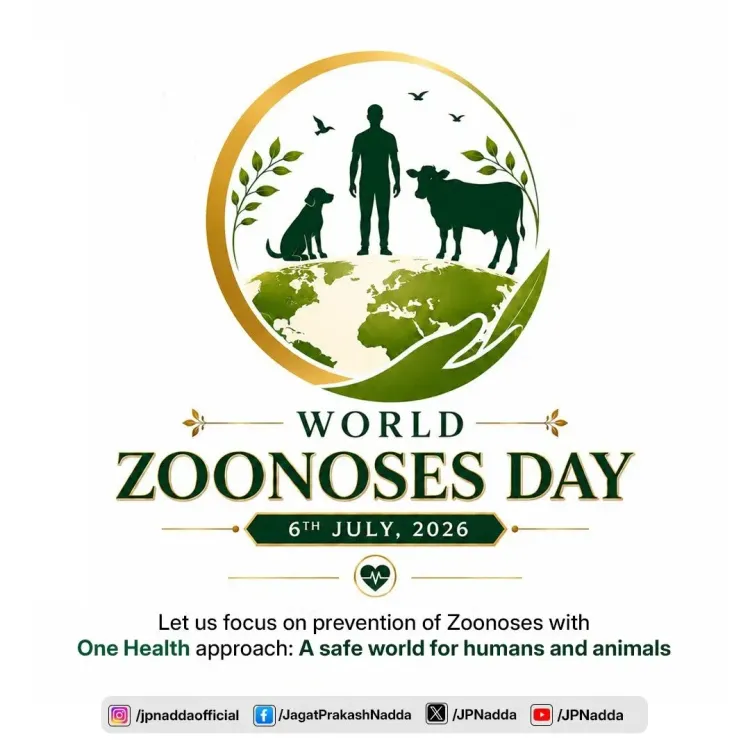
Union Health Minister J. P. Nadda marked World Zoonoses Day on 6 July 2026, spotlighting India's One Health framework and the Centre for One Health under NCDC as central to the country's strategy for preventing and controlling zoonotic diseases across human, animal, and environmental health sectors.
Key Takeaways
World Zoonoses Day is observed on 6 July each year to raise awareness of infections that spread between animals and humans.
Union Health Minister J.
Nadda reaffirmed India's commitment to the One Health approach as a core pillar of national public health strategy.
The Centre for One Health , housed within the National Centre for Disease Control (NCDC) , coordinates multisectoral surveillance and response across human, animal, plant, and environmental health.
India's disease surveillance architecture traces back to the Integrated Disease Surveillance Programme launched in 2004 and the strengthening of NCDC in 2009 .
The One Health framework aligns India's approach with international standards promoted by WHO , FAO , and WOAH .
Key stakeholders include public health agencies, veterinary services, and livestock-dependent communities across India.
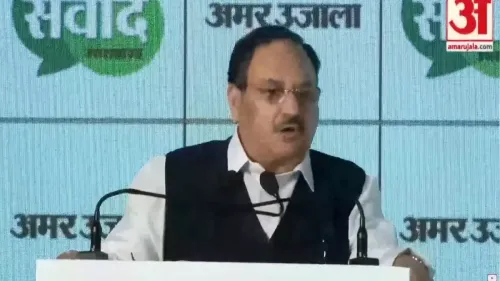
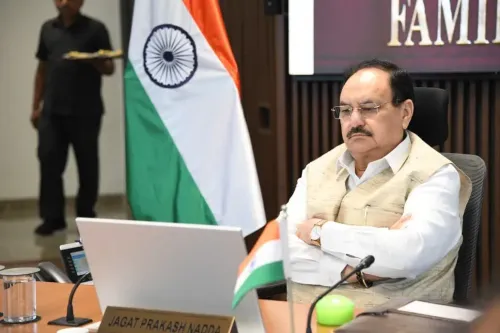
Union Health Minister J. P. Nadda on Monday, 6 July 2026 marked World Zoonoses Day by reaffirming the government's commitment to the One Health approach, calling it a key pillar of India's public health strategy under Prime Minister Narendra Modi. The minister highlighted the role of the Centre for One Health under the National Centre for Disease Control (NCDC) in building integrated surveillance and response systems that span human, animal, and environmental health.
Context
World Zoonoses Day is observed every year on 6 July to mark the date in 1885 when French biologist Louis Pasteur administered the first successful rabies vaccine — a landmark moment in the fight against zoonotic disease. Zoonotic diseases are infections that spread between animals and humans, and they account for a significant share of emerging infectious disease events globally. In his post, Nadda described them as posing 'significant threats to public health, animal health, and global health security.'
The minister's statement comes as India continues to build out its post-pandemic public health infrastructure. The COVID-19 outbreak accelerated global and domestic recognition that human health cannot be managed in isolation from animal and environmental health — a principle central to the One Health framework.
Policy Backdrop
India's disease surveillance architecture has evolved steadily over the past two decades. The Integrated Disease Surveillance Programme, launched in 2004, laid the groundwork for networked outbreak monitoring. The National Centre for Disease Control was subsequently strengthened in 2009 as the nodal institution for disease surveillance, prevention, and response.
The Centre for One Health, a specialised unit within NCDC, is tasked with coordinating responses that cut across human, animal, plant, and environmental health domains. Nadda noted that the Centre works to 'detect, prevent, and control zoonotic diseases' through 'multisectoral collaboration and strengthening surveillance, prevention, and response systems.' This architecture mirrors frameworks promoted by international bodies including the World Health Organization (WHO), the Food and Agriculture Organization (FAO), and the World Organisation for Animal Health (WOAH).
Stakeholders and Impact
The One Health approach directly involves public health agencies, veterinary services, and livestock-dependent communities — sectors that often operate in silos. Strengthening coordination among them is considered essential to reducing the risk of zoonotic spillover events that could escalate into outbreaks or pandemics.
For India, where a large rural population lives in close proximity to livestock and wildlife, integrated surveillance carries particular importance. Veterinary services and state health departments are among the key institutional actors whose coordination the Centre for One Health aims to improve. Livestock communities, who face both economic and health risks from zoonotic disease, stand to benefit most directly from early detection and rapid response systems.
What's Next
The government's stated priority is deepening collaboration across human, animal, and environmental health sectors to build what Nadda called a 'more resilient and future-ready health system.' Attention will now turn to the roll-out of state-level One Health coordination committees and any updates to zoonotic disease surveillance protocols under NCDC. On this observance, the minister urged a collective recommitment: 'let us reaffirm our commitment to the One Health approach and work together to protect the health of people, animals, and our shared environment for a safer, healthier future.'
Point of View
Lending institutional credibility to domestic policy choices. By anchoring the message in Prime Minister Modi's 'visionary leadership,' the communication also serves a political function — tying a globally resonant public health concept to the ruling party's governance narrative. The emphasis on the Centre for One Health within NCDC signals an intent to consolidate zoonotic disease governance at the central level, which could have implications for how states are expected to align their veterinary and health departments. The real test of this commitment will be whether state-level One Health coordination committees are operationalised with adequate resources and inter-departmental authority.
NationPress
6 Jul 2026
Frequently Asked Questions
What is World Zoonoses Day and why is it observed on 6 July?
World Zoonoses Day is observed on 6 July each year to mark the date in 1885 when Louis Pasteur successfully administered the first rabies vaccine, a milestone in combating diseases that spread between animals and humans.
What is the One Health approach in India?
The One Health approach recognises that human, animal, and environmental health are interconnected. In India, it is being implemented through the Centre for One Health under the National Centre for Disease Control (NCDC) , which coordinates surveillance, prevention, and response across these sectors.
What does the Centre for One Health under NCDC do?
The Centre for One Health under NCDC fosters multisectoral collaboration and strengthens surveillance and response systems to detect, prevent, and control zoonotic diseases, reducing the risk of outbreaks that could affect people, animals, and the environment.
What are zoonotic diseases and why do they matter for India?
Zoonotic diseases are infections that can spread between animals and humans. For India, where large rural populations live in close contact with livestock and wildlife, robust surveillance and early response systems are especially critical to preventing outbreaks.
What did J. P. Nadda say on World Zoonoses Day 2026?
Union Health Minister J. P. Nadda called zoonotic diseases 'significant threats to public health, animal health, and global health security' and urged a collective recommitment to the One Health approach to protect people, animals, and the shared environment.