Nadda Hails Suvendu, Slams TMC Over Bengal Violence
Synopsis
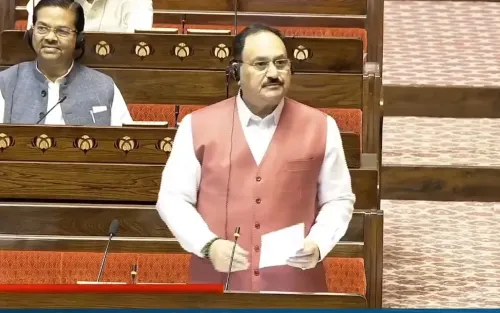
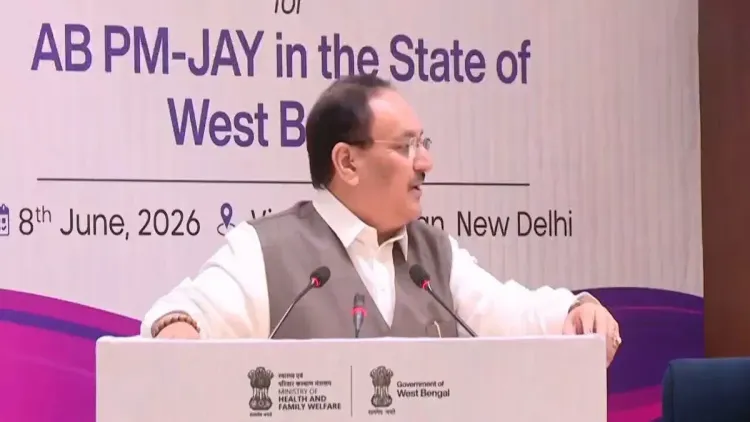
Union Health Minister and BJP national president J. P. Nadda on June 8, 2026, praised Suvendu Adhikari for fighting for West Bengal's people and accused the Trinamool Congress of enabling broad-daylight violence while police stood by, saying he personally witnessed the situation.
Key Takeaways
Nadda publicly congratulated Suvendu Adhikari on June 8, 2026 , crediting him with a ground-level fight for West Bengal's people.
Nadda accused Trinamool Congress of allowing open violence in broad daylight with no police response during its rule.
He stated he was a personal eyewitness to the hardships faced by BJP workers in the state.
The statement situates local West Bengal politics within the national BJP framework led by Prime Minister Narendra Modi .
The post comes ahead of the 2026 West Bengal assembly elections , intensifying BJP's anti-TMC narrative on law and order.
Union Health Minister J. P. Nadda on Monday, June 8, 2026, publicly congratulated Suvendu Adhikari, addressing him as Chief Minister, for waging a ground-level fight for the people of West Bengal under the leadership of Prime Minister Narendra Modi, while sharply attacking the Trinamool Congress over alleged political violence and police inaction in the state.
Context
Posting in Hindi on X, Nadda wrote: 'TMC raj mein din dahaade hinsa hoti thi aur police koi kaarvaai nahi karti thi' ('In TMC's rule, violence used to happen in broad daylight and the police took no action'). He added that BJP workers faced multiple kinds of hardships, and that he had personally witnessed these events. The message was directed at Adhikari, a senior BJP leader in West Bengal who had previously served as a minister in the TMC government before switching to the BJP ahead of the 2021 assembly elections.
Policy Backdrop
BJP's contestation in West Bengal has intensified steadily since the 2014 general elections, with the party consistently raising allegations of partisan violence and the misuse of state police machinery under Trinamool Congress governance. After the 2021 West Bengal assembly elections, senior BJP leaders including Nadda formally documented alleged attacks on party workers and demanded central intervention. The party has positioned itself as the principal challenger to TMC on law-and-order grounds across successive election cycles.
Nadda, as BJP national president, has been directly involved in the party's organisational expansion in West Bengal and has made multiple visits to the state to oversee grassroots activities. His personal claim of having witnessed violence against party workers underscores the depth of BJP's institutional engagement with the state over the past several years.
Stakeholders and Impact
BJP workers and West Bengal residents are the primary stakeholders in this political narrative. Allegations of post-poll violence and police inaction have been a recurring flashpoint, drawing attention from courts and civil society groups. For ordinary voters in the state, the debate over law and order has been a central electoral issue, with TMC and BJP presenting sharply divergent accounts of ground realities.
Trinamool Congress has consistently denied charges of sponsoring political violence, attributing such claims to BJP's electoral strategy. The exchange of accusations has defined much of the political discourse in West Bengal ahead of every major electoral contest in recent years.
What's Next
With the 2026 West Bengal assembly elections on the horizon, statements such as Nadda's are likely to become more frequent as both national and state BJP leadership seek to consolidate the party's organisational base and sharpen its anti-incumbency messaging against TMC. Any fresh incidents of reported political clashes in the state, or judicial or parliamentary proceedings related to alleged violence, will keep this issue at the centre of Bengal's political conversation in the months ahead.
Point of View
Deploying personal testimony to lend credibility to BJP's long-running law-and-order indictment of TMC governance in West Bengal. By addressing Adhikari in terms that frame him as a frontline combatant under Modi's national leadership, the BJP national president is reinforcing a chain-of-command narrative designed to energise cadres ahead of the 2026 assembly polls. The eyewitness claim elevates the statement beyond routine political rhetoric, making it harder for opponents to dismiss as hearsay. This fits a broader BJP pattern of using senior central leaders to amplify state-level grievances, effectively nationalising what is ostensibly a local law-and-order debate.
NationPress
25 Oct 2026
Frequently Asked Questions
What did JP Nadda say about West Bengal and TMC?
JP Nadda accused the Trinamool Congress of allowing violence in broad daylight while police took no action, and said he personally witnessed the hardships faced by BJP workers in West Bengal.
Who is Suvendu Adhikari and why did Nadda congratulate him?
Suvendu Adhikari is a senior BJP leader in West Bengal who switched from TMC to BJP before the 2021 assembly elections. Nadda congratulated him for fighting at the grassroots level for the people of West Bengal under PM Modi's leadership.
When did JP Nadda make this statement about Bengal violence?
Nadda made the statement on Monday, June 8, 2026, in a post on X directed at Suvendu Adhikari.
What is BJP's position on political violence in West Bengal?
BJP has consistently alleged that TMC governance in West Bengal has been marked by partisan violence against its workers and deliberate police inaction, a charge it has raised during successive election cycles since 2014.
How does Nadda's statement relate to the 2026 West Bengal elections?
With the 2026 West Bengal assembly elections approaching, the statement is part of BJP's sustained campaign to highlight law-and-order failures under TMC and consolidate the party's organisational base in the state.