Assam's Nameri Tiger Reserve Wins CA|TS International Accreditation

Synopsis
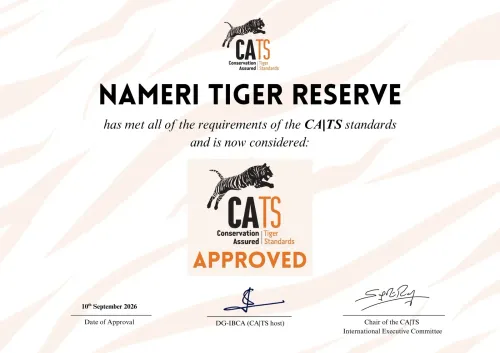
Nameri Tiger Reserve in Assam has earned CA|TS Recognition — the Conservation Assured | Tiger Standards international accreditation — for proven excellence in protection, scientific monitoring, habitat management and conservation planning, reinforcing India's global tiger-recovery credentials.
Key Takeaways
Nameri Tiger Reserve in Assam has been awarded CA|TS Recognition , an internationally validated accreditation for tiger reserve management.
CA|TS evaluates reserves across four pillars: site protection, scientific monitoring, habitat management, and conservation planning.
Nameri was established as a tiger reserve in 2000 in Sonitpur district , bordering Arunachal Pradesh's Pakke Tiger Reserve.
India launched Project Tiger in 1973 and now hosts over 50 tiger reserves , holding roughly 70 per cent of the world's wild tiger population.
CA|TS accreditation generates standardised data that strengthens future All India Tiger Estimation results from northeast India.
A tiger reserve tucked along the foothills of Arunachal Pradesh just earned a badge that places it among the best-managed tiger habitats on the planet. Nameri Tiger Reserve in Assam has been awarded the CA|TS Recognition — the Conservation Assured | Tiger Standards accreditation — for excellence across protection, scientific monitoring, habitat management, and conservation planning, the Chief Minister's Office of Assam announced on Thursday, 22 October 2026.
What CA|TS recognition actually means
CA|TS is not a ceremonial trophy. It is a rigorous international accreditation framework — used by governments and conservation bodies worldwide — that audits tiger reserves against a demanding set of management standards. To earn the recognition, a reserve must demonstrate credible, independently assessed performance across four pillars: anti-poaching and site protection, scientific monitoring of tigers and prey, habitat and ecological management, and long-term conservation planning. Clearing that bar puts Nameri in a select club of reserves that can claim globally validated management standards.
Nameri's journey from forest to tiger reserve
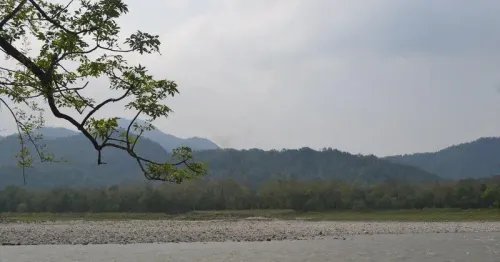
Nameri Tiger Reserve was established in 2000, carved from the dense riverine and semi-evergreen forests bordering the Jia Bhoreli river in Sonitpur district. The reserve shares a contiguous forest block with Pakke Tiger Reserve across the border in Arunachal Pradesh, making the landscape one of the more ecologically connected corridors in northeast India. Beyond its tigers, Nameri is notable for the critically endangered white-winged wood duck and a significant population of elephants — the kind of biodiversity richness that makes genuine habitat management a complex, multi-species task.
Project Tiger's five-decade arc, and where Assam fits
India launched Project Tiger in 1973 with just nine reserves. That network has since grown to over 50 tiger reserves across the country, and India today holds roughly 70 per cent of the world's wild tiger population. Assam's contribution to that recovery — through reserves including Kaziranga, Manas, and Orang — has been substantial. Pursuing CA|TS accreditation for these sites is part of a broader national push to align reserve management with international standards and demonstrate to the global conservation community that India's tiger numbers rest on a durable, science-backed foundation. Nameri's recognition strengthens that case.
A signal to the next tiger census
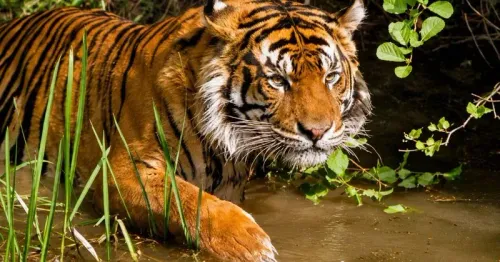
India conducts an All India Tiger Estimation on a four-year cycle, and the results of the next count will be watched closely for trends in northeast India — a region where forest fragmentation and human-wildlife conflict have historically complicated recovery. A CA|TS-accredited reserve generates the kind of structured, standardised data that feeds meaningfully into those estimates. For Nameri, the accreditation is both a recognition of past work and a framework for what comes next — ensuring that the tigers already thriving in its riverine forests continue to be counted, tracked, and protected with the rigour the standard demands.
Assam's forests have long been among India's most biodiverse — and today, one of them has the international certification to prove it.
Point of View
Internationally audited management standards give that claim independent credibility beyond headline population numbers. For Assam, a state that runs multiple major reserves, each CA|TS award raises the reputational and institutional bar for the others. The timing also matters: with the next national tiger census on the horizon, a CA|TS-certified northeast India reserve injects rigour and scientific legitimacy into data that will shape global conservation policy.
NationPress
22 Oct 2026
Frequently Asked Questions
What is CA|TS recognition for tiger reserves?
CA|TS stands for Conservation Assured | Tiger Standards — an international accreditation framework that independently audits tiger reserves on protection, scientific monitoring of tigers and prey, habitat management, and long-term conservation planning. Reserves that meet the standard earn formal CA|TS Recognition.
Where is Nameri Tiger Reserve located?
Nameri Tiger Reserve is located in Sonitpur district in northern Assam , along the Jia Bhoreli river and bordering Arunachal Pradesh . It was established as a tiger reserve in 2000 .
How many tiger reserves in India have CA|TS accreditation?
India has been progressively seeking CA|TS accreditation for multiple reserves as part of its national tiger conservation strategy. Nameri's recognition adds to a growing list of Indian reserves that meet the international standard, though the exact current total count is updated periodically by conservation authorities.
What is Project Tiger and when did it start?
Project Tiger was launched by the Government of India in 1973 to protect Bengal tigers through a dedicated network of reserves. Starting with nine reserves, it has grown to over 50 tiger reserves today, and India now holds approximately 70 per cent of the world's wild tiger population.
What wildlife besides tigers lives in Nameri Tiger Reserve?
Nameri Tiger Reserve is home to elephants, a significant diversity of birds including the critically endangered white-winged wood duck, and a rich array of mammals in its riverine and semi-evergreen forest habitat.