Nasscom welcomes GST Council reforms on IT exports, ITC and compliance

Synopsis
The GST Council's latest recommendations hand India's IT sector a meaningful set of wins — chiefly removing the overseas-branch export restriction that had long cost companies in litigation and working capital. With engineering R&D firms, GCCs, and deep-tech start-ups also set to gain from place-of-supply changes, the reforms could quietly sharpen India's pitch as a global research hub.
Key Takeaways
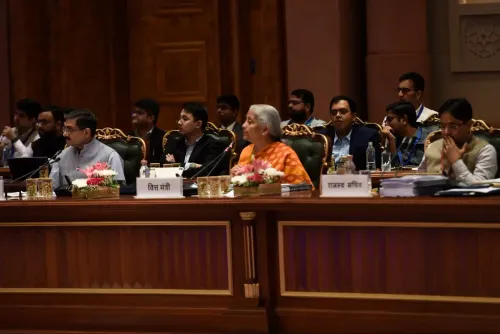
Nasscom welcomed GST Council recommendations on 8 October 2026 , calling them a resolution of longstanding industry concerns.
The Council recommended removing the restriction that prevented services from an Indian office to its overseas branch from qualifying as exports — a major relief for IT-ITeS companies.
Revised place-of-supply rules for research, testing, and engineering services on overseas-owned goods are expected to benefit engineering R&D firms , GCCs , and deep-tech start-ups .
A simplified GST registration mechanism for smaller e-commerce sellers using out-of-state platform warehouses has also been proposed.
Extensions of inverted-duty refunds to input services, refund eligibility for plant and machinery , and ITC on employee health and life insurance were among the other key changes welcomed by Nasscom.
Nasscom, the apex trade body for India's IT and IT-enabled services (IT-ITeS) industry, on Thursday, 8 October 2026 welcomed the latest recommendations of the GST Council, saying they address longstanding concerns across service exports, input tax credit (ITC), refunds, and compliance. The body also noted that proposals on notices, prosecution, and arrest powers signal a more proportionate approach to tax enforcement.
What the IT Industry Gets
The most significant relief for Indian technology companies is the GST Council's recommendation to remove a restriction that had long prevented services supplied by an Indian office to its overseas branch from qualifying as exports. Under the current law, since both entities belong to the same legal person, such transactions fail the export test — creating tax uncertainty, prolonged litigation, and avoidable working capital costs.
Nasscom said this change is 'especially welcome' for Indian firms that frequently serve overseas customers through their foreign branches. Subject to other export conditions being met, the removal of this restriction should reduce friction considerably for the sector, which contributes a significant share of India's services exports.
Engineering R&D and Deep-Tech Start-Ups to Benefit
The Council has also recommended a revised place-of-supply treatment for research, testing, certification, and engineering services performed in India on goods belonging to overseas customers. Currently, the physical presence of a customer's prototype or sample in India can disqualify such services from being treated as exports.
The proposed change is expected to benefit engineering R&D firms, global capability centres (GCCs), and deep-tech start-ups providing qualifying research and testing services to overseas clients. Nasscom said the revision could also strengthen India's position as a destination for global research and engineering mandates — an area of growing strategic interest.
E-Commerce and Small Business Relief
For the e-commerce sector, the Council has proposed a simplified registration mechanism for smaller sellers using platform warehouses located in other states. This is intended to allow small businesses to participate in interstate online commerce without needing to establish physical premises in every state — a requirement that had been cited as a barrier to growth for smaller sellers.
Broader ITC and Refund Improvements
Nasscom also welcomed a set of broader changes that reduce tax credit blockages across industries. These include the proposed extension of inverted-duty refunds to input services, refund eligibility for plant and machinery, and faster processing of refunds. Notably, the Council's recommendation to allow input tax credit for employee health and life insurance addresses another concern that industry bodies had repeatedly flagged.
Nasscom said these changes should reduce the volume of legitimate tax credit tied up in routine business expenditure, easing cash flow for companies across the sector. The association expressed appreciation for the engagement of the Union and State Governments, the Ministry of Finance, and the Central Board of Indirect Taxes and Customs (CBIC) with industry stakeholders on these issues.
What Happens Next
The GST Council's recommendations must be translated into legislative amendments before they take effect. Industry will be watching the timeline for notification of the changes, particularly those related to overseas-branch export treatment and place-of-supply rules for engineering services, where even short delays have material cost implications for exporters.
Point of View
And Nasscom had been raising it for years. The fact that it has now been addressed is a sign that the GST Council is beginning to treat services exporters with the same seriousness it has long extended to goods exporters. The employee health insurance ITC change is similarly overdue, given how ubiquitous group cover is as a compensation component in the tech sector. The real question now is implementation speed: GST Council recommendations have a track record of sitting in legislative limbo, and every quarter of delay on the overseas-branch fix is another quarter of avoidable cost for India's largest export-earning sector.
NationPress
8 Oct 2026
Frequently Asked Questions
What did the GST Council recommend for the IT-ITeS sector?
The GST Council recommended removing the restriction that prevented services supplied by an Indian company to its overseas branch from qualifying as exports, directly addressing a longstanding concern of India's IT-ITeS industry. Subject to other export conditions, the change is expected to reduce tax uncertainty, litigation, and working capital costs for Indian technology firms.
How does the overseas-branch export fix help Indian IT companies?
Under the current law, since an Indian office and its overseas branch are establishments of the same legal entity, transactions between them do not qualify as exports — leading to tax disputes and blocked working capital. The proposed removal of this restriction means Indian companies serving overseas customers through foreign branches can now more clearly qualify for export benefits.
Which businesses benefit from the place-of-supply change for engineering services?
Engineering R&D firms, global capability centres (GCCs), and deep-tech start-ups that perform research, testing, certification, or engineering work in India on goods belonging to overseas customers stand to benefit. The change removes the disqualification triggered when a customer's prototype or sample is physically present in India.
What GST relief has been proposed for e-commerce sellers?
The GST Council has proposed a simplified registration mechanism for smaller sellers who use platform warehouses in states other than their home state. This is intended to allow small businesses to engage in interstate online commerce without needing to set up physical premises in every state.
Why did Nasscom welcome the input tax credit change on employee insurance?
Nasscom welcomed the recommendation to allow input tax credit for employee health and life insurance because group insurance is a standard component of compensation in the technology sector, and the current denial of ITC on these costs ties up legitimate tax credit. The change is expected to reduce the amount of business expenditure that cannot be offset against GST liability.