NDA governs 7 of 10 highest-SC states, 8 of 10 highest-ST states

Synopsis
A resolution adopted at an NDA meeting on 10 June 2025 puts a precise number on the alliance's social reach: it governs 7 of India's 10 highest-SC-population states and 8 of the 10 highest-ST-population states. Combined with a third consecutive national mandate in 2024 — the first in over 60 years — the NDA is making a pointed case that its expansion is structural, not cyclical.
Key Takeaways
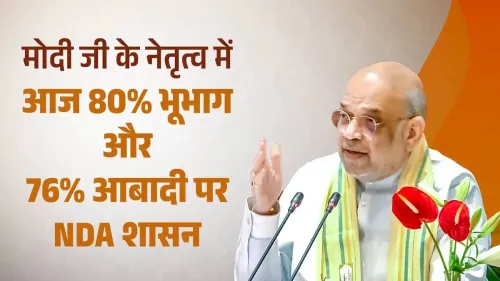
The NDA governs states accounting for more than three-fourths of India's population and territorial area.
The alliance holds power in 7 of the 10 states with the highest Scheduled Caste population and 8 of the 10 with the highest Scheduled Tribe population.
Since 2014 , the NDA has formed governments for the first time in Haryana , Tripura , Assam , and West Bengal .
The BJP has held Gujarat uninterrupted since 1995 and returned to power in Uttar Pradesh for the first time in over four decades .
The NDA's third consecutive national mandate in 2024 is described as the first such achievement in more than 60 years of Indian political history.
The resolution was adopted on 10 June 2025 , marking 12 years of the Prime Minister Narendra Modi -led Union government.
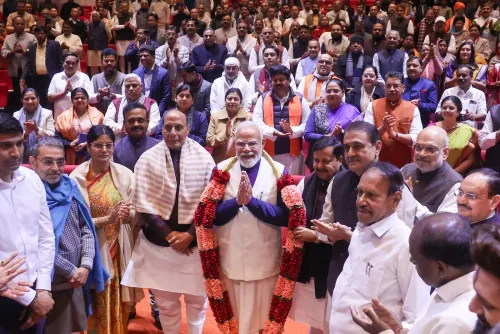
The National Democratic Alliance (NDA) has entrenched itself as a pan-India political force, governing states that together account for more than three-fourths of India's population and territorial landscape, according to a resolution adopted at an NDA meeting in New Delhi on Wednesday, 10 June 2025, marking 12 years of the Prime Minister Narendra Modi-led Union government.
SC and ST Representation
The resolution highlights a striking measure of the alliance's social reach: the NDA is in power in seven out of the 10 states with the highest Scheduled Caste (SC) population, and in eight out of the 10 states with the highest Scheduled Tribe (ST) population. According to the document, this reflects the alliance's penetration into historically underrepresented and marginalised regions, where electoral support has translated into sustained governance presence.
Geographic and Electoral Expansion Since 2014
The resolution notes that since 2014, the NDA has formed governments for the first time in several states, including Haryana, Tripura, Assam, and West Bengal. In states such as Andhra Pradesh, Bihar, and Maharashtra, the alliance has secured what it describes as historic mandates through coalition partnerships, reinforcing its identity as a multi-party arrangement rather than a single-party formation.
In Gujarat, the Bharatiya Janata Party (BJP) — the NDA's principal constituent — has maintained an uninterrupted winning streak since 1995. In Uttar Pradesh, it became the first party in more than four decades to return to power consecutively, marking a significant shift in the state's electoral dynamics. The alliance has also consolidated its hold across the Northeast, now governing most states in the region, including those with diverse tribal and Christian populations.
Third Consecutive National Mandate
The NDA's return to power at the national level for a third consecutive term in 2024 is described in the resolution as a historic milestone — the first such achievement in more than 60 years of Indian political history. The alliance frames this as evidence of a shift from traditional anti-incumbency patterns to what it calls 'pro-incumbency' — a phase where governance performance and electoral trust have enabled repeated mandates.
Coalition Architecture and the 'India First' Principle
At its core, the NDA's expansion is presented as the outcome of coalition-building under an 'India First' principle, balancing regional aspirations with national priorities. By aggregating diverse regional parties, the alliance positions itself as a platform that integrates local leadership with a broader national development agenda. Analysts, according to the resolution, assess the NDA's reach not merely in electoral numbers but in its sustained governance presence across large parts of the country.
How the NDA translates this expanded governance footprint into measurable development outcomes — particularly in SC- and ST-majority regions — will determine whether the coalition's political breadth converts into lasting social equity.
Point of View
Not an independent audit — and the distinction matters. Holding power in a state is not the same as delivering measurable outcomes for its most marginalised communities; Gujarat, for instance, has faced persistent criticism on tribal welfare despite decades of BJP rule. The 'pro-incumbency' framing is politically convenient but elides the fact that several of these mandates were won through coalition arithmetic rather than single-party dominance. The more consequential question the resolution does not answer: have SC and ST welfare indicators in NDA-governed states outpaced those in non-NDA states? Without that data, the governance-footprint argument remains a political claim, not a development record.
NationPress
27 Sept 2026
Frequently Asked Questions
In how many SC and ST states does the NDA currently govern?
According to an NDA resolution adopted on 10 June 2025, the alliance governs 7 of the 10 Indian states with the highest Scheduled Caste population and 8 of the 10 states with the highest Scheduled Tribe population.
What is the significance of the NDA's third consecutive national mandate in 2024?
The NDA describes its return to power for a third straight term in 2024 as the first such achievement in more than 60 years of Indian political history, framing it as evidence of a shift toward 'pro-incumbency' politics driven by governance performance.
Which new states has the NDA governed since 2014?
Since 2014, the NDA has formed governments for the first time in Haryana, Tripura, Assam, and West Bengal, according to the resolution. It has also consolidated its presence across most Northeastern states.
How does the NDA explain its coalition growth?
The alliance attributes its expansion to coalition-building under an 'India First' principle that balances regional aspirations with national priorities, bringing together diverse regional parties under a common governance framework.
What was the occasion for the NDA resolution on 10 June 2025?
The resolution was adopted at an NDA meeting in New Delhi on 10 June 2025 to mark 12 years of the Prime Minister Narendra Modi-led Union government, and it outlined the alliance's political and geographical expansion over that period.