Supreme Court: ECI's new Form 6 neither approved nor rejected by bench
Synopsis
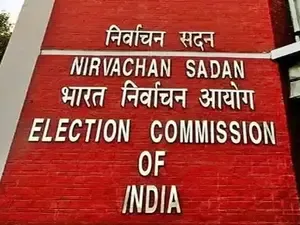
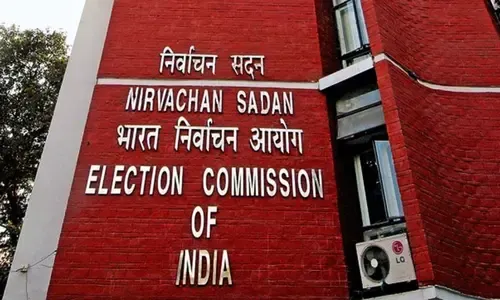
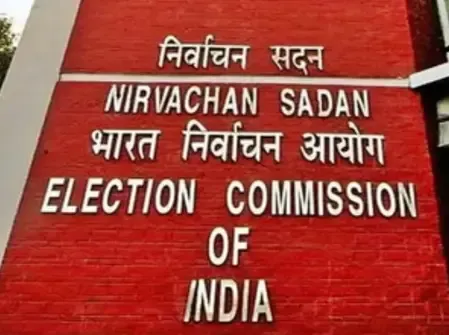
The Supreme Court has cut through a growing political and legal dispute: it explicitly stated it never approved or rejected the ECI's revised Form 6 for voter registration — directly contradicting an ECI press release that suggested otherwise. With two Election Commissioners reportedly having objected to the change internally, and the opposition alleging illegal manipulation, the case now squarely puts the ECI's internal processes under judicial and public scrutiny.
Key Takeaways
The Supreme Court on 12 October 2026 clarified it had not adjudicated on the ECI's modified Form 6 — neither approving nor rejecting it.
The bench, led by CJI Surya Kant , noted the revised form did not exist when the Bihar SIR judgment was delivered.
The ECI had claimed in a 26 September 2026 press release that the Supreme Court's May 2026 ruling had upheld the revised declaration — a claim the court has now contradicted.
The revised Form 6 requires new voter applicants to disclose whether they or their parents featured in the previous SIR ; two Election Commissioners reportedly objected to the change as requiring a statutory amendment.
Leader of Opposition Rahul Gandhi alleged the modification was made illegally to benefit the BJP ; the party denied the allegation.
The fresh petition continues to be heard; the court's eventual ruling will determine the validity of the modified declaration nationwide.
The Supreme Court on Monday, 12 October 2026, clarified that it had not adjudicated on the Election Commission of India (ECI)'s modified Form 6 declaration for new voter registration, stating that the revised form was not before the court when it ruled on the Bihar Special Intensive Revision (SIR) of electoral rolls case.
What the Court Said
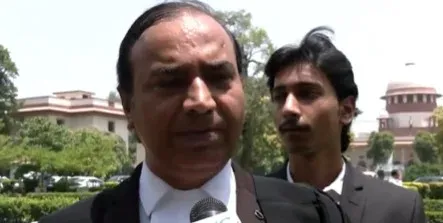
A bench comprising Chief Justice of India (CJI) Surya Kant, Justice Joymalya Bagchi, and Justice V. Mohana made the clarification while hearing a fresh petition raising concerns over the functioning of Chief Election Commissioner (CEC) Gyanesh Kumar and the changes to Form 6. Justice Bagchi stated unequivocally: 'There is no adjudication on the new Form 6,' adding that the revised declaration did not exist when the Bihar SIR judgment was delivered and that the court's earlier oral remarks could not be construed as either approving or disapproving it.
CJI Surya Kant also cautioned against selectively reading the court's observations for media purposes, saying: 'Please don't pick words for news items.'
The ECI's Disputed Press Release
The clarification comes after the ECI issued a press release on 26 September 2026 suggesting that the Supreme Court had upheld the revised declaration in its May 2026 judgment on the Bihar SIR exercise. However, the modified Form 6 declaration was introduced after that judgment, meaning the apex court had no occasion to examine its contents. Counsel for the petitioner had submitted that the court had, on 5 October 2026, already noted that the modified Form 6 had not received its approval — a position the ECI had contested.
What the Revised Form 6 Requires
Under the modified declaration, applicants seeking fresh voter registration must disclose whether they or their parents were included in the previous SIR exercise. The earlier version of Form 6, used during SIR exercises in other states, did not carry this requirement. According to reports, two Election Commissioners had objected to the modification on the ground that altering the declaration required a formal amendment to the Registration of Electors Rules, 1960 by the Central government — a process that was reportedly not followed.
Political Row and Allegations
Leader of Opposition Rahul Gandhi alleged that Form 6 had been altered unilaterally and illegally to benefit the Bharatiya Janata Party (BJP). The BJP rejected the allegations; party spokesperson Sambit Patra maintained that the Supreme Court had neither declared the form illegal nor rejected it, and disputed the interpretation that the apex court had found any illegality in the modification. The controversy has intensified the broader political debate over the ECI's internal decision-making processes and its institutional independence.
What Happens Next
The fresh petition before the Supreme Court continues to be heard, and the court's eventual ruling on the validity of the modified Form 6 — and the process by which it was introduced — will have direct implications for new voter registrations across the country. The case is being closely watched by opposition parties, civil society groups, and election law experts alike.
Point of View
In effect, a rebuke of the ECI's 26 September press release — an institution claiming judicial backing it did not have. What makes this more than a procedural footnote is the allegation that the modification bypassed the statutory requirement of amending the Registration of Electors Rules, 1960, a process that requires Central government action. If two Election Commissioners did indeed formally object on those grounds, the ECI's decision-making chain deserves far closer scrutiny than the BJP-Congress political exchange has so far invited. The court's reminder not to 'pick words for news items' also signals its awareness of how institutional credibility — judicial and electoral alike — is being weaponised in the current political climate.
NationPress
12 Oct 2026
Frequently Asked Questions
What did the Supreme Court clarify about ECI's modified Form 6?
The Supreme Court clarified on 12 October 2026 that it had neither approved nor rejected the ECI's revised Form 6 for new voter registration. The bench stated that the modified form did not exist when it decided the Bihar SIR case, and its earlier oral remarks could not be read as endorsing or disapproving the change.
What is the revised Form 6 and what does it require?
Form 6 is the application form for fresh voter registration in India. The ECI's revised version requires applicants to declare whether they or their parents were included in the previous Special Intensive Revision (SIR) of electoral rolls — a requirement that did not exist in the earlier version of the form used during SIR exercises in other states.
Why did the ECI's press release spark controversy?
The ECI issued a press release on 26 September 2026 claiming that the Supreme Court had upheld the revised Form 6 declaration in its May 2026 Bihar SIR judgment. However, the modification was introduced after that judgment, meaning the court had no occasion to examine it, making the ECI's claim factually untenable, as the Supreme Court has now confirmed.
What objections were raised within the ECI about the form change?
According to reports, two Election Commissioners objected to the modification on the ground that changing the Form 6 declaration required a formal amendment to the Registration of Electors Rules, 1960 — a process that mandates Central government action and was reportedly not undertaken before the revision was introduced.
What is the political dimension of the Form 6 controversy?
Leader of Opposition Rahul Gandhi alleged the form was altered unilaterally and illegally to benefit the BJP. The BJP rejected the claim, with spokesperson Sambit Patra arguing the Supreme Court had not declared the form illegal. The case is being heard by the Supreme Court and its eventual ruling will determine whether the modification stands.