Maharashtra Strengthens MMR Power Supply with New 400 kV Line
Synopsis
The commissioning of the Babhaleshwar–Kudus 400 kV transmission line marks a significant advancement in the Mumbai Metropolitan Region's power infrastructure, promising enhanced reliability and capacity for the growing energy demands.
Key Takeaways
New 400 kV line enhances power supply stability in MMR.
Reduces transmission losses by approximately 5 MW .
Increases power transfer capacity by up to 3000 MW .
Involves installation of 715 towers over 228 km .
Project faced various administrative and technical challenges.
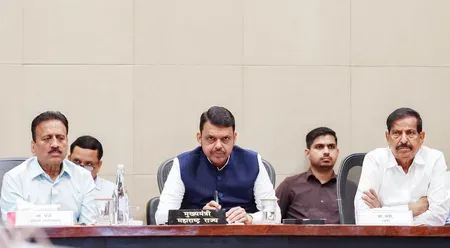
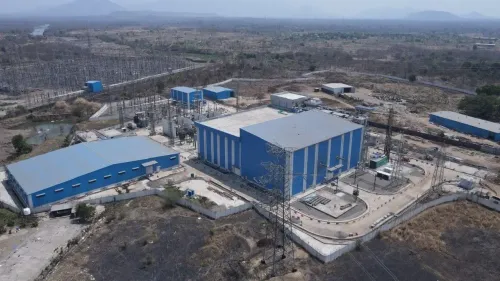
Mumbai, April 9 (NationPress) The Maharashtra State Electricity Transmission Company Limited (Mahatransco) has successfully inaugurated its significant Babhaleshwar–Kudus 400 kV transmission line this Thursday, thereby bolstering the power infrastructure within the Mumbai Metropolitan Region (MMR).
This newly activated line is anticipated to significantly improve the stability, reliability, and efficiency of power distribution in the areas of Mumbai, Thane, Palghar, and Ahilyanagar districts. According to Mahatransco, the project aims to decrease transmission losses by nearly 5 MW and enhance voltage levels throughout the region.
Importantly, this double-circuit transmission line will facilitate an extra power transfer capacity of up to 3000 MW, ensuring effective management of the increasing electricity demand in the rapidly developing Mumbai area.
Initially approved in 2010, with a completion goal of 2013, the project encountered several delays due to both technical and administrative obstacles. However, through collaborative efforts among various government bodies and accelerated governance, the project was ultimately completed in March 2026.
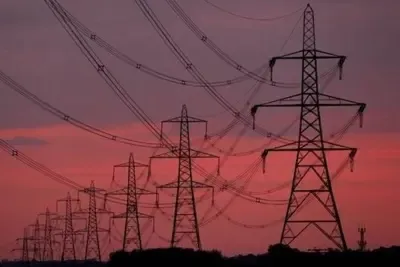
This initiative involved the establishment of 715 transmission towers along a total line length of about 228 km. Specifically, 485 towers and 304 circuit km of stringing work were finalized under the Nashik division, while 230 towers and 152 circuit km were accomplished under the Vashi division.
The execution of this project faced numerous challenges, including securing special permissions to navigate near the Giant Metrewave Radio Telescope (GMRT) in Pune district. Additional difficulties comprised land compensation issues, forest clearances, right-of-way (RoW) constraints, and logistical challenges related to material transport. In forested regions, materials were manually transported, whereas in some areas, advanced hotline stringing techniques were employed, as stated.
The operationalization of this line is projected to alleviate the load on the existing Padghe–Babhaleshwar transmission lines and substantially enhance overall grid reliability. It will also supply an additional power source to the Kudus substation, aiding in meeting the surging electricity demand in the Mumbai region.
Mahatransco attributed the successful completion of the project to the cooperation and support from local public representatives, revenue authorities, police, and forest departments.
Point of View
The successful commissioning of the Babhaleshwar–Kudus 400 kV transmission line is a pivotal step towards enhancing the power infrastructure in the Mumbai Metropolitan Region. It reflects the government's commitment to addressing rising energy demands while improving reliability and efficiency in the power supply.
NationPress
15 Oct 2026
Frequently Asked Questions
What is the purpose of the Babhaleshwar–Kudus transmission line?
The line aims to enhance the stability, reliability, and efficiency of power supply across the Mumbai Metropolitan Region, while accommodating rising electricity demand.
When was the project originally approved?
The project was initially approved in 2010, with a targeted completion date in 2013.
How many transmission towers were installed?
A total of 715 transmission towers were established along approximately 228 km of the line.
What challenges did the project face?
Challenges included obtaining permissions for proximity to the GMRT, land compensation issues, forest clearances, and logistical hurdles in material transport.
How much power transfer capacity does the new line provide?
The new double-circuit transmission line enables an additional power transfer capacity of up to 3000 MW.