NHAI, SSNNL sign MoU to fast-track Gujarat highway and canal crossings
Synopsis
NHAI and SSNNL have signed an MoU to eliminate the dual-approval bottleneck that has long delayed highway and irrigation projects in Gujarat. With 26 active NHAI corridors backed by ₹20,000 crore already under construction, the fee-waiver and standardised-approval framework could meaningfully compress timelines — and potentially serve as a national template.
Key Takeaways
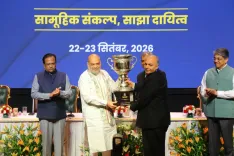
NHAI and SSNNL signed an MoU on 22 September 2026 in Gandhinagar to fast-track approvals for highway, canal, and pipeline crossings in Gujarat .
A mutual waiver of fees, charges, and levies is a key provision, aimed at reducing costs and eliminating procedural delays.
The framework mandates early sharing of project information and standardised engineering practices between the two agencies.
26 major NHAI highway projects are currently active in Gujarat, backed by a ₹20,000 crore central funding commitment.
Key corridors connect industrial hubs including Ahmedabad , Vadodara , Surat , Rajkot , and Gujarat's port gateways.
The National Highways Authority of India (NHAI) and Sardar Sarovar Narmada Nigam Limited (SSNNL) signed a Memorandum of Understanding (MoU) on 22 September 2026 to establish a simplified, time-bound approval framework for National Highway, canal, and pipeline crossings across Gujarat. The agreement, formalised in Gandhinagar, is designed to accelerate inter-departmental coordination and streamline the execution of highway and irrigation infrastructure projects in the state.
What the MoU Covers
A defining provision of the agreement is the mutual waiver of fees, charges, and levies by both NHAI and SSNNL for all National Highway, canal, and pipeline crossings under the pact. This is expected to cut project costs, eliminate procedural bottlenecks, and make better use of public funds.
The MoU also introduces standardised engineering practices, early sharing of project information, and clearly delineated responsibilities for the construction and maintenance of crossing structures — measures aimed at improving planning quality and operational efficiency across both agencies.
Who Signed and Where
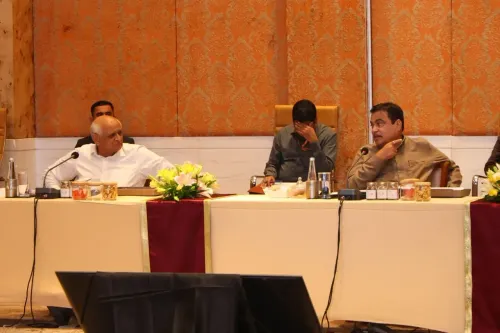
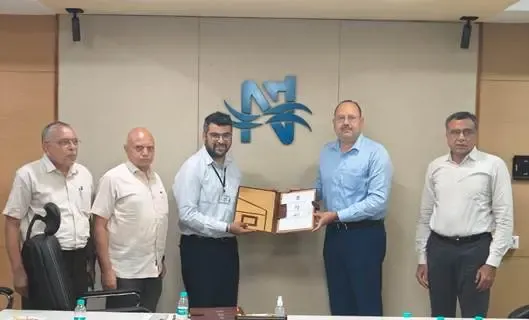
The agreement was executed by the Regional Officer, Gandhinagar, NHAI, and the Chief Engineer, SSNNL, in the presence of SSNNL directors and senior officials at Gandhinagar. The signing follows growing pressure on state and central agencies to reduce the time lost in inter-departmental clearances, which has historically been a key bottleneck for large infrastructure corridors.
Scale of Ongoing Projects in Gujarat
The MoU gains additional significance given the sheer scale of highway construction currently under way in the state. As many as 26 major NHAI highway projects are presently active in Gujarat, underpinned by a central funding commitment of ₹20,000 crore. These corridors connect key industrial and commercial hubs including Ahmedabad, Vadodara, Surat, Rajkot, and strategic port gateways along the western coastline.
Why This Matters for Infrastructure Timelines
Gujarat is one of India's most active highway-construction states, and delays at canal or pipeline crossings — which require dual approvals from highway and irrigation authorities — have long inflated both costs and timelines. By creating a single coordinated framework, the MoU attempts to convert what were sequential processes into parallel ones. Notably, the fee-waiver mechanism also removes a recurring financial friction that slowed smaller crossing projects disproportionately.
Officials indicated that the collaborative model could serve as a template for similar inter-agency arrangements in other states where NHAI corridors intersect with major irrigation networks. The framework is expected to improve adherence to quality standards while reducing the overall financial burden of project execution on the public exchequer.
Point of View
But they are often the real reason infrastructure projects slip years past their deadlines. Gujarat's highway programme is ambitious on paper — 26 projects and ₹20,000 crore — yet crossing-level disputes between highway and irrigation authorities have quietly undermined similar targets elsewhere. The NHAI-SSNNL MoU addresses that friction directly, though its value will depend entirely on whether the 'time-bound framework' comes with hard deadlines and an escalation mechanism. If it does, this could be a model worth replicating across states where national highway corridors bisect irrigation grids — which, in India, is nearly everywhere.
NationPress
22 Sept 2026
Frequently Asked Questions
What is the NHAI-SSNNL MoU signed in Gandhinagar?
It is a Memorandum of Understanding signed on 22 September 2026 between the National Highways Authority of India and Sardar Sarovar Narmada Nigam Limited to create a simplified, time-bound approval framework for National Highway, canal, and pipeline crossings in Gujarat. The pact includes mutual fee waivers and standardised engineering procedures to reduce delays and costs.
What is the mutual fee waiver in the NHAI-SSNNL MoU?
Under the agreement, NHAI and SSNNL have each agreed to waive fees, charges, and levies applicable to all National Highway, canal, and pipeline crossings covered by the MoU. This provision is designed to cut project costs, reduce procedural friction, and optimise the use of public funds.
How many NHAI projects are currently active in Gujarat?
As of September 2026, 26 major NHAI highway projects are under way in Gujarat, supported by a central funding pledge of ₹20,000 crore. These projects connect key industrial and commercial centres including Ahmedabad, Vadodara, Surat, Rajkot, and major port gateways.
Why does inter-agency coordination matter for highway projects in Gujarat?
Highway corridors in Gujarat frequently intersect with SSNNL-managed canals and pipelines, requiring dual approvals that have historically caused delays and cost overruns. The MoU creates a single coordinated framework with shared project data and defined responsibilities, converting sequential clearance processes into parallel ones.
Could the NHAI-SSNNL framework be adopted in other states?
Officials have indicated that the model could serve as a template for similar inter-agency arrangements elsewhere in India where NHAI corridors cross major irrigation networks. Replication, however, would depend on whether the time-bound approval mechanism delivers measurable results in Gujarat first.